





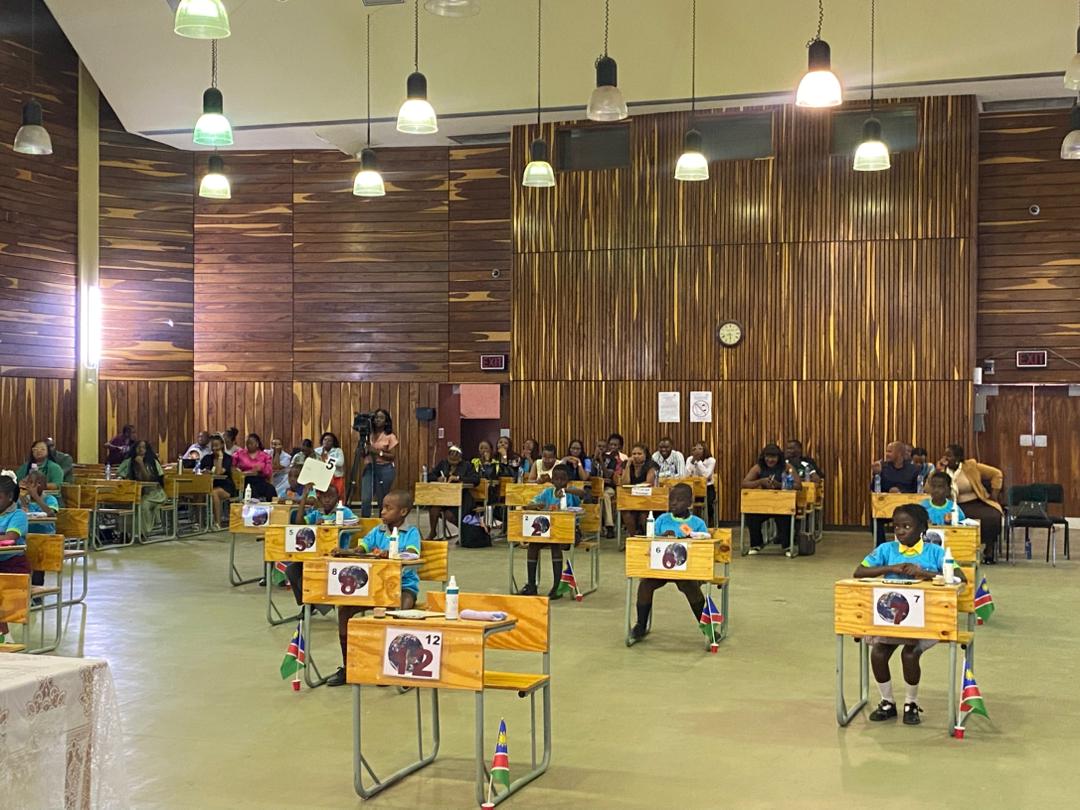
Pupils from primary schools across the Khomas region gathered at the University of Namibia (Unam) main campus on Thursday for a social studies quiz.
The Khomas Regional Social Studies Quiz games are annual games organised by the Khomas Regional Council in collaboration with the Ministry of Education, Innovation, Youth, Sport, Arts and Culture and Unam.
Sponsored by Debmarine, Sisa Namandje & Co Inc, the Namibian Agronomic Board and Dinapama, the games aim to test pupils’ knowledge of history, culture and the world.
Forty pupils from 23 primary schools competed in the quiz.
The student who gets the most correct answers will win a gold medal and a trophy. The runner-up will receive a silver and third place a bronze medal. Pupils were given questions, a board and a time frame to write their answers. Teachers who were judges walked from pupil to pupil to record their answers.
Valeria Hangula, a Grade 7 teacher at Fidel Castro Primary School, says the competition aims to promote education, raise awareness of career choices and improve academic performance.
“The competition is a platform where pupils put effort into mastering competencies and improve interest in subjects’ content. Pupils should strive to become engineers, nurses and doctors,” she saya.
She explains that the involvement of schools, civil society and the corporate sector is intended to improve the status of the country’s human and natural resources.
Chief executive for professional development advisory services at the Khomas regional council, Eveline Benjamin, expresses gratitude to partners for their support.
“This partnership serves as a beacon of hope and opportunity. It reminds us that education remains a cornerstone of sustainable development, social transformation and national prosperity,” she says.
Suiderhof Primary School Grade 6 teacher and event organiser Inna Shapaka hopes to extend the programme outside the Khomas region.
“We want to make it a national event and we cannot do that if other regions are not on board,” she says.
She adds that people mostly prioritise science and mathematics, but notes that social studies issues matter too.