



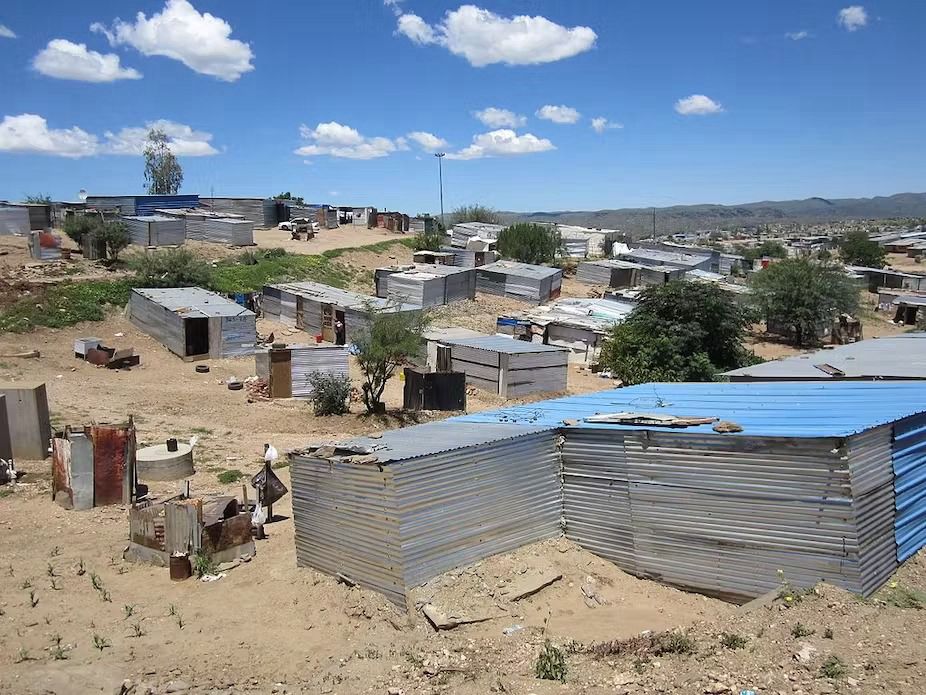
The Khomas region has the highest number of informal settlements in Namibia, accounting for 150 of the 419 undeclared informal settlements recorded nationwide, or roughly 35.8% of the national total, according to the Namibia Informal Settlements Baseline Report.
The report, compiled by the Ministry of Urban and Rural Development in collaboration with the Namibia Statistics Agency (NSA), highlights the growing scale of urban informality and mounting pressure on local authorities to provide basic services and secure land tenure.
Presenting the findings, statistician general and NSA chief executive Alex Shimuafeni said the country has 563 urban settlements exhibiting varying levels of informality.
“From the 563 listed settlements, 419 (74.4%) were classified as informal settlements, while the remaining 144 (25.6%) were declared townships which were still exhibiting some levels of informality,” Shimuafeni said.
He said more than half of informal settlements are located within municipalities, which host 221 settlements, representing 52.7% of the total. Towns account for 145 settlements, or 34.6%, while 53 settlements, equivalent to 12.6%, are located in villages.
“The Khomas region had the highest number of informal settlements (150, 35.8%), followed by the Otjozondjupa (42; 10.0%), Oshana (32; 7.6%), Hardap (31; 7.4%), and Kunene regions (27; 6.4%),” Shimuafeni said.
The report further indicates that 89.5% of informal settlements are concentrated in municipalities and towns, placing significant strain on local authorities, which own approximately 98.3% of the land on which these settlements are situated.
Nationally, more than 60% of informal settlements are classified as congested, with Windhoek recording a congestion rate of 59.3%. Despite being located within urban boundaries, most settlements remain disconnected from essential infrastructure and services.
According to the findings, 86.4% of informal settlements lack access to formal sewerage systems, while 70.4% have no connection to both formal water and electricity networks. In addition, 93.5% of these areas have no formal road infrastructure.
The report also reveals slow progress in service upgrading, with 244 settlements classified under ‘level 1’, indicating little to no bulk service provision.
Only 16 settlements nationwide have reached ‘level 5’, which represents full service coverage and secure land tenure.
“The upgrading of service levels has been classified into five categories in the report. Level 1 includes municipalities where no services have been implemented at all. Level 2 refers to municipalities where at least one service has been implemented.
“Level 3 applies to those with at least two services implemented, while level 4 includes municipalities with at least three services in place. Finally, level 5 represents municipalities where full services have been implemented. According to the statistics, out of 419 municipalities, only 16 have full services (level 5). The majority fall under level 1, meaning they have no services at all,” Shimuafeni said.
The lack of infrastructure development is compounded by limited legal security, with only about 33.9% of residents holding a certificate of occupancy, leaving the majority without formal tenure rights.
The findings underscore the scale of Namibia’s urban housing and infrastructure challenges, as rapid urbanisation continues to outpace service delivery and settlement formalisation efforts.
In an age of information overload, Sunrise is The Namibian’s morning briefing, delivered at 6h00 from Monday to Friday. It offers a curated rundown of the most important stories from the past 24 hours – occasionally with a light, witty touch. It’s an essential way to stay informed. Subscribe and join our newsletter community.

The Namibian uses AI tools to assist with improved quality, accuracy and efficiency, while maintaining editorial oversight and journalistic integrity.
Stay informed with The Namibian – your source for credible journalism. Get in-depth reporting and opinions for
only N$85 a month. Invest in journalism, invest in democracy –
Subscribe Now!