



Opuwo, Kunene region, 12 November 2025
It has been a common cause that whenever I visit this area, the Okangwati road is always raised as an important road to bring further development to the Kunene region.
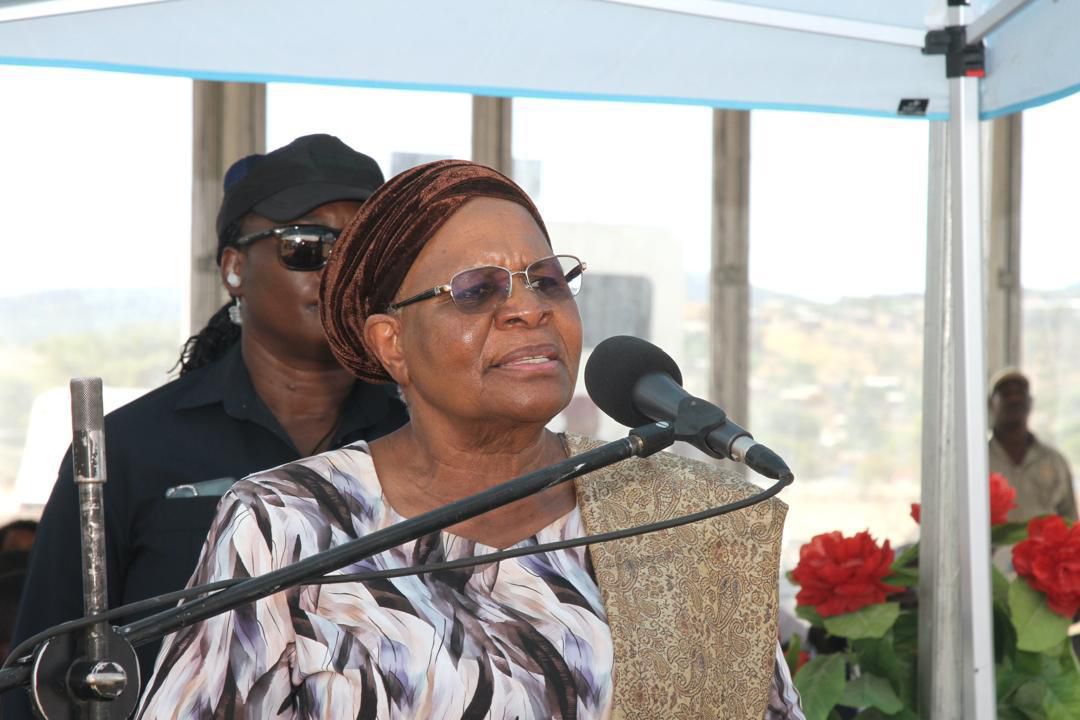
As you may be aware, road and infrastructure development is one of the enablers identified in the Swapo Party election manifesto and prioritised in the National Development Plan 6. Hence, we are here today to witness this historic event, the groundbreaking ceremony signalling the commencement of the construction of the Opuwo-Otjivize-Okangwati-Omaseratundu road up to the Baynes Hydro Power Project site and Epupa.
This road spans approximately 280 kilometres, including a stretch of 47 kilometres to Epupa. Due to its length, the construction will be undertaken in different sections.
The groundbreaking today marks the commencement of Section A, which covers the first 75 kilometres of this critical route from Opuwo to Otjivize, located in the northern parts of the Kunene region.
This project marks another important milestone in our national efforts to develop sustainable infrastructure that connects communities, unlocks economic potential and supports strategic national projects.
Although at independence Namibia inherited an existing road infrastructure, modern roads were mostly concentrated in the central and coastal parts of our country for the purpose of exporting raw materials, while some roads were meant for the rapid movement of the colonial South African Defence Force against the People’s Liberation Army of Namibia during the war of national independence.
Thus, after independence, a drastic policy shift was implemented with a deliberate focus on expanding existing infrastructure, constructing rural and feeder roads to decentralise development, and making the movement of people and goods easier, thereby strengthening internal trade. We have invested in roads to the point that today we are linked with all our neighbouring countries by tarred roads.
Therefore, roads not only play an important role in facilitating the export and import of goods between Namibia and neighbouring countries, but also enable access to government services such as health centres and schools.
I cannot overemphasise the fact that the upgrading of this road to bitumen standards will enable tourism and help foster an environment conducive to job creation and business opportunities.
The Kunene region has potential for tourism, agriculture, energy and culture. However, accessibility remains a major challenge. Hence, once completed, this project will transform the lives of our people and bring about tangible benefits such as reduced travel time and transport costs, and improved road safety and reliability.
This project also forms an essential link in the planned upgrade to bitumen standard of access road infrastructure from Opuwo to the Baynes Hydro Power Project site, a cornerstone of the binational cooperation between Namibia and Angola.
Thus, the road will serve the dual purpose of facilitating access to the Baynes Hydro Power Project site and Epupa, and enhancing regional mobility within the Kunene region. Reliable road access to the Baynes Hydro Power Project will make it possible to transport heavy construction equipment, improve project logistics and support local business opportunities during and after construction.
Namibia is a young nation, and the greatest challenge facing us is the prudent development of valuable assets in the interest of promoting the social and economic welfare of our people.
As I always say, “we are too few to be poor”. The construction of roads to bitumen standards contributes to uplifting the social well-being of our people across the country to ensure equitable and shared prosperity for all.
Some of the important aims and objectives of this Swapo Party administration are to improve the level of serviced roads and, in return, ultimately improve road user safety by providing all-weather accessibility to rural areas, schools, clinics and agricultural centres, improving regional connectivity and promoting equitable access to social and economic opportunities.
The government is committed to providing all Namibians with, among others, better access to education, affordable housing, water, electricity, skills training for our young people, better roads and ensuring food sustainability.
The development of infrastructure in regions such as Kunene is central to our national commitment to inclusive growth. For far too long, remote areas have faced challenges of inaccessibility, which limits development and social services. Through projects like this, the government is actively addressing regional disparities by ensuring that every Namibian, regardless of where they live, enjoys the benefits of modern infrastructure.
The upgrading of this road is therefore another testimony of our commitment to put in place a world-class road network that serves the needs and aspirations of the Namibian people.
The construction of this road is also about creating employment opportunities, skills transfer and local empowerment. I have been informed that local communities and small and medium enterprises will benefit directly through job creation – approximately 300 labourers will be employed during construction – as well as through the supply of materials and subcontracting opportunities, which will undoubtedly stimulate local economies across the Kunene region.
I am encouraged by the Roads Authority’s continued efforts to promote local participation through the engagement of small and medium enterprises and community-based contractors, ensuring that the benefits of development are felt at grassroots level.
I am proud to announce that the construction of this section is fully financed by the government of the Republic of Namibia at a cost of N$991 million. The construction period is 28 months. This investment demonstrates our government’s unwavering commitment to infrastructure development, even in the face of competing national priorities.
Furthermore, I appeal to the Ministry of Works and Transport and the Roads Authority to plan the upgrading to Low Volume Seal of the Opuwo-Sesfontein road.
As we turn the soil today, let this groundbreaking be a symbol of progress, resilience and unity of purpose. Let us work together to ensure that this project is implemented with excellence, transparency and accountability, and that it stands as a testament to what we can achieve when we invest in the future of our people.
In conclusion, to the Roads Authority, engineers, contractors and all stakeholders involved, I urge you to uphold the highest standards of quality and safety and to ensure that this project is completed within the agreed time frame and budget.
With these remarks, it is now my distinct honour to officially declare that the upgrading to bitumen standards of Section A of the Opuwo-Otjivize-Okangwati-Omaseratundu road project is officially launched.
I thank you.
In an age of information overload, Sunrise is The Namibian’s morning briefing, delivered at 6h00 from Monday to Friday. It offers a curated rundown of the most important stories from the past 24 hours – occasionally with a light, witty touch. It’s an essential way to stay informed. Subscribe and join our newsletter community.

The Namibian uses AI tools to assist with improved quality, accuracy and efficiency, while maintaining editorial oversight and journalistic integrity.
Stay informed with The Namibian – your source for credible journalism. Get in-depth reporting and opinions for
only N$85 a month. Invest in journalism, invest in democracy –
Subscribe Now!