




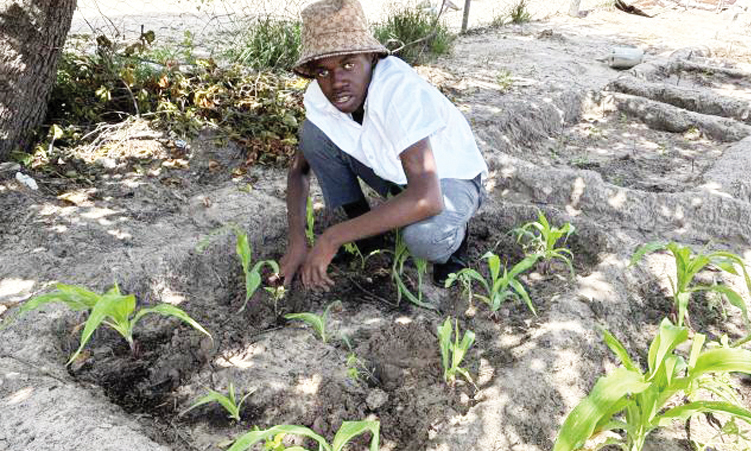
Katjinakatji Combined School in the Kavango West region is using a revived garden to provide pupils with practical agricultural experience and improve hostel food security.
Agricultural science teacher Jopa Uoruunda says the school garden is proving to be a valuable learning environment.
“It is here where our pupils gain hands-on experience in planting, maintaining and harvesting crops,” he says.
The garden, which was revived in 2019, has not been actively used to grow crops, he says.
Seedlings are bought from a local farmer, he says.“We are busy doing practicals for grade 11 and 12 pupils as part of their exams as they are required to complete another paper in agricultural science,” Uoruunda says.
The school is hoping to plant spinach once the seedlings sold by the farmer are ready.
Apart from planting crops, pupils are also researching the effectiveness of different fertilisers, including organic and inorganic types, to see which of the two produces better quality crops, Uoruunda says.
He says the pupils appear to enjoy outdoor learning more.
The garden also contains maize planted by the Grade 9 pupils last year.
This initiative helps bridge the gap between theoretical learning and practical application.
“Through gardening activities, pupils can better understand subjects such as agriculture and environmental studies while developing a deeper appreciation for food production,” he says.
Uoruunda says he prefers exposing pupils to the outside environment rather than spending all their time in the classroom.
“This type of teaching prepares pupils for life in case they do not make it in the corporate world,” he says.
The main aim of the garden, he says, is to eventually produce enough food to supply vegetables to the school’s hostel, which houses about 472 pupils. However, the project is not without its challenges.
Uoruunda says the garden is affected by salty water, which impacts the growth of crops.
Although August 26 Holdings drilled two boreholes at the school, the garden still lacks essential resources such as water tanks, drip irrigation pipes, fertilisers, net shades and seeds due to limited funding.
For the pupils, the garden represents more than just a school project.
Grade 12 pupil Frans Thiremo says he is currently learning about crop production and food security, adding that his dream is to one day establish his own green scheme to grow vegetables for the community and retail outlets.
Another Grade 12 pupil, Elizabeth Thitana, says the purpose of the school garden is to supply vegetables to the hostel and improve the nutritional value of pupils’ meals.
School gardening initiatives in Namibia form part of broader national development efforts, including the Harambee Prosperity Plan, the National Development Plans and the National School Feeding Policy.
The Ministry of Education, Innovation, Youth, Sport, Arts and Culture promotes school gardening as a practical learning tool within agriculture subjects to encourage a culture of crop farming among pupils.
– Nampa
In an age of information overload, Sunrise is The Namibian’s morning briefing, delivered at 6h00 from Monday to Friday. It offers a curated rundown of the most important stories from the past 24 hours – occasionally with a light, witty touch. It’s an essential way to stay informed. Subscribe and join our newsletter community.

The Namibian uses AI tools to assist with improved quality, accuracy and efficiency, while maintaining editorial oversight and journalistic integrity.
Stay informed with The Namibian – your source for credible journalism. Get in-depth reporting and opinions for
only N$85 a month. Invest in journalism, invest in democracy –
Subscribe Now!