


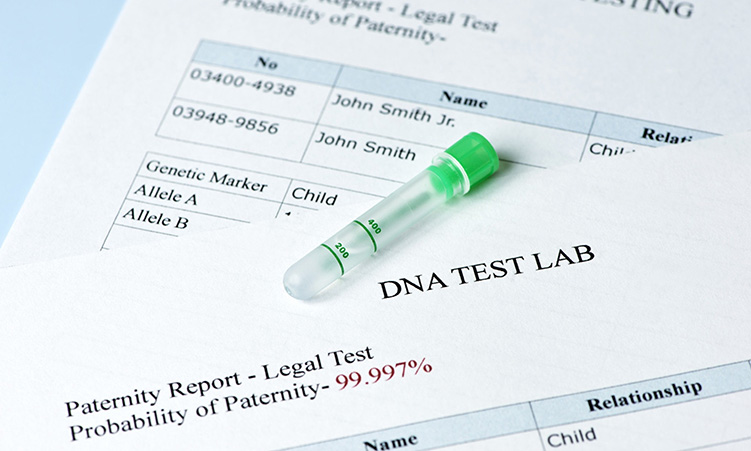
The Ministry of Justice and Labour Relations has ruled out mandatory DNA testing following calls from members of parliament (MPs) to address paternity fraud.
This has prompted debates on gender, rights, and legal fairness.
Ministry spokesperson Edmund Khoaseb says the ministry currently has no plans to make DNA testing mandatory.
This comes after a call by Swapo parliamentarian Pohamba Shifeta for the introduction of compulsory DNA testing for all children born to unmarried couples.
“There is no basis upon which the ministry can address fears of gender biases or infringing upon women’s rights and bodily autonomy,” Khoaseb says.
He cited Section 21 of the Maintenance Act, which provides that DNA testing can be done if a maintenance officer reasonably believes the paternity of any child is in dispute and the mother of that child as well as the person who is alleged to be the father are prepared to submit themselves, as well as that child, to the tests.
Khoaseb said a paternity dispute involves the mother of a child and the alleged father.
“The parents of a child are primarily and jointly responsible for the maintenance of that child. Regrettably, the ministry is not in a position to respond to or address narratives which are not provided for in the law,” he said.
‘GENDERED CONVERSATION’
Human rights activist Linda Baumann says the conversation surrounding paternity fraud and gender justice issues is “very gendered”.
Speaking to Desert FM last week, she said many feel women are prioritised and afforded more rights.
“The justice system is about making sure the system is just for all people, meaning while men’s perception is that this is how they view it, it’s also important for us to understand where the real rooted opinions and perceptions are coming from,” she said.
Baumann said in a patriarchal system men have been given power over women, but at the same time experience stigma if they report being abused by a woman.
“That initially clearly indicates that there is a perception broadly in the country and within men that women are given precedence, which is not the case,” she said.
Baumann said there are ongoing paternity disputes, as well as cases where men do not feel the need for DNA testing, because they are certain a child is theirs.
She asked what would be meant by ‘compulsory’ paternity testing and who would foot this bill. She also asked how unnecessary disputes between individuals would be avoided.
“So there needs to be greater consultation so that we’re able to address these issues,” Baumann said.
Shifeta has clarified that the proposed mandatory DNA testing should be administered free of charge at public hospitals before a child’s birth is officially registered.
The issue was originally raised by Affirmative Repositioning legislator Tuhafeni Kalola, who expressed concerns about women lying about the identity of a child’s father for potential gain.
He said it could have serious effects on men who believe themselves to be fathers, as well as on the involved children.
Speaking to Desert FM last week, Kalola highlighted that the paternity test should only be compulsory if one is unsure.
“It should be compulsory just for fairness, otherwise a lot of crimes in our society are not going to end.
“We should not only look at parents, we should look at the future of the children. It’s really important that that child should carry his or her own paternity identity, which is crucial in life,” he said.
Kalola said Namibians are, however, resistant to change.
“Men might welcome it and yet be scared . . . it might even bring problems,” he said.
In an age of information overload, Sunrise is The Namibian’s morning briefing, delivered at 6h00 from Monday to Friday. It offers a curated rundown of the most important stories from the past 24 hours – occasionally with a light, witty touch. It’s an essential way to stay informed. Subscribe and join our newsletter community.

The Namibian uses AI tools to assist with improved quality, accuracy and efficiency, while maintaining editorial oversight and journalistic integrity.
Stay informed with The Namibian – your source for credible journalism. Get in-depth reporting and opinions for
only N$85 a month. Invest in journalism, invest in democracy –
Subscribe Now!