



WE MUST STOP gambling on genius and start building champions. Namibia’s sporting year could have been better if only administrators and policymakers had done a little more.
Look at what Christine Mboma did, the Welwitschias’ euphoric World Cup qualification, and Lukas Ndafoluma’s triumph.
I’m just saying beneath all this and other achievements lies a disquieting truth: Our greatest successes still feel like miracles.
They are delivered by exceptional individuals clawing their way through structural dysfunction, not carried by a system designed to produce excellence.
It is time we confront the uncomfortable reality that Namibia’s sport is still running on talent, not institutional design.
I’m just saying for years, we have continued to rely on raw talent and we risk it all as we navigate the obstacles of underfunded facilities, administrative crises, and inconsistent support.
The failed qualification attempt, governance turmoil, and avoidable tragedies are not isolated events; they are connected symptoms of a national sport ecosystem that lacks coherence, stability, and professional standards.
I’m saying we celebrate sporadic peaks and conveniently ignore the deep valleys, celebrating athletes who succeed within a system that is skewed against them, instead of demanding a system that supports every athlete.
I’m just saying that if the sixth National Development Plan (NDP6) and Swapo’s manifesto, which both prioritise sport after agriculture, is to take hold in this country, we must treat the collective amnesia among us.
As a country we make a deliberate and intentional decision for a deliberate, engineered pipeline of champions.
We must shift from relying on individual brilliance to designing an ecosystem where brilliance is the expected output, not the improbable exception. And the blueprint already exists, not in foreign models or vague wish lists, but in our own national frameworks.
To transform vision into reality, Namibia must embark on a professionalisation agenda built on four essential pillars.
First, the regulatory overhaul. If we truly expect sport to function as an industry, then athletes, coaches, and technical staff must be protected as professional workers.
This requires re-engineering the National Qualifications Framework to legitimise training in coaching, sport science, officiating, and management. It requires labour law reforms to define contracts, benefits, and dispute mechanisms that safeguard athletes against exploitation.
And crucially, it requires social security reforms to ensure pension, injury, and medical support for individuals whose careers are both high-risk and short-lived.
Secondly, we must construct a financial architecture that moves sport beyond sponsorship roulette. Namibia needs purpose-built financial instruments, offering low-interest athlete development loans, sport venture capital, facility investment funds, and tax incentives for private equity.
In an environment where financial institutions can invest in sport as confidently as they invest in agriculture or mining, we will know we have a real industry. Talent, properly developed and managed, must be recognised as a bankable asset.
Thirdly, governance must become a non-negotiable cornerstone. The crises we have seen in the various sport codes have not been about talent, they’ve been about leadership failures.
Namibia needs a national governance framework for sport, grounded in the King IV principles, to enforce transparency, ethical leadership, athlete representation, and independent auditing. Without governance reform, even the most beautifully designed system will collapse under the weight of mismanagement.
Fourthly, we must build the industry around the athletes. The National Training Authority’s mandate should help generate a pipeline of sport marketers, physiotherapists, performance analysts, stadium technicians, and broadcast professionals.
Champions do not rise alone, they are supported by an ecosystem of skilled people whose expertise multiplies performance and retains value within the domestic economy.
This is a moment of rare opportunity. This year has created an atmosphere of hope, pride, and political alignment Namibia has not felt in years. It is a window, a brief one, to do the hard work of system building while the nation is united behind sport.
The Ministry of Education, Innovation, Youth, Sport, Arts and Culture, together with the health, finance, labour and justice, and urban and rural development ministries must convene a national task force with the sole purpose of removing the legislative and financial barriers that stand between vision and professionalisation.
Namibia has already proven it can produce champions by chance. The next era must be defined by producing them by design.
We must evolve from a nation that prays for the next Mboma to one that intentionally engineers excellence at every level.
The plans exists. The foundation is strong.
The potential is enormous.
What remains is the courage to build the system our athletes deserve.
The future of Namibian sport is not a miracle waiting to happen, it is a structure waiting to be built.
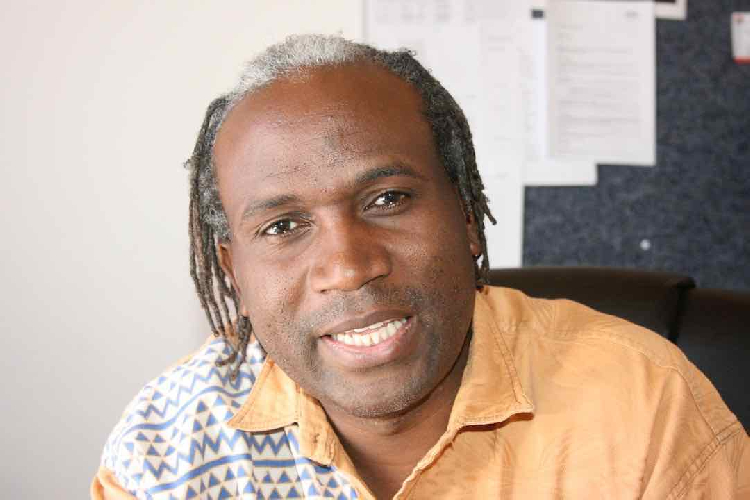
– Mathew Haikali is a managing member of Just Imagine Sports and writes in his own capacity.
In an age of information overload, Sunrise is The Namibian’s morning briefing, delivered at 6h00 from Monday to Friday. It offers a curated rundown of the most important stories from the past 24 hours – occasionally with a light, witty touch. It’s an essential way to stay informed. Subscribe and join our newsletter community.

The Namibian uses AI tools to assist with improved quality, accuracy and efficiency, while maintaining editorial oversight and journalistic integrity.
Stay informed with The Namibian – your source for credible journalism. Get in-depth reporting and opinions for
only N$85 a month. Invest in journalism, invest in democracy –
Subscribe Now!