



Journalists should not be mistaken for brand managers, public relations officers or advertisers for institutions.
They should instead be allowed to perform their constitutional role as public watchdogs serving the public interest.
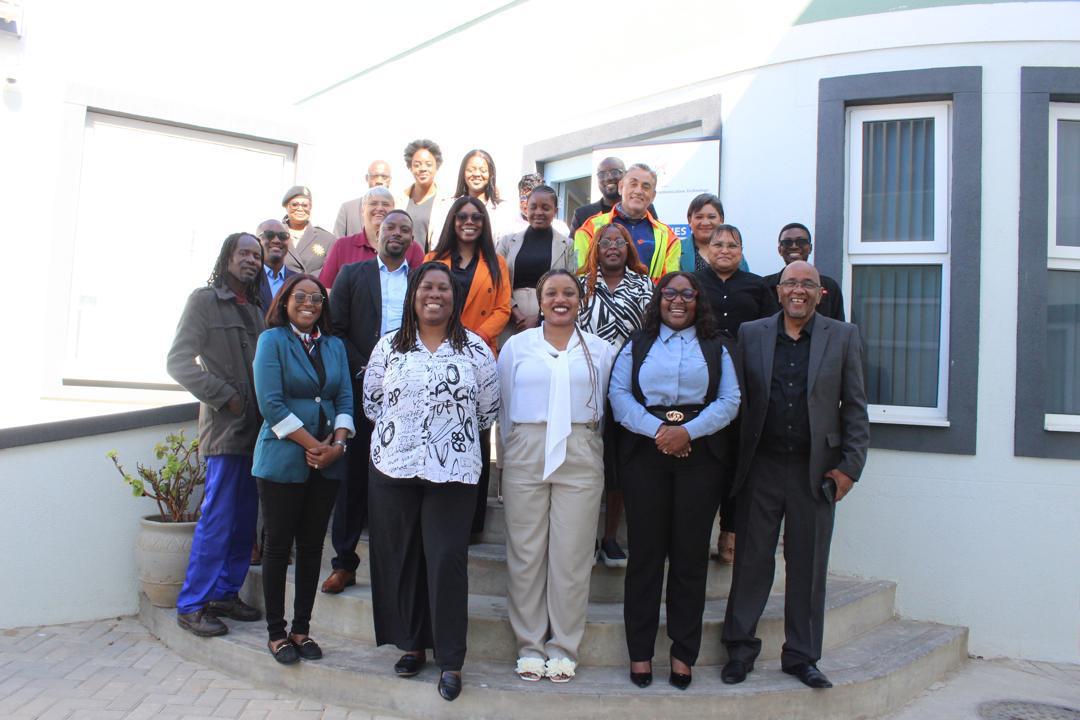
These were the sentiments of former journalist-turned-communications consultant Usi //Hoebeb, who was speaking at the Erongo Media Stakeholders Engagement Conference at Swakopmund on Tuesday.
//Hoebeb cautioned that ethical journalism is compromised when communicators expect the media to merely reproduce institutional messaging or sanitised narratives.
“Journalists are not brand managers. They are public watchdogs. Tension often arises when stakeholders expect favourable coverage rather than fair, accurate and contextual reporting,” he said.
He said ethical gatekeeping requires heightened self-awareness, fairness and responsibility, particularly in Namibia’s close-knit society where journalists, politicians and communicators often know one another personally.
Drawing from his experience in broadcast journalism, //Hoebeb explained that gatekeeping decisions, from editorial meetings to story follow-ups, are influenced by news values such as timeliness, impact, proximity, prominence and public interest, but are frequently applied under pressure, with limited resources and competing priorities.
He warned that gatekeeping becomes dangerous when it shifts from editorial judgement to political protection, commercial shielding or personal bias, noting that ethical journalism must ask whether reporting gives the public a fair, accurate and proportional picture of reality.
//Hoebeb said ethical communication demands transparency rather than “spin”, cautioning against attempts to manage reputations at the expense of accountability.
“We cannot expect the media to act as random ambassadors while journalists are expected to hold power to account,” he said.
Organised and hosted by the Ministry of Information and Communication Technology, the two-day conference aimed to build practical understanding between media practitioners and news makers, improve professional relationships, and strengthen the flow of accurate, timely and credible information to the public.
Discussions focused on how newsrooms operate, gatekeeping and editorial judgement, as well as deadlines and publication cycles.
The conference also addressed media revenue models, ethical boundaries between advertising and editorial content, and the writing of effective media invitations and press releases.
Erongo Regional Council chief regional officer Sem Ntelamo highlighted that strong societies are built on strong communication and that the media plays a vital role in bridging institutions and the communities they serve. – Nampa
In an age of information overload, Sunrise is The Namibian’s morning briefing, delivered at 6h00 from Monday to Friday. It offers a curated rundown of the most important stories from the past 24 hours – occasionally with a light, witty touch. It’s an essential way to stay informed. Subscribe and join our newsletter community.

The Namibian uses AI tools to assist with improved quality, accuracy and efficiency, while maintaining editorial oversight and journalistic integrity.
Stay informed with The Namibian – your source for credible journalism. Get in-depth reporting and opinions for
only N$85 a month. Invest in journalism, invest in democracy –
Subscribe Now!