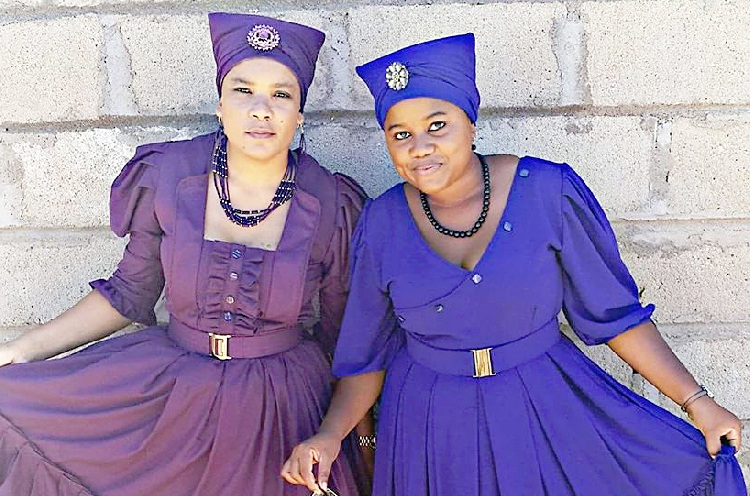
THE Damara dress stands tall with other traditional Namibian attire and has stood the test of time to remain a sought-after garment for both traditional as well as conventional events.
While the older generation pride themselves on keeping these traditional dresses alive in a modern world, younger dressmakers are doing their part as well.
The Weekender this week spoke to one such young lady who has been making Damara dresses from the comfort of her home and has to date amassed a growing client list of women who look to her to provide them with beautiful modern versions of the dress.
Born at Walvis Bay 26 years ago, Jessica Khoetage Pietersen has always shown a deep interest in the traditional dress of her people. She not only admired her culture, she also loved the way her people showed pride in how they dress.
By the time she was old enough, Pietersen made sure that she had a special dress for every occasion and found deep pride in showing off while dressed in one.
“I have always had this love for the dress,” she told us. While she didn’t show any interest in how the dress was made, she one day found herself of a sewing machine that she bought right after moving to Windhoek and decided that it was time to make the dress herself – from scratch. “Back then I didn’t care how people made the dresses. People would make them for me and I didn’t care how it came together,” she said. “One day I decided to make my own Damara dress. I looked at my old dresses and inspected them to see exactly how they were made. I also thought of how I could modernise them,” she recalled.
At the start of her experimental stage of sewing the iconic dress, she worked alongside her friend, Truly Xamises, who also has a passion for making and altering clothes.
“She was more into African prints and I was into Damara dresses,” she said, adding that the two of them didn’t work as partners, but rather as friends who both had a passion for clothing and for sewing.
As a young woman, Pietersen grew up to prefer modern versions of the Damara dress, a fresh take on the historic silhouette of the dress. “Most of the elders I meet like my take on the dress. My aim is not to turn the dress into something different and even if I modernise it, there are details that I always keep,” she said. Some of these details include making sure the sleeves don’t expose the elbow or that the hemline is never without the mandatory ruffles.
“I’m very excited that young women are wearing their traditional dresses,” she said of the many young clients who are taking pride in the dress. A quick peek at her Facebook proves just how popular Pietersen’s designs are.
While she has always loved the Damara dress, Pietersen has struggled with one problem – tying the doek that has to be worn with the dress. “I always struggled with the doek. I suffered a lot with it and even when you see pictures of me when I was younger, you can see the struggle,” she chuckled. This struggle remained despite the efforts of some elders in her community to teach her the skill.
“When I made my first dress, I once again stumbled on the doek and this time I thought I should really do something about it.” Pietersen recalled how she tried and tried to finally get this right, until she figured it out. “I found out that there was an easier way to do it,” she said.
The young designer decided to share this new-found skill with her peers who also struggled to make the doek work. Last year, she hosted her very own workshop to teach both young and old how to tie the doek. “The problem here is that many ladies who cannot tie the doek give up on wearing the dress,” said Pietersen. Her workshop helped a lot of these women, she said, and the feedback has been positive. “I still have women sending me WhatsApp messages and telling me “ousie, I could never thank you enough”.
Pietersen currently makes Damara dresses on a full-time basis. For her, this is a skill that is sustainable and she wouldn’t make a living doing anything else. “My only advice to those who want to do this is that you should have a love for making the dress. My eyes have to be satisfied first before a client says that they love the dress I’ve made for them. The money is the last thing that I worry about.”
To get yourself a unique version of Pietersen’s Damara dress designs, contact her on her Facebook page, JP Designs, or her personal page, Jessica Khoetage Pietersen.
– rukee@namibian.com.na;@rukeeveni on Twitter
In an age of information overload, Sunrise is The Namibian’s morning briefing, delivered at 6h00 from Monday to Friday. It offers a curated rundown of the most important stories from the past 24 hours – occasionally with a light, witty touch. It’s an essential way to stay informed. Subscribe and join our newsletter community.

The Namibian uses AI tools to assist with improved quality, accuracy and efficiency, while maintaining editorial oversight and journalistic integrity.
Stay informed with The Namibian – your source for credible journalism. Get in-depth reporting and opinions for
only N$85 a month. Invest in journalism, invest in democracy –
Subscribe Now!