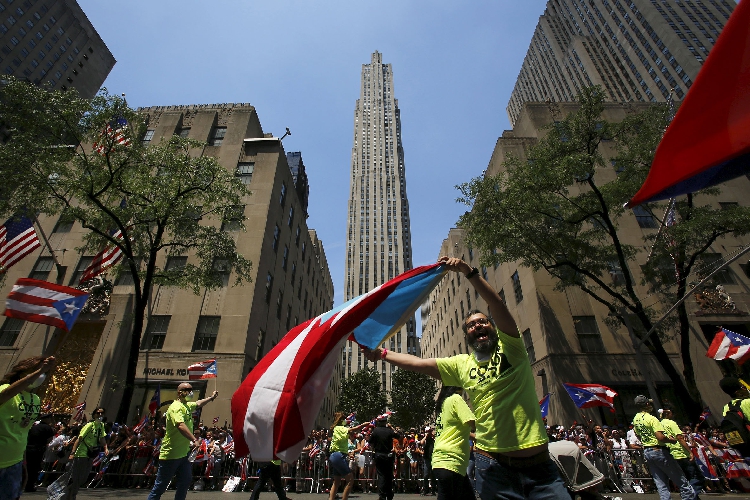
LONDON – Load up Google Maps and zoom in on Manhattan and you will see skyscrapers’ air vents mapped in three dimensions.
Zoom in on South Kivu in eastern Congo, a province as big as Sri Lanka with nearly five million people, and just a few roads are marked.
The Missing Maps Project gets volunteers to mark satellite photographs of undermapped places, building detailed maps which can be used by aid agencies wanting to know how many houses are in a village or trails are in a forest.
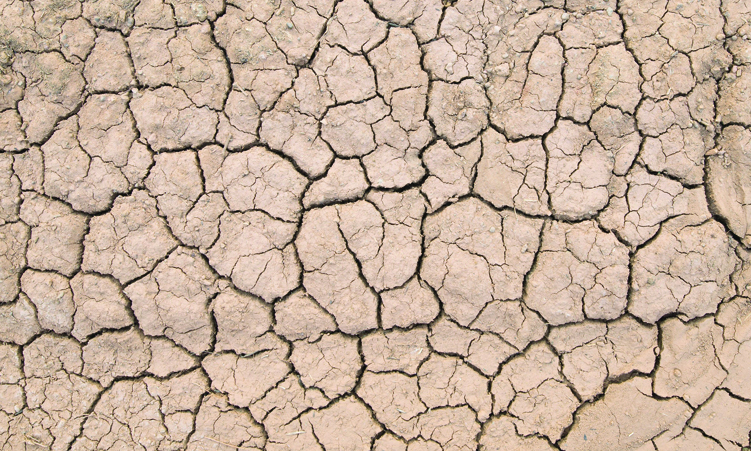
Grant Swanpoel, a software designer for a bank, is spending his evening in a London university classroom, peering at a grainy aerial picture of an arid patch of South Sudan, trying to work out if a cluster of dark pixels is a building or a rock.
“I like maps and wanted to do something for the greater good,” said Swanpoel, a South African attending his first ‘mapathon.’
He consults his neighbours, and decides what he is looking at is a building. He clicks on it and marks it as such.
Missing Maps Project volunteers are allocated a quadrant of land to study, marking everything that looks like a road or dwelling.
A second pair of eyes then has a look and validates the changes. Where possible, field workers eventually follow up on the ground, checking that a grainy line marked as a road doesn’t have a tree or wall running across it.
A few dozen volunteers gather in London for a mapathon each month, spending three hours zooming, clicking and tagging before heading to the pub. Others, both remote mappers and those in the field, contribute from around the world.
The pooled contributions are added to ‘Open Street Maps’, described as a ‘Wikipedia for maps’ by its founder, which provides an open source – free to tinker with – map of the world.
The Missing Maps Project was set up when it became clear Open Street Maps were comprehensive in a ‘place where a geek lived,’ but not in remote parts of the world, said Pete Masters of Medecins Sans Frontieres (MSF), who leads the project.
It is a collaboration between MSF, the Red Cross and the Humanitarian OpenStreetMap Team (HOT). Masters said 3,5 million people not on existing maps have now been mapped remotely by the project, with 1,5 million of these verified by field workers.
The beginners’ group in London is mapping South Sudan’s Unity State, while a more experienced group upstairs is scrutinising the dense forests of South Kivu.
As well as pre-emptively mapping hard to reach places, volunteers also mobilise in response to crises. When a devastating earthquake hit Nepal in April, teams around the world got to work, pulling all-nighters with their laptops.
Kathmandu airport was chockablock, so identifying where helicopters could land was a priority, said Masters.
Nepalis on the ground were recruited and paid to walk the streets to corroborate the data. “If you have the local knowledge, which Google doesn’t have, the data is a lot better,” Masters told the Thomson Reuters Foundation.
The maps can be used by aid workers delivering vaccination programmes, helping them estimate the number of people in a remote settlement by counting the number and size of dwellings.
Anna Gibson, who creates maps for a London borough council, is looking for buildings and trails beneath South Kivu’s blurry canopy. ‘You’re creating something which could be used by somebody,” she said.
As well as having a detailed map, aid workers also need to be able to locate themselves on it. What3words, a London-based company, aims to give every patch of earth an easy-to-remember three word address rather than a complex set of coordinates.
If you are an aid worker, making sure you install a water pump in the right spot and deliver a vaccine to the right village is crucial, but this can be difficult in places where address systems are erratic and inconsistent.
What3words estimates 4 billion people lack a consistent address, and these are not just in the developing world – Ireland and Dubai launched code based address systems for the first time this year.
Words that sound the same but are spelled differently, like sale and sail, are excluded, as are rude words. Densely populated areas get more memorable words, while more obscure ones get assigned to Antarctica or a remote splash of ocean. The system is available in nine languages.
– Nampa-Reuters
In an age of information overload, Sunrise is The Namibian’s morning briefing, delivered at 6h00 from Monday to Friday. It offers a curated rundown of the most important stories from the past 24 hours – occasionally with a light, witty touch. It’s an essential way to stay informed. Subscribe and join our newsletter community.

The Namibian uses AI tools to assist with improved quality, accuracy and efficiency, while maintaining editorial oversight and journalistic integrity.
Stay informed with The Namibian – your source for credible journalism. Get in-depth reporting and opinions for
only N$85 a month. Invest in journalism, invest in democracy –
Subscribe Now!