



THE PARENTS OF the many pupils who have not been placed in schools yet are growing more bitter by the day.
“How did we get here?” we ask. “Was there no foresight? What does the Ministry of Education, Arts and Culture do with all the Educational Management Information Systems reports compiled yearly to not see this coming?”
These are all valid questions, and surely someone should be held accountable. However, the issue is not limited to the lack of classrooms to accommodate the growing number of pupils.
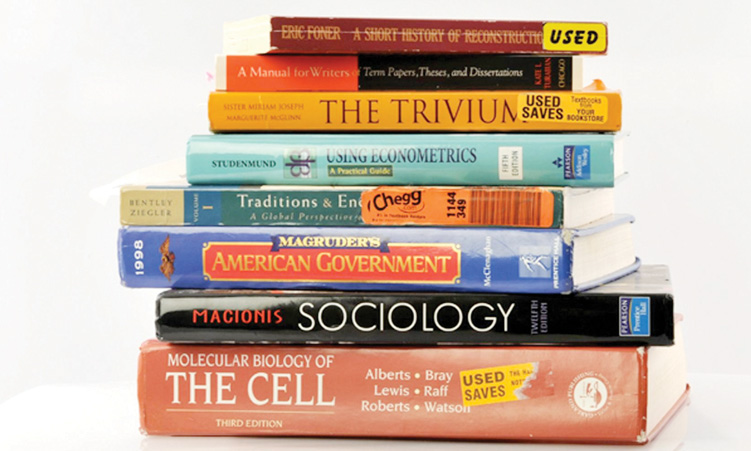
The availability of educational materials at schools has been a problem for years.
With an average textbook-to-pupil ratio now likely being 1:4, it is no wonder that the examination results for the two most important national examinations, NSSCO and NSSCAS, are more worrying with every year passing.
How can a pupil be expected to perform well at the end of Grade 11 if they were shuffled from one grade to the next to avoid overcrowding from 2020 to 2021, and were sharing a textbook with two to three other pupils – if they even got to use a textbook at all?
The Namibian Textbook Policy dated March 2008, available online, has a vision “… to pave the way for pupils in formal education to have equitable access to learning support materials . . .”
The overall objective of this policy was to ultimately achieve a textbook-to-pupil ratio of 1:1 for core subjects by year 2014.
According to the ministry, this ratio was achieved as planned, although only briefly, because the situation deteriorated as soon as the allocation per pupil for textbooks and stationery was cut by 37% for primary school pupils, and 58% for high school pupils in 2017 and 2018, according to Unicef’s Namibia 2017 Education Budget Brief, Children and the Namibian Budget: Basic Education (available online).
For interest’s sake, the 2022/23 textbook budget allocation per pupil has been further cut down to a meagre N$31,43! (MoEAC: Office of the Executive Director).
With figures like these, do we still wonder why the reading culture in the country is so poor?
I fear for the state of our economy in the years to come, when our future leaders get to have a go at making the mentioned “meaningful contribution”.
On the other hand, can it get any worse?
As most of the schools try to cope with the textbook shortage problem by photocopying copyrighted materials, the authors of these materials must feel robbed every day.
How else would you feel if your intellectual property was infringed on in this way, to the point where writing a quality textbook is no longer worth the effort?
Even stationery shops these days display a disclaimer by their photocopier, claiming they will not be liable for any copyright infringement they openly facilitate.
I admit that I too thought I could photocopy a book and save money.
Imagine my disappointment when I had to pay almost three times the price of the actual book available at the bookstore.
It seems the only way we can make some reasonable impact at improving the achievements of our children this school year is to buy the required textbooks ourselves.
While this is not the ideal solution, it is a worthy investment in our children’s future. Otherwise, will we be able to look them in the eye and say: I did everything I could to give you a chance in life?
And to those parents who have more than one child, you have my utmost respect for doing what you can to provide them with this indispensable resource.
Concerned Parent
In an age of information overload, Sunrise is The Namibian’s morning briefing, delivered at 6h00 from Monday to Friday. It offers a curated rundown of the most important stories from the past 24 hours – occasionally with a light, witty touch. It’s an essential way to stay informed. Subscribe and join our newsletter community.

The Namibian uses AI tools to assist with improved quality, accuracy and efficiency, while maintaining editorial oversight and journalistic integrity.
Stay informed with The Namibian – your source for credible journalism. Get in-depth reporting and opinions for
only N$85 a month. Invest in journalism, invest in democracy –
Subscribe Now!