Industry experts want the government to prioritise Namibia’s future as it weighs exempting United States (US)-based Starlink from the 51% local ownership rule.
Nearly a year after it applied to operate in Namibia under its 100% foreign ownership model, billionaire Elon Musk’s satellite internet company remains in regulatory limbo.
While Namibia’s Communications Act caps foreign telecom ownership at 49%, minister of information and communication technology Emma Theofelus has the power to grant the company the right to operate in Namibia without local partners.
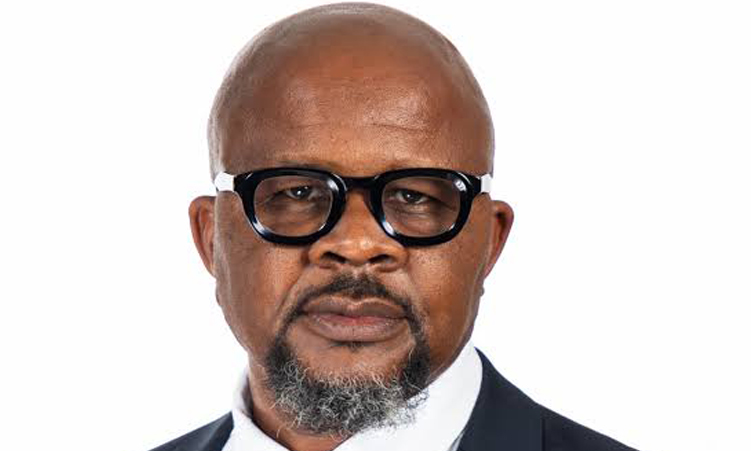
Tech expert Nrupesh Soni says while Starlink could boost rural connectivity where existing internet service providers struggle, exempting it from local ownership laws may undermine efforts to ensure Namibian participation in key sectors.
“If Starlink is exempted, what stops other global players from demanding the same, especially in finance, health, or energy?” Soni says.
He says granting Starlink the licence to operate without local partners also invites risks to data sovereignty.
“With no Namibian ownership, what happens to the information flowing through Starlink?” Soni asks.
Soni suggests if the government is to consider an exemption, it must come with conditions such as mandatory local data centres or data localisation commitments, strategic partnerships with Namibian entities and a commitment to digital skills training – especially in rural areas.
Institute for Public Policy Research Frederico Links says it is not in Namibia’s interest to frustrate and antagonise potential investors and service providers that could be game changing.
“I think it would be short-sighted to insist that major international companies give up significant control or their potential investments before they have made an actual investment. How this situation is handled could send a loud message to potential investors,” he says.
Economist Josef Sheehama says the country should not undermine the goal of local content criteria by accommodating Starlink at the expense of regulatory frameworks.
“Why should Namibia be forced to compromise its development goals for the sake of Starlink?” he asks.
Sheehama says Starlink’s entry into the Namibian market is laudable, but may lead to other corporations having the same requirements.
“We must be consistent in our decision-making if we want to see our economy flourish,” he says.
Kara van den Heever, junior equity analyst at Simonis Storm, says the firm believes there is a compelling and exceptional case for granting Starlink an ownership exemption.
“Starlink is one of the few viable solutions that can bridge digital divide at scale, and without delay . . . No domestic or regional player currently offers a comparable technological solution with similar reach and readiness,” she says.
The firm says the exemption would not equate to bypassing local participation as Paratus Holdings Namibia, already appointed as Starlink’s business services reseller, has a functioning structure for local value creation and service delivery.
Theofelus says no final decision has been made yet on whether Starlink’s licence will be approved without the required local ownership.
“The process is ongoing and we updated Starlink on the status of their application in April,” she says.
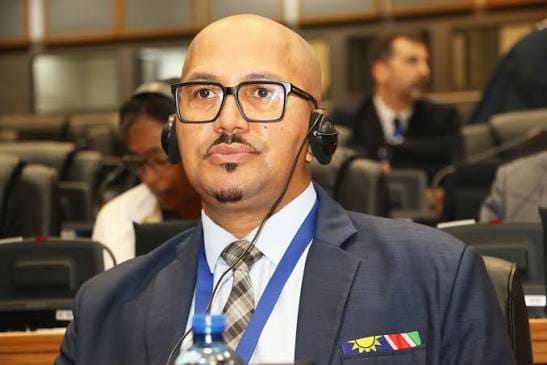
Communications Regulatory Authority of Namibia (Cran) spokesperson Mufaro Nesongano has confirmed that Starlink submitted its application in June 2024 and has requested legal exemption from local ownership.
He says licensing cannot proceed until Theofelus rules on the company’s request.
“The application may take longer, considering Cran must first wait for the ownership exemption application to be finalised by the minister of ICT,” Nesongano says.
Starlink has been facing hurdles in countries like South Africa, which would require it to obtain network and service licences – both requiring 30% ownership by historically disadvantaged groups.
Several countries have, however, allowed Starlink to operate, including India, Somalia, Lesotho, the Democratic Republic of Congo, Bangladesh, Pakistan, and Vietnam.