




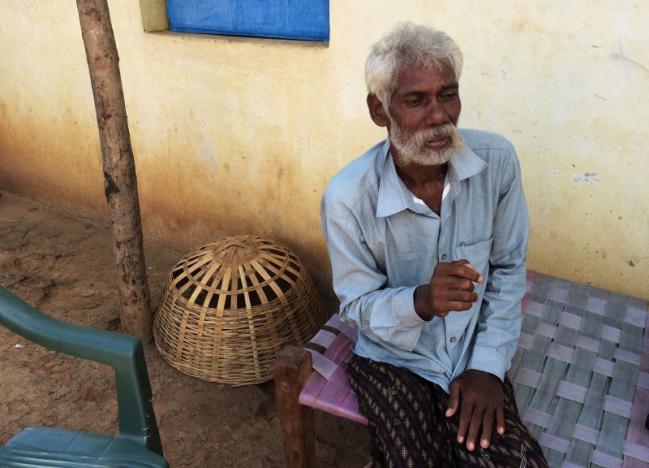
BALANGIR – For three years, Srikrushna Rajhansiya worked 14-hour days making bricks. He hardly ate and barely slept. But no amount of labour was enough to earn his freedom.
It all started with a loan
“We left our village because we were practically starving,” he recalled, sitting outside his hut in Surgul village in India’s eastern Odisha state. “We thought hard work would earn us enough to live with dignity.”
The reality was a form of slavery known as debt bondage, which campaigners say ensnares tens of thousands of labourers each year who are trafficked to brick kilns to feed India’s booming construction industry.
Disregard for labour laws, impunity for unscrupulous agents and brick kiln owners and few alternatives for workers from poor rural regions all made it difficult to break the cycle of exploitation, rights groups say.
Rajhansiya’s story is typical
He took a loan of 18 000 rupees (US$270) from a local labour agent to arrange for his wife, son and daughter to accompany him to work at a brick kiln in the southern state of Andhra Pradesh.
Their hopes of paying back the debt and earning money to take home soon evaporated.
“The first thing they took from us was our phone,” he said. “They also had security round the clock at the facility to make sure we didn’t escape. We were accompanied even to the market.”
At night, all the boys were taken to the brick kiln owner’s house, he added. “He would bring them back in the morning. How could anyone leave their child behind and escape?”
Verbal abuse was constant. Workers who complained or were too sick to work had chilli powder rubbed in their eyes.
Labourers had been promised 250 rupees (US$4) for every 1 000 bricks they made – but they received just 100 rupees.
“We still don’t know how the accounts were kept,” Rajhansiya said. “Every week we were paid a small amount for buying essentials and groceries. The rest we were promised at the end of our work. They said we would run away if all our wages were given on time.”
It was only when a new batch of workers from Odisha arrived that escape seemed possible. They had the number of a new hotline for migrant workers started by the labour department, and a contraband phone.
Rescue was quick. Police raided the kiln, loaded workers onto a truck and drove them to safety. After receiving a release certificate, they were put on a train back home.
But escape didn’t come
with freedom
“I’m still not free of the 18 000 rupees loan I took,” Rajhansiya said. “My son is still working in a brick kiln and my wife may also have to go in a few months. We need to feed ourselves and there seems to be no other option.”
INHERITED DEBT
No official figures exist on the number of people employed to cut, shape and bake clay-fired bricks, mostly by hand, in India’s tens of thousands of brick kilns.
According to a 2015 paper by the Centre for Science and Environment, at least 10 million people work in kilns, many located on the edge of towns and cities, making them easily accessible for urban builders.
According to government data, 282 000 bonded labourers have been freed in 18 states across 172 districts since 1978.
In Odisha’s Balangir district alone, 2 488 workers have been rescued since 2011.
A recent labour ministry statement said there was “no correct estimation of the extent of bondage” but local authorities say they get calls every week on a helpline.
“A year or so back, we rescued 1 200 people being illegally taken to work near Khariar road (in Balangir),” Ashish Kumar Singh, a police officer, said.
“We sent them back to their villages. Two days later, they were missing again. All of them had been taken by a different agent, through a different route.”
A survey of bonded labourers rescued from brick kilns, rice mills and agriculture in the southern state of Tamil Nadu found 61% of respondents had been enslaved for one to 10 years, and 21% for up to 20 years.
The report by Chennai-based Loyola College and rights group International Justice Mission found that more than two-thirds of respondents had taken loans of at least 5 000 rupees (US$75) for a family wedding, hospital expense or just to buy food.
Many had inherited debts from parents and generational bondage was cited as the main reason for getting into the cycle of slavery.
In an age of information overload, Sunrise is The Namibian’s morning briefing, delivered at 6h00 from Monday to Friday. It offers a curated rundown of the most important stories from the past 24 hours – occasionally with a light, witty touch. It’s an essential way to stay informed. Subscribe and join our newsletter community.

The Namibian uses AI tools to assist with improved quality, accuracy and efficiency, while maintaining editorial oversight and journalistic integrity.
Stay informed with The Namibian – your source for credible journalism. Get in-depth reporting and opinions for
only N$85 a month. Invest in journalism, invest in democracy –
Subscribe Now!