


The International Monetary Fund (IMF) has raised concerns about excessive bureaucracy in Namibia, which it says is discouraging potential investors.
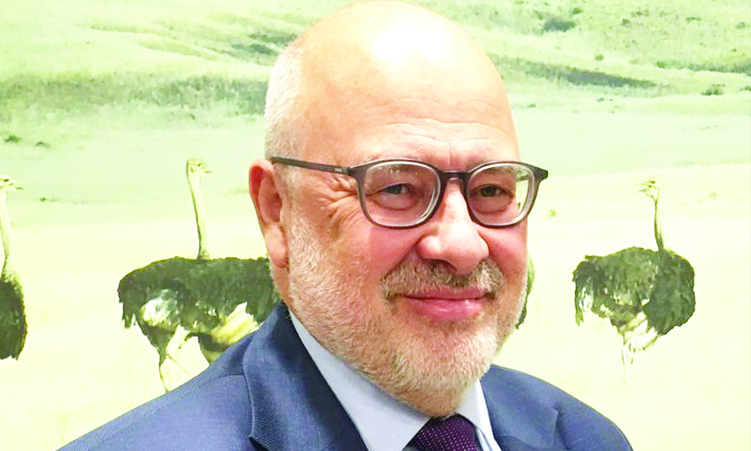
IMF Namibian mission head Jaroslaw Wieczorek yesterday stressed the need for the government to streamline administrative processes and create a more conducive environment for foreign investors.
“There is a general sense that the economy is slightly over regulated. There is too much of an administrative burden. The cost of doing business is elevated,” Wieczorek said.
He pointed out that the excessive paperwork required to conduct business in Namibia has raised concerns among businesses and this administrative burden is currently one of the primary obstacles to the country’s socio-economic development.
Wieczorek further noted that Namibia faces pressing issues such as high levels of inequality and unemployment, which continue to impact social inclusion and income distribution.
Wieczorek maintained the IMF and the World Bank’s classification of Namibia as an upper middle income country.
This is despite the fact that the IMF and World Bank’s classification of Namibia as an upper middle income country continues to irk president Hage Geingob.
“In totality, it’s not a poor country, there are countries where there are poor people and there are very rich countries. The country as a whole is classified as upper middle income. We do not come to upper middle income countries on a frequent basis, only when there is a crisis,” Wieczorek said.
Geingob, during his 2020 state of the nation address, argued that the method of deriving per capita income from gross domestic product (GDP), given Namibia’s small population, is a flawed formula that needs reconsideration.
“We have maintained that while the concept of upper middle income countries is valid, the application, which takes our GDP and divides it by our small population, thus deriving a high per capita income, is a flawed formula that requires urgent reconsideration,” Geingob said at the time.
Wieczorek also raised issues with the risks associated with Namibia’s heavy dependence on the mineral sector, particularly mining, calling for diversification and the creation of value chains to generate high-level jobs in the private sector.
However, Wieczorek commended Namibia for sound macroeconomic policies, highlighting a sustainable level of public debt and well-managed central bank.
The IMF has advised the government to reconsider its spending patterns, with a significant portion (40%) of the budget being allocated to public wages, leaving limited resources for essential sectors like education and social development.
“Namibia has a sustainable level of public debt. It has been high but we assessed the risk and at best it is moderate,” Wieczorek said.
The fiscal deficit decreased from 8,6% of GDP in 2021/22 to 5,3% in 2022/23 due to measures aimed at curbing wage bill growth and improving the performance of state-owned enterprises, with an expectation that the fiscal deficit would remain below 4% of GDP, he said.
Wieczorek stressed the importance of diversifying Namibia’s economy beyond its mineral sector, suggesting investments in green hydrogen, oil and gas exploration and critical minerals processing.
“This reform can include measures such as the introduction of early retirement programmes, aimed at optimising the size and cost of the public sector workforce,” said Wieczorek.
He said restructuring state-owned enterprises to ensure efficiency and financial sustainability is vital and restructuring these entities may involve measures such as improved governance, transparency and performance evaluations to make the entities more competitive and fiscally responsible.
Meanwhile, finance executive director Titus Ndove said Namibia currently does not require IMF financial assistance, as its needs primarily revolve around project financing rather than balance of payment support.
“The needs of Namibia now are not for instance on balance of payment support which IMF offers, so we are more on project financing, and on that basis, we as a country are fine,” said Ndove.
In an age of information overload, Sunrise is The Namibian’s morning briefing, delivered at 6h00 from Monday to Friday. It offers a curated rundown of the most important stories from the past 24 hours – occasionally with a light, witty touch. It’s an essential way to stay informed. Subscribe and join our newsletter community.

The Namibian uses AI tools to assist with improved quality, accuracy and efficiency, while maintaining editorial oversight and journalistic integrity.
Stay informed with The Namibian – your source for credible journalism. Get in-depth reporting and opinions for
only N$85 a month. Invest in journalism, invest in democracy –
Subscribe Now!