



Survivor shares her six-year bleeding ordeal
“I Bled every day for six years. I would repeat every day for six years.”
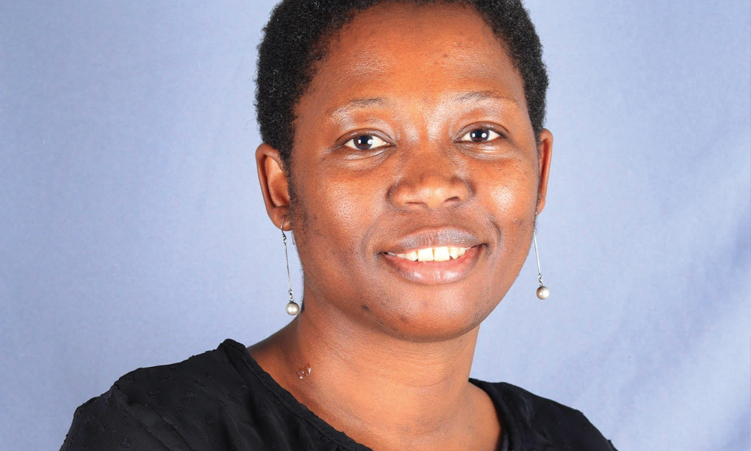
These are the words of endometriosis advocate Mphonyana Verbeeck (39), who has stage four endometriosis.
She says the condition has dramatically altered the course of her life and health.
“I’ve already lost my uterus and one of my ovaries,” she says.
Additionally, the disease has also led to several other chronic health complications, Verbeeck says.
“I got polycythemia [an excessive number of red blood cells] from it, and others. I live now with seven chronic illnesses,” she says.
Verbeeck’s symptoms began when she was a teenager.
“I got my period when I was 15 years old in 2001.
I bled for seven days, and it was heavy from day one until the day it stopped,” she says.
A few months later, things got worse.
“In the fourth month, I started bleeding every day – for six years.”
‘DISMISSED’
Verbeeck says when she sought help at a clinic, her symptoms were dismissed.
“I went to the clinic to seek help and the nurses thought I was lying, that I had aborted illegally,” she says.
Verbeeck says the lack of understanding and others’ disbelief also took a toll on her mental health.
“The first time I tried to take my life was in Grade 11. I was just tired of not being believed,” she says.
March is Endometriosis Awareness Month, a global campaign that shines a spotlight on the condition.
According to the World Health Organisation, endometriosis occurs when tissue similar to the lining of the uterus grows outside the uterus.
“Because it is outside the uterus and there’s no exit of that tissue, it starts shedding onto other organs, and then it starts growing because the blood is just there floating around your other organs,” she says.
The tissue can eventually cause organs to attach to one another, she says.
There is currently no cure for endometriosis.
“There is no known cause of endometriosis, and therefore there is no cure. There are treatments to manage the symptoms, but no cure,” she says.
Verbeeck says the condition presents with different symptoms.
“The most common are severe abdominal bleeding and pain during periods,” she says.
According to Verbeeck, the pain associated with endometriosis can be severe.
She also highlights the condition’s impact on fertility.
“Endometriosis is responsible for at least 40% of infertility issues in a woman’s body,” she says.
Verbeeck is now using her experience to raise awareness of the condition through the Sisters Against Endometriosis organisation in Namibia.
The organisation, established in 2023, supports women living with the condition and provides a platform for them to share their experiences.
To mark Endometriosis Awareness Month, the organisation will host an awareness event at the Namibia University of Science and Technology (Nust) on 18 March.
“So, from 11h00 to 15h00, we’ll be hosting an awareness campaign together with the Nust clinic,” she says.
Verbeeck says the event will include health professionals who will provide medical advice, while women living with endometriosis will share their stories.
“We will be sharing our stories with the attendees, who will be coming to our booth between classes,” she says.
Verbeeck urges women not to ignore symptoms and to seek medical help early.
“We don’t need to be ashamed.
Your body is important. Your health is important. Seek help,” she says.
Verbeeck encourages men and families to better understand the condition.
“Men, we need men to listen to this, because men are married to women. Listening and understanding may help you manage your wife’s condition better,” she says.
Members of the public attending the event are encouraged to wear yellow, the global colour of endometriosis awareness.
‘COMPLEX CONDITION’
Dr David Emvula is a specialist obstetrician and gynaecologist at Ob-Gyn Practice, who says endometriosis is a complex gynaecological condition characterised by the abnormal growth of endometrial tissue outside the uterus.
He says the uterus opens into the abdomen through tiny tubes known as fallopian tubes.
During menstruation, menstrual blood containing the endometrium layer may travel into the abdomen through the fallopian tubes.
“How endometriosis develops continues to evade medical knowledge as only some women develop the disease.
It is believed that once the endometrium is in the abdomen, it has the potential to grow outside the uterus.
“Once implanted, the endometrial tissue outside of the uterus responds to the woman’s hormones, causing menstrual pain every month.
Endometriosis causes internal organs such as the intestines and uterus to be attached to each other,” he says.
In an age of information overload, Sunrise is The Namibian’s morning briefing, delivered at 6h00 from Monday to Friday. It offers a curated rundown of the most important stories from the past 24 hours – occasionally with a light, witty touch. It’s an essential way to stay informed. Subscribe and join our newsletter community.

The Namibian uses AI tools to assist with improved quality, accuracy and efficiency, while maintaining editorial oversight and journalistic integrity.
Stay informed with The Namibian – your source for credible journalism. Get in-depth reporting and opinions for
only N$85 a month. Invest in journalism, invest in democracy –
Subscribe Now!