


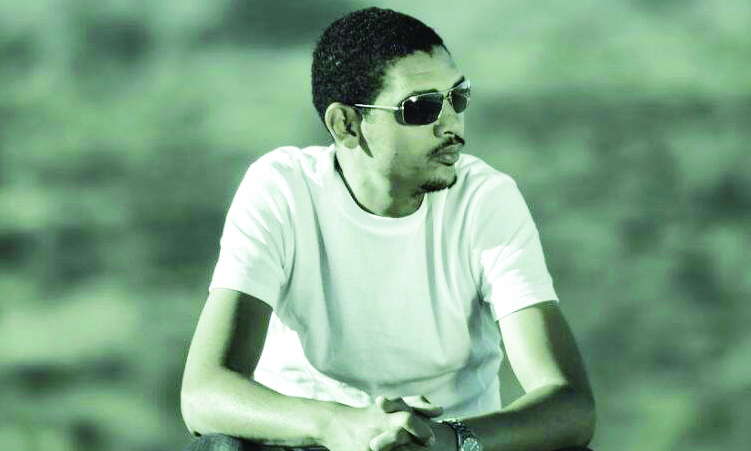
Twenty years ago, Elvo Diergaardt was at the pinnacle of his career, producing award-winning hits. Now he finds himself living in a shack, with barely enough money to buy food for his wife and children.
On an overcast Monday morning at the 8ste Laan area of Windhoek, Diergaardt welcomes The Weekender into his home.
In the shack that he shares with his wife and children, he settles into a chair behind his work station.
This is where he now does his production work.
“I first discovered my love and passion for music in the early 90’s as a rapper, part of a group that used to be called Noble Lashes,” Diergaardt (45) says.
Born at Rehoboth, he is known to most as ‘Dr Mavovo’.
“I excelled in my career, scooping an award in France in 1998,” he recalls.
Upon completing his high school education, Diergaardt pursued theoretical knowledge in music production through the College of the Arts. “Unfortunately, I could not complete my course due to some challenges I was faced with at the time,” he says.
Despite the challenges, Diergaardt chose to set up his own recording studio.
He collaborated with most of the music industry’s early innovators, he says. “I have worked with many artists, some of whom most people may not even remember any more,” he says.
“I remember working with artists like Cool Style from Katima Mulilo, Dolla 6, The Dogg, Gazza, Pablo, Leghetto, Exit and the likes,” he says.
“Those were the glory years of my life. Back then, everything was fine,” he says.
Diergaardt says he acknowledges that over the years, the general approach to music may have evolved, but he is convinced that musical evolution is not the reason for his rough times currently.
“I am still relevant in the industry. I still have the creative drive to combine old and new methods to make great sounds.”
TRYING TIMES
Six years ago, Diergaardt noticed a significant decline in his clientele, which he attributes to a fall in CD sales.
“Jukeboxes played a big role in the music industry in the early 2000s, as most artists sold their CDs and generated revenue,” he says.
Diergaardt says he began scouting for more opportunities to keep his boat afloat for the sake of his family.
It was then that the College of the Arts approached him with a part-time teaching opportunity.
“I had to find a way to put bread on the table. I have a wife and six children to feed,” he says.
His teaching days at the College of the Arts were short-lived, as three years later, the Covid-19 pandemic came along and turned things around. “I was let go from my teaching position after three years. I’d like to think it was because of the pandemic,” he says.
“People were no longer accustomed to me, things were different and I had to adjust. My life was a mess,” he recounts.
“There was nowhere to go, I didn’t know where to turn.”
As the circumstances became increasingly dire, Diergaardt became overwhelmed and decided to publicly seek help.
“When I was at my lowest point, I reached out to my friends, but in most cases, they were not available to help,” he says.
Although he occasionally feels he has lost his pride as a man for being unable to provide for his loved ones, he is grateful that they have stood by him. “When I am feeling down and have nothing to look forward to in life, my wife holds my hand and reinstils the faith in me and that has kept us going,” Diergaardt says.
He says he expects those he once helped to be willing to come to his aid when he needs it, without him having to beg them. “Many artists have approached me in the past with their own struggles and negotiated with me to produce for them at discounted prices, and I was always keen to help,” he says. “So I just thought that if I also reached out, asking for help, they would be there for me, but that was not the case.”
Despite rough times, Diergaardt is looking forward to better days ahead.
“God is real and he always comes through, but you must have faith,” he says.
SAFETY NET
Contacted for comment, Venaune Kandukira, popularly known as ‘Big Ben’, says there is a need to put systems in place to prioritise artists’ welfare.
“Elvo’s case is just a drop in the ocean,” Kandukira says.
He says many Namibian artists live in abject poverty and rely on money they make from performances and events.
“We need to create a safety net for everyone in the industry,” he says.
In addition, Big Ben believes people in the entertainment industry require financial counselling.
Also speaking to The Weekender, Namibian Society of Composers and Authors of Music (Nascam) board member Erna Chimu echoes Big Ben’s words.
“There is a need for a union, specifically for Namibian artists,” Chimu says.
According to Chimu, the government needs to recognise music as a form of work as well.
Additionally, she says measures need to be put in place for artists to be registered with the Social Security Commission.
“In case something happens to you as an artist, you can at least be paid some benefits,” she says.
“As a board member of Nascam and an artist as well, we have been trying to have some negotiations and putting some strategies in place to help artists when they are faced with financial difficulties,” Chimu says.
In an age of information overload, Sunrise is The Namibian’s morning briefing, delivered at 6h00 from Monday to Friday. It offers a curated rundown of the most important stories from the past 24 hours – occasionally with a light, witty touch. It’s an essential way to stay informed. Subscribe and join our newsletter community.

The Namibian uses AI tools to assist with improved quality, accuracy and efficiency, while maintaining editorial oversight and journalistic integrity.
Stay informed with The Namibian – your source for credible journalism. Get in-depth reporting and opinions for
only N$85 a month. Invest in journalism, invest in democracy –
Subscribe Now!