



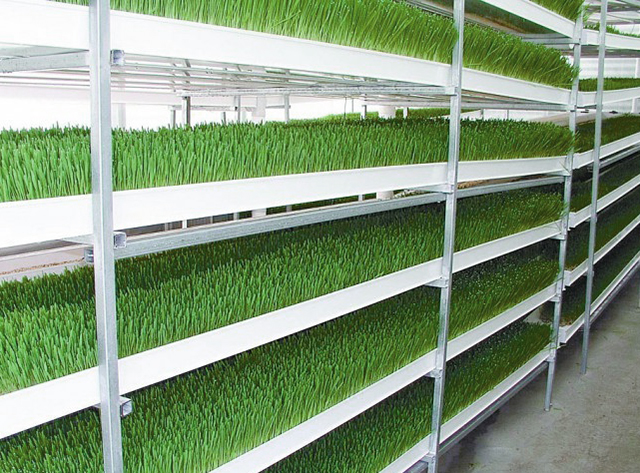
THE Namibia National farmers Union will set up barley hydroponic fodder production systems in seven regions under a new project to assist livestock farmers in drought-affected agro-pastoral communities to get supplementary animal feed.
The Namibia National Farmers Union (NNFU) is one of the implementing partners of the N$10 million six-month United Nations funded project.
The project, themed ‘Emergency Livelihood Support to Drought Affected Communities in Namibia,’ is funded by the United Nations Central Emergency Response Fund (CERF) through the Food and Agriculture Organisation (FAO) in Namibia.
At the one-day workshop on the project held at Okahandja on Tuesday last week, NNFU’s finance and administration manager, Inomusa Nyati, said the union’s role is to set up the systems in the Hardap, Ohangwena, Omaheke, Omusati, Kunene, //Karas and Erongo regions.
The farmers who will be trained in fodder production will be expected to train others in return.
Nyathi explained that 36 extension officers from the agriculture ministry have been trained on the system and they will also train the selected farmers.
“The extension officers have to go out there to train farmers and must be present when the structure are being set up,” said Nyati.
Eleven hydroponic fodder production systems will be set up in //Kharas, eight in Ohangwena, Omaheke (9), Kunene (12), Erongo (9), Omusati (9) and Ohangwena (8).
Each hydroponic system will produce fodder every seven days and sustain 80 large stock (cattle). The identified beneficiaries will collect the fodder every month from the centres where the project will run from January to July 2020.
Other partners in the implementation of the project are FAO Namibia, the ministry of agriculture and the Namibia Emerging Commercial Farmers Union (NECFU).
The project complements government drought relief interventions.
The targeted farmers will be identified by the regional councils with the support of agriculture extension officers.
The FAO representative in Namibia, Farayi Zimudzi, said the project was initiated in late December 2019, to target five regions (Ohangwena, Omusati, Kunene, Hardap and Omaheke).
However, there were other areas where rains were poor, like Erongo and //Karas regions and they were included.