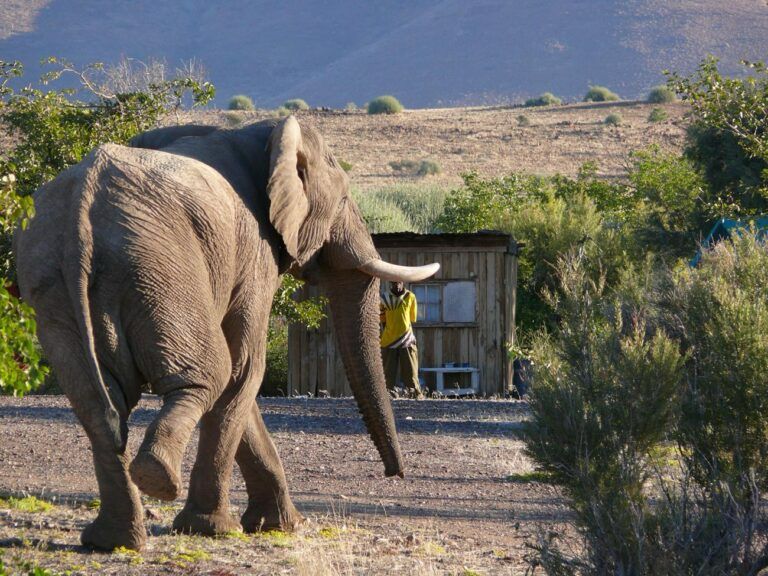
Kunene and Zambezi conservancies are facing rising human-wildlife conflict among other challenges such as poaching and financial mismanagement. This was found by a recent parliamentary report which explored the challenges faced by conservancies in these regions.
A delegation visited eighteen conservancies in both regions between January and June 2023, during which they met with relevant stakeholders including conservancy leaders, traditional leaders and community representatives.
It was found that climate change has increased human-wildlife conflict significantly. Due to long periods of drought, wild animals are forced to migrate bringing them into closer contact with humans, where they can destroy homes and infrastructure and attack domesticated animals.
In the meeting with members of the Torra Conservancy, lawmakers were urged to review the laws governing such conflict. The conservancy argues that it is becoming increasingly difficult to convince community members of the importance of co-existing with wildlife, while they continue to lose livestock and vital infrastructure such as water points.
In Otuzemba, farmers living within the boundaries of the conservancy claim they have not received compensation for losses from wildlife for more than six years due to lack of money and coordination between the conservancy and the Ministry of Environment, Forestry and Tourism.
The Anabeb and Sesfontein conservancies, on the other hand, were facing a trend of people settling in areas designated for wildlife. They decried the environmental ministry’s slow response to emergencies regarding wildlife and suggested that predators such as lions be relocated to other areas.
The report recommends that the ministry ensure that all animals that can cause human wildlife conflict be included in the policy.
Environment minister Pohamba Shifeta recently announced that the offset payment for cattle loss under the Human-Wildlife Conflict Self-Reliance scheme will be adjusted from N$5 000 to N$8 000 as of 1 April.
In addition, numerous conservancies were found to be struggling with financial mismanagement. The report suggests that the ministry should offer basic accounting and bookkeeping training to financial officers in conservancies in order to ensure effective handling of finances.
In an age of information overload, Sunrise is The Namibian’s morning briefing, delivered at 6h00 from Monday to Friday. It offers a curated rundown of the most important stories from the past 24 hours – occasionally with a light, witty touch. It’s an essential way to stay informed. Subscribe and join our newsletter community.

The Namibian uses AI tools to assist with improved quality, accuracy and efficiency, while maintaining editorial oversight and journalistic integrity.
Stay informed with The Namibian – your source for credible journalism. Get in-depth reporting and opinions for
only N$85 a month. Invest in journalism, invest in democracy –
Subscribe Now!