



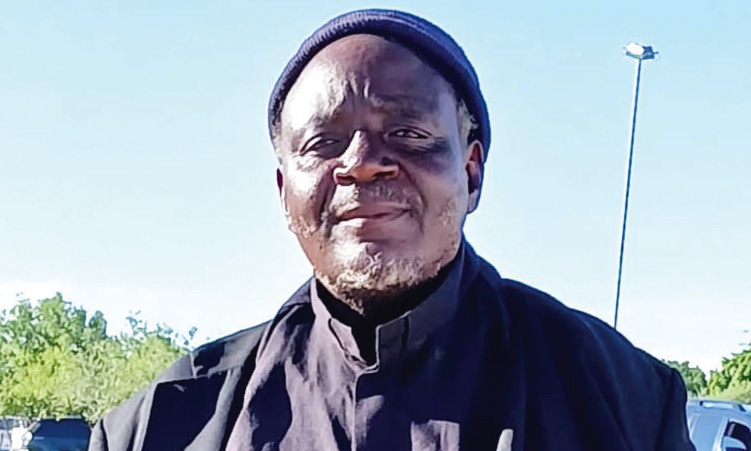
When he was young, Uakalenda Mbinge (54) recalls being taught in school that Sam Nujoma was a lion – a fearless leader with a mythical presence.
Yesterday, Mbinge embarked on an extraordinary journey to pay his last respects to Namibia’s founding president, Sam Nujoma.
“Our teachers told us Nujoma was a lion. They said he had a tail and would never return to Namibia,” Mbinge said, reflecting on the status of the man who led Namibia to independence.
In one day, Mbinge travelled 330km from his home at Epupa in the remote Kunene region to Etunda village in the Omusati region, where Nujoma’s memorial service was held yesterday.
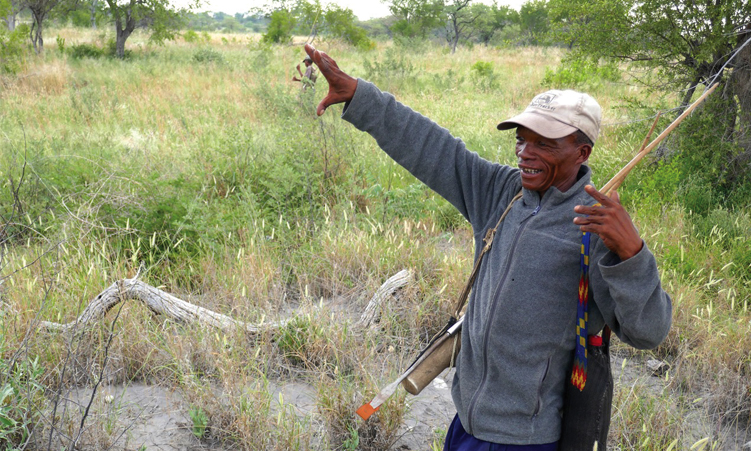
Dressed in traditional Himba attire, Mbinge shared the journey he made to honour the man he calls “brave”.
He had to cough up N$170 for transport from Epupa to Okahao.
“I woke up in the morning and hiked to Opuwo. From Opuwo I hiked to Okahao. I arrived in the afternoon at around 16h00,” he said.
Mbinge said he would have to travel back to Opuwo after yesterday’s memorial.
This was not the first time Mbinge had travelled a great distance to honour Nujoma, having also attended his mother’s funeral in 2007 and regularly visiting the Nujoma family for birthday celebrations.
Nujoma has taught him a lot, he said, including how to keep the peace in Namibia.
Before he met Nujoma in person many years ago, he would see cartoons depicting him in newspapers.
Mbinge is one of many who travelled from various destinations yesterday to pay their last respects to the founding president.
Among the mourners were former president Hifikepunye Pohamba, who shed some tears upon viewing Nujoma’s remains.
The arrival of Nujoma’s body at Andimba Toivo ya Toivo Airport yesterday was emotional, with former People’s Liberation Army of Namibia (Plan) fighters singing struggle songs.
Onlookers included hundreds of pupils and elders lining up along the Oshakati-Ondangwa and Oshakati-Okahao roads.
As part of the official farewell, Nujoma’s body will be taken to eight regions.
These are the Omusati, Ohangwena, Kavango East, Zambezi, Otjozondjupa, Erongo, //Kharas and Khomas regions.
Nujoma was the last of a generation of African leaders who fought colonial rule. The white-bearded leader was Namibia’s president from 1990 to 2005.
After his death, the government declared 21 days of national mourning, with flags countrywide flying at half-mast.
Nujoma’s long-time friend and retired Evangelical Lutheran Church in Namibia (Elcin) bishop, Kleopas Dumeni, yesterday described him as “a good adviser and experienced leader”.
Retired Elcin pastor Tshapaka Tshakapolo suggests that a statue of Nujoma be erected at Etunda.
Former City of Windhoek chief executive Niilo Taapopi at the occasion said Nujoma did a lot for Namibia and Africa.
Omusati governor Erginus Endjala described Nujoma as a tactician and “supreme” leader.
As the tributes continued, Nujoma’s family also paid heartfelt homage to the man they knew, beyond his public persona.
His sister, Julia, remembers her brother with deep affection, describing him as “gold”, and a brave and fearless soul.
“He was like our late father and mother,” she said, “unwavering in his courage. The apartheid government wanted him, dead or alive, yet he stood firm.”
Nujoma is considered the key architect of Namibia’s independence.
In the late 1970s, he led talks with major Western powers, which led to United Nations (UN) Security Council Resolution 435. Passed in September 1978, the resolution set out a plan for free and fair elections in Namibia.
Turning this diplomatic coup into reality took another decade. South Africans dithered, and then United States president Ronald Reagan insisted that Cuba first withdraw from Angola.
Namibia’s independence process got off to a rocky start on 1 April 1989 when Nujoma ordered Plan combatants to cross from Angola into Namibia to report to UN officials.
The South African security services gunned them down.
Nujoma returned home to a hero’s welcome on 14 September 1989.
His 89-year-old mother and the rest of the Swapo leadership at the time greeted him at Windhoek’s airport.
He immediately hit the campaign trail for UN-supervised elections, which were then only two months away.
Swapo won 57% of the vote in that election, and grew only more popular in the next one.
Nujoma’s leadership was not without flaws.
In 2004 he dismissed his foreign affairs minister, Hidipo Hamutenya, in the run-up to the Swapo extraordinary congress.
At the Swapo electoral college in October 2004, Nujoma condemned certain Swapo leaders as “agents of imperialism”.
Some of them, like the late Hamutenya and former deputy minister Jeremiah Nambinga, left Swapo and started the Rally for Democracy and Progress in November 2007.
Nujoma’s last public appearance was at former president Hage Geingob’s memorial and burial last February.
In an age of information overload, Sunrise is The Namibian’s morning briefing, delivered at 6h00 from Monday to Friday. It offers a curated rundown of the most important stories from the past 24 hours – occasionally with a light, witty touch. It’s an essential way to stay informed. Subscribe and join our newsletter community.

The Namibian uses AI tools to assist with improved quality, accuracy and efficiency, while maintaining editorial oversight and journalistic integrity.
Stay informed with The Namibian – your source for credible journalism. Get in-depth reporting and opinions for
only N$85 a month. Invest in journalism, invest in democracy –
Subscribe Now!