



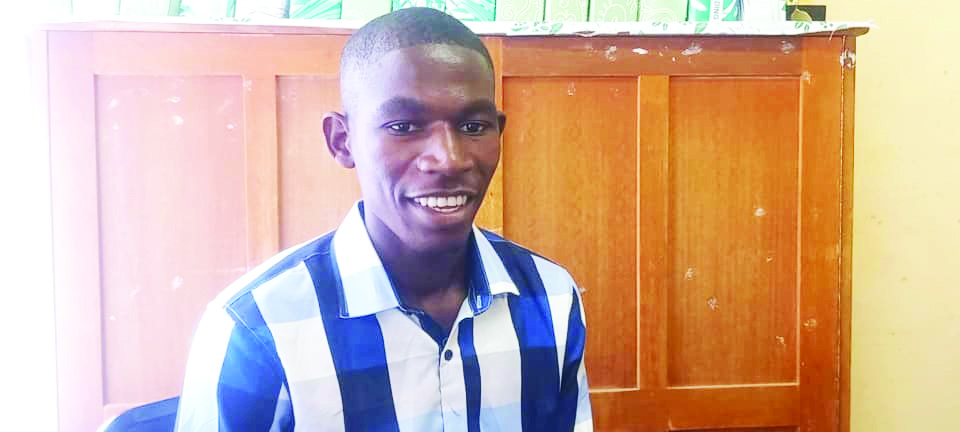
David Dinyando (26) recalls the days he arrived at school soaking wet, surrounded by teasing classmates. His books were soaked, his homework not done and he was late for class.
Such days tempted him to give up on his education.
“I had to decide: drop out or continue,” Dinyando says. “I continued.”
The Namibian last month reported that over 152 pupils of the Kavango East region’s Mukwe and Kangongo circuits commute on canoes through the river to attend classes on the other side of the shore.
Dinyando had been one of those children.
Some of the children are from the Mushangara, Ngongo, Tjova, Kambamba and Ditemwange villages in Angola.
School authorities warn that these pupils risk encountering crocodiles or hippos, and face the threat of drowning when the river floods during the summer.
Dinyando, who is from Mushangara village, says he is one of the few who have beaten the odds.
Despite the daily challenge of crossing the river and repeated failures, he completed Grade 12. Today, he is in his final year of studying to become a teacher at the University of Namibia’s Katima Mulilo campus.
Dinyando says paddling daily from his village to Kake Primary School on the other side of the Kavango River depended on the availability of a canoe, either his family’s or a neighbour’s.
“Homework was often left undone, and weekends were spent caring for cattle and milking. Even small requests, like a bicycle to ease the commute, went unmet,” he says.
Like many children using canoes to go to school, Dinyando’s schooling was marked by constant interruption.
“I repeated grades and changed schools as inconsistent teaching and circumstances set me back,” he says.
“Sometimes I stayed with my mother, sometimes my father, most of the time with my grandmother,” he told The Namibian.
The family owned one canoe, bought with his mother’s savings. Over time, it wore out. For a few years, he relied on a friend’s canoe, but then that help ended.
“There were mornings where all the canoes were already on the other side. I had to wait,” he says.
WRITING EXAMS
In 2015, he transferred to Max Makushe Secondary School in search of better opportunities, only to face new challenges when Namibia introduced a revised curriculum.
Pressure from home and encouragement from his grandmother motivated him. He says her death, shortly after he wrote his Grade 11 exams, was difficult. “I wrote that examination in tears,” he says.
Dinyando describes his late grandmother as a steady presence who offered emotional and occasional financial support, often telling him she could “see him as a teacher” – his chosen profession.
“After passing Grade 12, the question of funding loomed. With limited family support, I took a gap year in 2023. An uncle gave me N$400 to register for additional exams and avoid stagnation,” Dinyando states.
His mother scraped together the funds, and with temporary accommodation from a relative at Katima Mulilo, he enrolled at university. He says registration proved difficult, involving long travel, incomplete information and high living costs.
At university, independence became essential.
“Back in high school we had to wait for someone to push us to study; at university you must find your own notes, get information yourself,” he says.
External support has been insufficient.
“I applied for aid, but the money is not enough. When it comes, I have to divide it into all the expenses, including my sisters’ school and food at home,” Dinyando says.
Dropping out remains a constant temptation, he says.
His mother, Domitila Muyamba, says crossing the river was difficult for her son. “I used to work at Ariamsvlei to put bread on the table. When it’s time for work, he stays with his grandmother,” Muyamba says.
“We saved money for over eight months from selling traditional alcohol and temporary work to buy a canoe that cost us N$2 000,” she says.
RISKING LIVES FOR EDUCATION
Joseph Dinyando, one of Dinyando’s former pre-primary teachers, says these challenges have persisted for a long time.
The journey itself poses serious dangers, says Joseph.
“There were hippopotamuses in the river, and they would destabilise the canoe. Because of this, Dinyando was absent some days during the week, and in the end, he got lower marks, not because he was not capable, but because of those challenges,” he says.
According to his former teacher, Dinyando is not alone, as many other pupils in the area face the same barrier.
“The school management knew about the situation. They reported these matters to the headman and to the ministry of environment, but nothing has been done so far,” the teacher says.
He emphasises that pupils from Mushangara village need urgent help with safe transport so they can attend school without risking their lives.
In an age of information overload, Sunrise is The Namibian’s morning briefing, delivered at 6h00 from Monday to Friday. It offers a curated rundown of the most important stories from the past 24 hours – occasionally with a light, witty touch. It’s an essential way to stay informed. Subscribe and join our newsletter community.

The Namibian uses AI tools to assist with improved quality, accuracy and efficiency, while maintaining editorial oversight and journalistic integrity.
Stay informed with The Namibian – your source for credible journalism. Get in-depth reporting and opinions for
only N$85 a month. Invest in journalism, invest in democracy –
Subscribe Now!