



Analysts say nation-state likely to be a no-show
The German government has been notified to appear in the Namibian High Court regarding the joint declaration of Namibia and Germany on the 1904-08 genocide.
An application to have the Federal Republic of Germany joined as the sixth respondent in a pending case about the joint declaration is scheduled to be heard by three judges in the Windhoek High Court on 7 October.
Current respondents cited in the case are the speaker of the National Assembly, the National Assembly itself, the president, the Cabinet and the attorney general.
The applicants in the matter are now asking the court to be allowed to also join the Federal Republic of Germany, the Council of Traditional Authorities and 24 of Namibia’s traditional authorities as respondents in the case.
This forms part of an attempt by the Landless People’s Movement, the Ovaherero Traditional Authority, the Afrikaner Traditional Authority and nine other traditional authorities to have the genocide joint declaration that Namibia and Germany concluded in 2021 declared as unlawful and invalid.
Namibia and Germany in 2021 concluded a joint declaration in which Germany acknowledged that what happened in the German colony of Namibia was a genocide “in today’s perspective”.
In terms of the declaration, Germany was set to apologise through its president for atrocities in Namibia and was to give Namibia 1.1 billion euros for reconstruction and reconciliation.
The funds would be disbursed over a period of 30 years and be aimed at development projects to help the descendants of genocide victims.
The Ovaherero Traditional Authority’s paramount chief, Mutjinde Katjiua, says this will be the first time that an erstwhile “colonial Western Power” will be dragged to court in its former colony to answer for colonial crimes.
“That’s the order of the High Court. They must show up, if they don’t the court process will take its course,” Katjiua said on Saturday.
The applicants are challenging the acceptance of the settlement, saying the declaration and agreement with Germany do not address the atrocities committed.
They also say the Namibian government should have consulted the affected communities intensively.
“We shall keep the flame burning. Germany will defend itself on the basis of diplomatic and sovereign immunity, while we shall argue that immunity will not be applicable,” the chief said.
Katjiua reiterated that it is a developing case and a first of its kind.
He said the watershed case is closely being watched by the rest of the African continent, the Caribbean and Western countries.
“They are closely watching because it will pave the way, it will be lessons for the rest of the previously colonised nations. Also the West is watching it because they want to see how they can manage the transition or manage the case so that it would not have repercussions to those countries that colonised the rest of us,” he said.
The Nama Traditional Leaders Association’s coordinator for international relations, genocide and reparations and fourth-generation genocide survivor, Sima Luipert, says if Germany refuses to come to court, it will damage its international reputation as a nation state committed to upholding universal principles of justice and human rights.
Luipert questions why Germany would hide from the courts if the country has truly committed itself to the so-called reconciliation process.
“We will see increasing local and international pressure from civil society to hold Germany accountable for not only the crimes committed, but the impoverishing results of the crime. Its reconciliation attempts will ring hollow,” she says.
Luipert says the court proceedings demonstrate the determination of genocide descendants to achieve justice.
She adds that their determination is based on the lasting political, socio-economic, spiritual and cultural damage caused by the genocide.
“A people who live daily with the pain and misery of injustice are a people determined to clear their collective names and the immeasurable losses they’ve suffered,” Luipert notes.
Meanwhile, the German government says it will not make any reparation payments to Germany’s former colonies, since there was no international criminal law at the time of colonial-era atrocities.
NO REPARATIONS
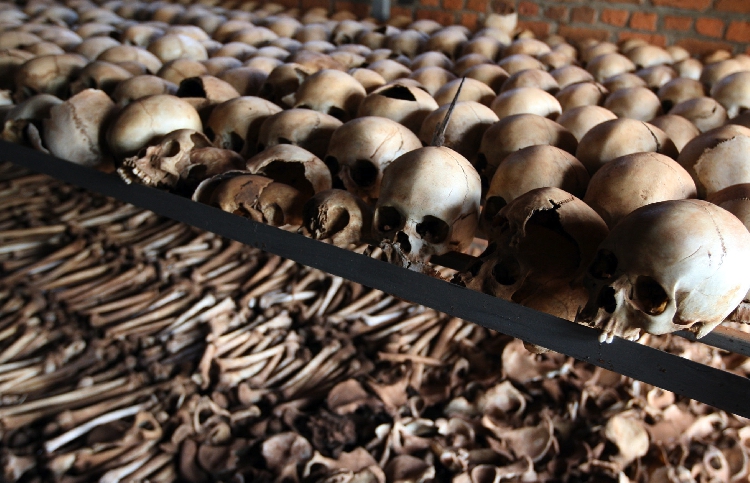
The former colonies include Namibia, where the 1904-08 Herero and Nama genocide claimed the lives of an estimated 100 000 victims.
The German government’s stance was reported by the newspaper Tagesspiegel, in connection with a parliamentary question from the Green party.
The newspaper reports that the German government says the concept of reparations is not applicable in the context of Germany’s colonial past, hence it is determined to avoid the term ‘reparations’, presumably to prevent legal claims of incalculable amounts.
Germany maintains that the money outlined in the joint declaration was expressly intended as a “gesture of recognition” and not as reparations – to possibly prevent further legal claims.
A Green party member of the German Bundestag, Awet Tesfaiesus, has argued that the German government’s approach to certain policies or historical issues reproduces colonial hierarchies.
Colonial hierarchies are described as systems of social, political and economic power established during the colonial era that ranked people based on race, ethnicity and class.
“It cannot be our aim to hide behind formal legal arguments, especially not in a republic whose constitution places inviolable human dignity at the centre of its statehood,” Tesfaiesus told the Tagesspiegel.
Political analyst Henning Melber told The Namibian that Germany’s clarification that there will be no reparations for colonial crimes committed confirms that the negotiated amount of 1.1 billion euros remains a fixed amount and not open for any further negotiations.
“Given the current government in Germany, which has also indicated a stronger reluctance to add colonialism to official German commemoration culture, it would be very surprising if it would comply with the order to appear in court.
“Unfortunately, the Namibian jurisdiction faces limitations when it comes to German refusals to comply with a court order,” Melber notes.
German historian Jürgen Zimmerer says Germany for a long time had complete amnesia when it came to the topic of colonialism.
“The new German minister of culture wants to exclude German colonial memory from official German memorial culture, which should include only Nazi injustice and East Germany, that is communist injustice. So we have quite a backlash there,” he says.
Zimmerer says Germany should appear at the court because if it does not do so, it would be disrespectful to Namibia and to the Ovaherero and Nama people.
He says the problem is the new German government has confirmed that they are only willing to negotiate with the Namibian government.
“We have a new government now with chancellor Friedrich Merz and we have a culture minister who is quite conservative and has already announced that he wants to change the way we engage with colonial crimes and he wants to exclude colonial crimes from the official memory concept from the government. It is something that the former government has thought of including,” Zimmerer notes.
In an age of information overload, Sunrise is The Namibian’s morning briefing, delivered at 6h00 from Monday to Friday. It offers a curated rundown of the most important stories from the past 24 hours – occasionally with a light, witty touch. It’s an essential way to stay informed. Subscribe and join our newsletter community.

The Namibian uses AI tools to assist with improved quality, accuracy and efficiency, while maintaining editorial oversight and journalistic integrity.
Stay informed with The Namibian – your source for credible journalism. Get in-depth reporting and opinions for
only N$85 a month. Invest in journalism, invest in democracy –
Subscribe Now!