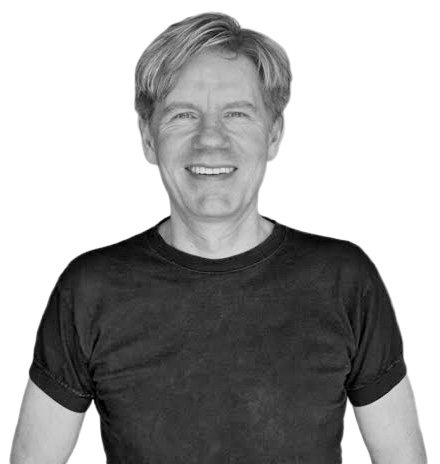






ANDRÉ DU PISANI
THE HEROES DAY 2022 celebrations took place in an unsettled and fractious mood, especially as a politician from the south reportedly opined the event to be “rubbish”.
His statement was seen by some as an impudence and folly that robbed countless veterans of the last liberation struggle of their glory.
The occasion provided an opportunity for the Namibian Defence Force (NDF) to show off its fighting prowess in the presence of its commander-in-chief. The climax was six paratroopers falling 10 000 feet from a leaden sky.
Heroes Day was drawn in blood. The military hardware was there for all to see.
The mantra of ‘One Namibia one nation’ was enacted through cultural performances symbolising ‘unity in diversity’.
All meant to underline the unity of purpose, energy and faith in the future as a matter of conviction and principle, rather than of mere expediency.
President Hage Geingob delivered the keynote address.In it he acknowledged the Hardap region as “a beacon of resistance against colonialism”.
He laid before us a very real sense of ordinary Namibian men and women, living their lives against a constant backdrop of colonial and apartheid-induced systemic violence, dehumanisation, neglect and indifference, legacies that endure to this day.
In heroic tenor, the president reminded us that independence “was not cheap”, the freedom and democracy Namibians enjoy today “came at the expense of blood”.
He repeated his admonition that it was “easy to destroy, but not easy to build”, warning of the fragility of peace and urging unity.
The destiny of economic prosperity would be long and bitter as the liberation struggle itself was. Unity of purpose and patriotism were preconditions for ultimate success.
This narrative is familiar to those who study the grammar of our politics and of the governing party.
There are indeed grounds for the remarkable successes and disastrous failings of the Swapo-led elite cartel that came to preside over a rent-seeking state.
What rarely features is the moral imagination that heroes and heroines need to have to deliver the emblem of dignity, equality, freedom, truth and justice for all.
The starting point of all politics of the moral imagination and of emancipation is that people do think for themselves.
Neo-liberal and anti-colonial nationalism’s assumptions of political society dominated by state institutions, hegemonic parties, the omnipotence of state management, the identification of regions with culture and the conflation of citizenship with nativism, fly in the face of emancipatory politics.
The politics of the moral imagination is about a new politics of peace and healing.
The universalism of rights can only exist through its particularity within the cultural and social contexts that contribute to making humanity human.
This is not a plea for the uniqueness of Africa, nor a plea for a return to the past.
Indeed, the universals of democracy, justice, equality, dignity, and rights – which Namibians by and large adhere to – can only be realised through a different conception of the human; a conception in which people are products of history, social differences and are, within such differences, capable of thought and agency, of transcending the narrow identities that divide them.
Each culture has the potential to exceed itself, in order to demand, through local activism, a better country founded on truly universal conceptions of dignity, justice, equality and freedom.
Building the ‘Namibian House’ is not a project of triumphant history, an inordinate desire for supremacy, a hegemonic party, heroic leader, or master narrative; it is a cultural and intellectual project of public reasoning and reflection that allows people freedom of choice, not an election trick.
If such linkages perish, as was shown in the case of the Fishrot scandal, state institutions become criminalised and the dream of prosperity ruined.
* André du Pisani is emeritus professor of politics at the University of Namibia (Unam) with an interest in moral philosophy, politics, history, literature and art. The views expressed are entirely his own.