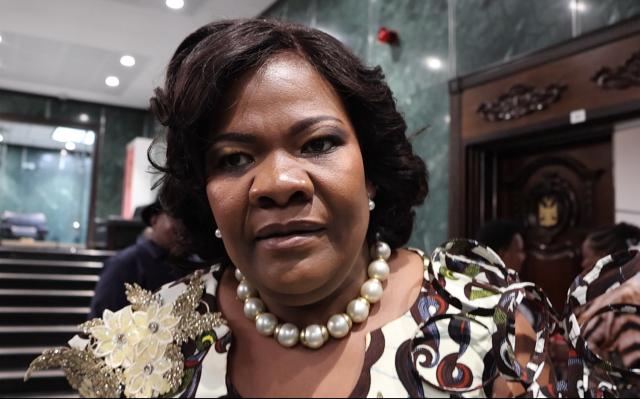




THE Hardap governor, Esme Isaack, has urged government to come up with a mechanism which will give the region’s inhabitants preference on future land allocation as part of its land resettlement programme.
“I submit humbly that feasible monitoring mechanisms be crafted and or identified for implementation, so as to give effect to the 70/30 policy, in terms of which 70% of the residents of the region should have preference in the resettlement process of land situated within the region, whereas 30% of resettlement should benefit members of other regions,” Isaack suggested during President Hage Geingob’s town hall meeting held at Mariental on Friday.
Furthermore, Isaack complained of what she termed “slow or non-responsiveness” on part of the lands ministry towards the water crisis, being experienced at some communal and resettlement farms which is aggravated by the drought.
This, Isaack added, hampers productivity and reverses the viable economic activities of those resettled as well as communal farmers.
Reverend Willem Simon Hanse echoed the governor’s sentiment that the 70/30 ratio be applied in favour of the region’s inhabitants when land is allocated in the region.
“Some farms are lying idle as people from other regions do not come to occupy them,” Hanse remarked.
Isaack also bemoaned the non-implementation of the 2008 Cabinet resolution to increase the height of the Hardap dam wall and clearing of reeds in the Fish River to avoid the re-occurence of a flood that hit the town of Mariental in 2006.
Voicing the same concerns about the non-implementation of the latter resolution, businessman Chris Nel, who is also a Hardap Flood Task Force member, remarked that the resolution’s implementation is “slow to come” after seven years of waiting.
In his response, Geingob noted that the 70/30 ratio concept is a bit problematic unless it is contextualised.
“In Namibia you can stay anywhere as we fought for freedom,” said Geingob.
In response to the non-implementation of the 2008 Cabinet resolution, agriculture minister John Mutorwa said lack of funding had hampered its implementation.
“The decision still stands, implementation will come once money is available,” Mutorwa added. Geingob asked what had happened to voluntarism and said the clearing of the reeds in the Fish river be done through the community.
They can clear the reeds in the river through the government cash-for-work programme, Geingob suggested. However, Geingob said government will seriously look at implementing the 2008 Cabinet resolution.
Hardap residents, who were in attendance at the meeting, also suggested that water be supplied free of charge to the poor and that municipal debts of pensioners be written off.
luqman@namibian.com.na
In an age of information overload, Sunrise is The Namibian’s morning briefing, delivered at 6h00 from Monday to Friday. It offers a curated rundown of the most important stories from the past 24 hours – occasionally with a light, witty touch. It’s an essential way to stay informed. Subscribe and join our newsletter community.

The Namibian uses AI tools to assist with improved quality, accuracy and efficiency, while maintaining editorial oversight and journalistic integrity.
Stay informed with The Namibian – your source for credible journalism. Get in-depth reporting and opinions for
only N$85 a month. Invest in journalism, invest in democracy –
Subscribe Now!