



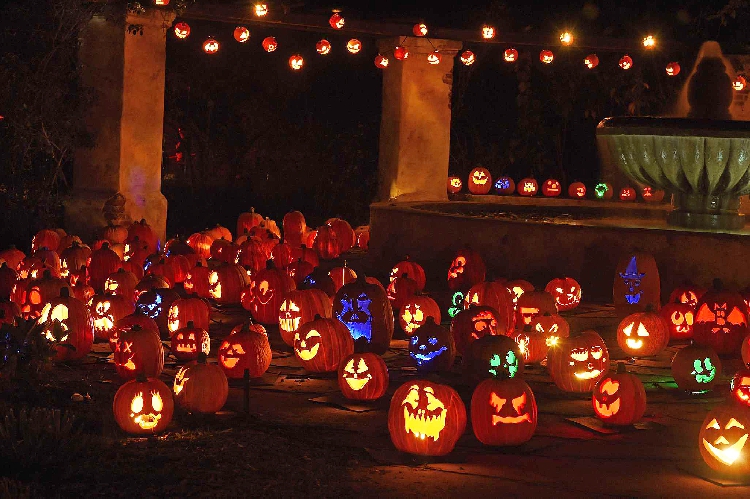
The month of October is usually accompanied by stories of ghosts and ghouls and all the things that go bump in the night – and that is thanks to the fascination with Halloween.
Though many associate the festivities with children dressing up as their favourite fictional characters and hunting for candy in the streets of American cities and towns, Halloween is celebrated differently throughout the world by different cultures, and has deeper meanings than you might think.
While it’s fun to decorate your body with all types of garments and make-up on the last day of October, or feast your eyes on horror films all month long, do we actually know where all this came from?
While most countries around the world take part in these celebrations, in Africa, the picture is a little different.
Some Namibians celebrate the day by having costume parties, however, this year, the location of Halloween party caused friction between those still affected by history, and the ones who seem to disregard it.
A Halloween party was planned to take place at Windhoek’s Alte Feste, a site which embodies pain and suffering in Namibia’s history.
Freelance journalist Hildegard Titus took to Facebook to express her unease with the decision. “Would you have a Halloween party at Auschwitz? Probably not, but somebody thought it was a bright idea to do so at the Alte Feste (an old German military fort, it also housed a concentration camp that killed hundreds of Nama and Herero people),” Titus expressed.
Radio presenter Anne Hambuda share Titus’ sentiments. “Firstly, I think it signifies a division in Namibia, because they (the organisers) don’t know the history and the importance of certain things in Namibia. It’s just ignorance,” she said. “It’s not just black people history, it’s Namibian history,” she added.
Although she expresses these views on the location of Halloween celebrations, Hambuda also feels the festival is very western, and Namibians don’t really understand it or enjoy it to the fullest, but she doesn’t think it is a bad thing that Namibia is adopting some aspects of western culture.
“As some residents of African cities were preparing themselves for Halloween parties, their counterparts in Kigali were dealing with a strange announcement from the Ministry of Culture and Sports dated 1 November 2013. Halloween parties were banned in Rwanda and organisers of Halloween parties specifically instructed to halt their preparations. The minister justified the ban citing the foreignness of Halloween and the need to promote Rwandan culture,” thisisafrica.me reported.
However, certain Rwandans felt that Halloween is a tradition that Africa shares with the western world and shouldn’t have been banned.
Edwin Mukiza was one of the unhappy Rwandans who revealed his displeasure with the ministerial ban on his Twitter feed saying: “Between Kubandwa and Christianity, which is part of Rwandan culture and which isn’t?” Kubandwa is the Rwandan equivalent of ancestral worship, much like the festivities in the western world.
Christian Murera made the same point. “In fact, that is one of the few events we share with the western world. We don’t have Christmas but we always had Halloween,” she tweeted.
According to history.com, the origins of Halloween date back to the ancient Celtic festival of Samhain. A couple of thousand years ago, the Celts inhabited the areas of Europe we now know as Ireland, the United Kingdom and northern France.
These ancient people celebrated their new year on 1 November, the day which marked the end of summer and the beginning of Europe’s dark cold winters – a period associated with death.
“Celts believed that on the night before the new year, the boundary between the worlds of the living and the dead became blurred. On the night of 31 October, they celebrated Samhain, when it was believed that the ghosts of the dead returned to earth.
To commemorate the event, Druids (Celtic priests) built huge sacred bonfires where people gathered to burn crops and animals as sacrifices to the Celtic deities. During the celebration, the Celts wore costumes, typically consisting of animal heads and skins, and attempted to tell each other’s fortunes.”
As time passed and the period of colonisation emerged, the customs and traditions of the colonisers were spread to the new lands they conquered and this is how the Samhain festival found its way to North America.
“The celebration of Halloween was extremely limited in colonial New England because of the rigid Protestant belief systems there. Halloween was much more common in Maryland and the southern colonies,” history.com explains.
The beliefs of the various European groups merged with those of the native Americans, thus a distinct American version of Halloween emerged.
“The first celebrations included ‘play parties’, public events held to celebrate the harvest, where neighbours would share stories of the dead, tell each other’s fortunes, dance and sing. Colonial Halloween festivities also featured the telling of ghost stories and mischief-making of all kinds. By the middle of the 19th century, annual autumn festivities were common, but Halloween was not yet celebrated everywhere in the country.”
In modern times, what we observe as ‘trick-or-treating’ also has a darker origin than what we know today.
“The American Halloween tradition of ‘trick-or-treating’ probably dates back to the early All Souls’ Day parades in England. During the festivities, poor citizens would beg for food and families would give them pastries called ‘soul cakes’ in return for their promise to pray for the family’s dead relatives.”
Creepy, right?
The festival is not only celebrated in Europe and the United States – Latin America, Asia and even Africa has their own interpretations on the festival.
In China, a version of Halloween is celebrated in mid-July and is called the ‘Hungry Ghost Festival’, when it is customary to float river lanterns to remember those who have died. Halloween is called ‘wànshèngjié’ and is largely celebrated by expatriate Americans or Canadians.
In the Philippines, the period from 31 October through 2 November is a time for remembering dead family members and friends. Many Filipinos travel back to their hometowns for family gatherings of festive remembrance.
Trick-or-treating is gradually replacing the dying tradition of Pangangaluluwâ, a local analogue of the old English custom of souling. People in the provinces still observe Pangangaluluwâ by going in groups to every house and offering a song in exchange for money or food.
A few days after the rest of the world are probably done with Halloween parties, the little country of Mexico are still in full swing busy honouring the deceased.
In an age of information overload, Sunrise is The Namibian’s morning briefing, delivered at 6h00 from Monday to Friday. It offers a curated rundown of the most important stories from the past 24 hours – occasionally with a light, witty touch. It’s an essential way to stay informed. Subscribe and join our newsletter community.

The Namibian uses AI tools to assist with improved quality, accuracy and efficiency, while maintaining editorial oversight and journalistic integrity.
Stay informed with The Namibian – your source for credible journalism. Get in-depth reporting and opinions for
only N$85 a month. Invest in journalism, invest in democracy –
Subscribe Now!