


An association representing members of Namibia’s Hai||om San community has filed a lawsuit in which it is claiming N$2.8 trillion from Namibia’s government because of the expulsion of members of the community from their ancestral land at Etosha National Park.
The Hai||om Association, formed in July 2024, and 10 of its members are asking the Windhoek High Court to declare that the Hai||om people are entitled to ownership of the land comprising Etosha National Park and 11 farms in the Mangetti West area of the Kavango West region.
The association and 10 of its members, including chairperson Hai||om elder Jan Tsumib, are also asking the court to declare that the Hai||om people are entitled to “the exclusive beneficial occupation and use of the land” on which Etosha National Park was created in 1958, but excluding the Namibia Wildlife Resorts camps at Okaukeujo, Namutoni and Halali, and of 11 farms in the Mangetti West area.
The Etosha land is about 23 150 square kilometres in size.
In an alternative claim, the association and its 10 members want the court to declare that the Hai||om community is entitled to have land equal in size and quality to Etosha and the Mangetti West farms awarded to them, or that they are entitled to compensation in an amount of N$2.8 trillion (N$2 800 billion), which they say is the estimated market value of the Etosha lands and Mangetti West farms.
The plaintiffs are also asking the court to make further orders, including declaring that the Hai||om people have “the right to freely deal with, develop or dispose of the wealth and natural resources” of the land on which Etosha National Park is situated, that the Hai||om are entitled to compensation for their past loss of access to Etosha and the past exploitation of natural resources on the land, and that they are entitled to access or reasonable access to the Etosha lands.
The plaintiffs’ main claim is set out under the heading “Ownership”, with further claims set out under the headings “The right to natural resources”, “The right to development”, “Cultural and religious rights” and “Genocide, apartheid, eviction and indigenous peoples’ rights”.
The government notified the court last week that it is opposing the plaintiffs’ claims. In the claims filed against the government, Legal Assistance Centre lawyer Corinna van Wyk, senior counsel Andrew Corbett, Natasha Bassingthwaighte and Peter Hathorn, and legal counsel Michael Bishop allege that the German colonial authorities perpetrated a genocide against the Hai||om and other San communities in the early 20th century.
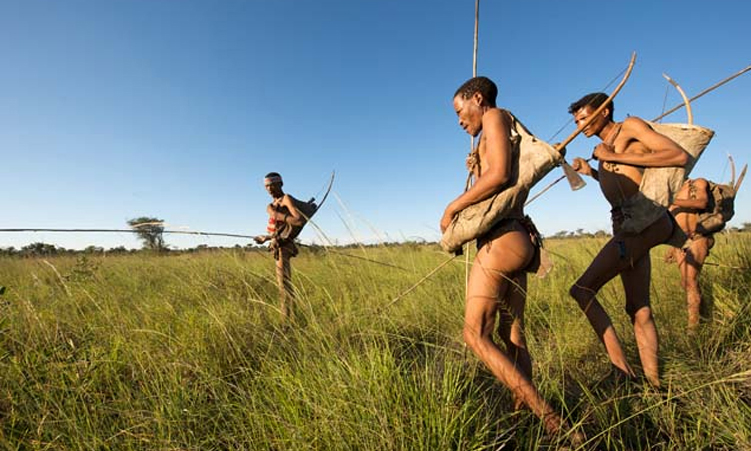
“The ability of members of the Hai||om to maintain their traditional lifestyle was restricted by the settlement of white farmers and other groups on their ancestral lands, the decimation of wildlife by colonists armed with firearms and statutory and administrative measures which limited their access to traditional food sources, such as the 1907 ban on the hunting of giraffe, buffalo, eland and kudu cows,” reads the Hai||om Association’s claims.
GAME RESERVE
In 1907, the colonial governor of German South West Africa established Game Reserve Number 2, the precursor of Etosha National Park, over much of the Etosha lands, the plaintiffs’ lawyers say.
They further say that as a result of the German colonial government’s disregard for the land rights of the Hai||om, the genocide and measures taken against the community, by the early years of the 20th century members of the Hai||om community had been largely driven off their ancestral lands and compelled to take refuge in Game Reserve Number 2 and other land outside the areas occupied by settlers.
After 1915, when German colonial rule in Namibia ended, the South African colonial authorities breached their international law duties to the Hai||om and were responsible for numerous violations of their human rights, including “treating them as sub-humans, with a status little better than the wildlife protected in Game Reserve Number 2”, and subjecting them to institutionalised racial discrimination and apartheid policies, the plaintiffs’ claims state.
A key event took place in 1954, when all of the members of the Hai||om community living in the game reserve, apart from 12 families with family members employed in the reserve, were ordered to leave the reserve without consultation, against their wishes and without any compensation or alternative land for them to settle on being offered to them, it is recounted in the claims as well.
“Deprived of the land, wildlife and natural resources necessary to practise their traditional lifestyle and culture, the Hai||om have since independence remained in conditions of great poverty, dispersed, marginalised and subject to ongoing discrimination, both direct and indirect,” the plaintiffs’ lawyers also say.
A first case planning hearing in the matter is due to take place in the Windhoek High Court next Tuesday.
In an age of information overload, Sunrise is The Namibian’s morning briefing, delivered at 6h00 from Monday to Friday. It offers a curated rundown of the most important stories from the past 24 hours – occasionally with a light, witty touch. It’s an essential way to stay informed. Subscribe and join our newsletter community.

The Namibian uses AI tools to assist with improved quality, accuracy and efficiency, while maintaining editorial oversight and journalistic integrity.
Stay informed with The Namibian – your source for credible journalism. Get in-depth reporting and opinions for
only N$85 a month. Invest in journalism, invest in democracy –
Subscribe Now!