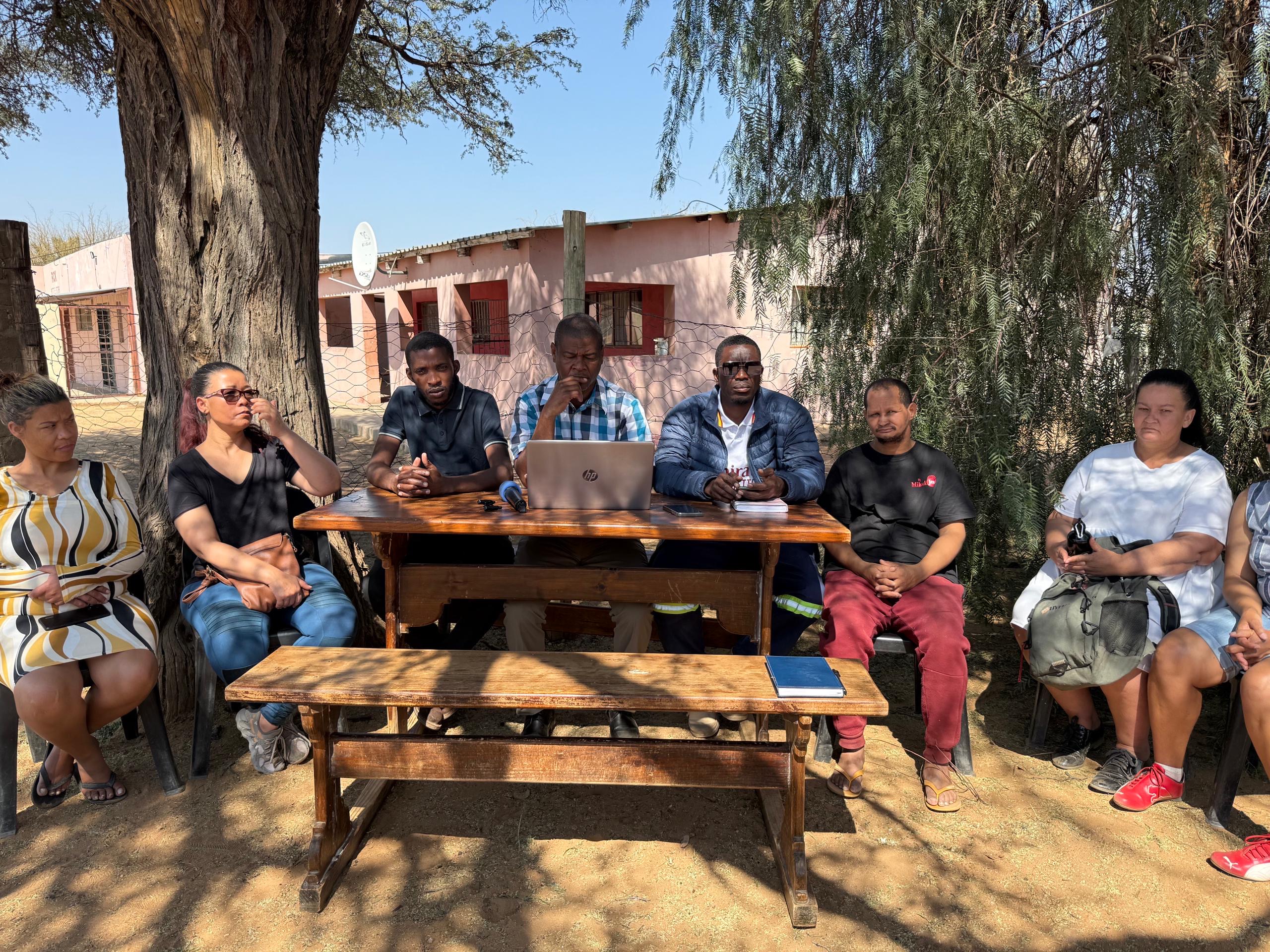
Residents of Groot Aub say they want the settlement to be excluded from the City of Windhoek, claiming that the integration of their community into the capital has derailed development instead of improving it.
Community activist Cicel Titus says Groot Aub has experienced stagnation since its formal integration into the City of Windhoek in 2017. He believes the settlement would do better under its own leadership through a village council.
“The mistake of transforming Groot Aub into a settlement under the City of Windhoek will have a lot of negative implications in the near future. Since the city took over, there has been no development plan, apart from refuse removal and law enforcement,” he says.
According to Titus, residents remember a period before integration when Groot Aub received infrastructure development from the Khomas Regional Council.
He says electricity was brought to the settlement around 2000, while water and sewerage networks were introduced to households between 1990 and 2005.
Titus says this progress was disrupted after the area was taken over by the City of Windhoek and Windhoek Rural constituency leadership in 2006.
“From that time, leaders who felt they were bosses started supporting corruption and bribery to happen at Groot Aub. What was good for the community was derailed,” he says.
Titus says the situation has left residents competing against each other for scarce resources such as land.
“Till today we see people moving into Groot Aub, but the City of Windhoek, as the custodian, cannot develop Groot Aub apart from struggling with water boreholes.
“We at Groot Aub never suffered with water as we do currently,” he says.
Although Titus thanks the city for services such as refuse removal and Windhoek City Police patrols, he accuses the municipality of spending money on areas that do not address the community’s urgent needs.
He says residents do not welcome the city’s use of temporary structures and containers as offices in the settlement.
Titus further argues that Groot Aub’s geographical location does not justify its inclusion within Windhoek’s municipal boundaries.
“Groot Aub is 60km away from Windhoek, Okahandja is 70km from the capital, and Rehoboth is 90km away, yet they fall under other regions.
“Extending the boundaries to include Groot Aub does not make sense,” he says.
The activist says residents want the settlement’s status to be upgraded gradually, under its own development plan, and with decision-making powers placed in the hands of the local community.
“We want to sustain ourselves with what we can afford and be part of the decision-making. We need a village council so we can elect our own leaders,” Titus says.
He appeals to the minister of urban and rural development to urgently intervene and meet residents to discuss their future.
In response, the City of Windhoek has acknowledged the concerns, but says Groot Aub’s integration was a Cabinet decision aimed at aligning the settlement with urban development standards and ensuring residents benefit from municipal services.
“Since integration, the city has extended several municipal services to Groot Aub. These include refuse removal, law enforcement through the Windhoek City Police, as well as ongoing maintenance of certain public services,” City of Windhoek spokesperson Harold Akwenye says.
He says challenges regarding water supply are being addressed within the broader context of Windhoek’s overall water scarcity, which also affects the capital.
Borehole management at Groot Aub forms part of this process, and sustainable solutions are being explored.
Akwenye says Groot Aub has been incorporated into the city’s planning framework, although residents may feel progress is slow.
“Development in newly integrated areas is a phased process that requires alignment of budgets, infrastructure and service standards. Groot Aub is part of the city’s long-term development plan, and specific interventions are being prioritised within available resources,” he says.
In an age of information overload, Sunrise is The Namibian’s morning briefing, delivered at 6h00 from Monday to Friday. It offers a curated rundown of the most important stories from the past 24 hours – occasionally with a light, witty touch. It’s an essential way to stay informed. Subscribe and join our newsletter community.

The Namibian uses AI tools to assist with improved quality, accuracy and efficiency, while maintaining editorial oversight and journalistic integrity.
Stay informed with The Namibian – your source for credible journalism. Get in-depth reporting and opinions for
only N$85 a month. Invest in journalism, invest in democracy –
Subscribe Now!