



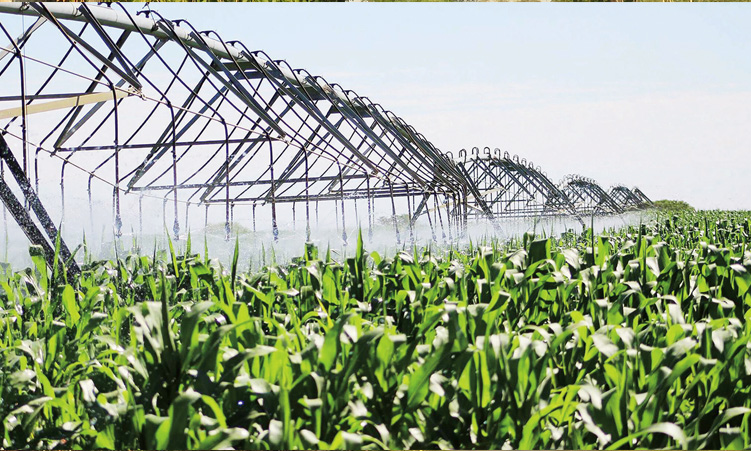
Namibia’s agricultural green schemes continue to face deep structural problems, such as machinery not working and procurement delays.
This is according to the parliamentary standing committee on natural resources.
The committee visited six green scheme agricultural projects in the Zambezi, Kavango East, and Kavango West regions in August last year, according to a report released by the parliament this week.
“Despite their potential, most projects face persistent challenges, including inadequate and inconsistent funding, outdated and broken equipment, and limited access to reliable markets,” the report says.
The green scheme projects were set up by the Ministry of Agriculture, Fisheries, Water and Land Reform to promote food security and employment in areas suitable for irrigation.
Namibia currently has 11 of these projects, some of which are directly managed by the ministry while others are leased to private operators.
The programme was allocated N$113 million for the 2025/26 financial year, split between operational costs (N$33 million) and infrastructure development (N$80 million), according to the report.
Some projects are relatively successful, such as the Ndonga Linena green scheme, while others are hamstrung by broken machinery and procurement delays.
Three of the projects visited produce maize, while the Sikondo green scheme focuses on potatoes and the Kalimbeza project produces rice.
The parliamentarians reported that although the Kalimbeza project produced rice in 2024, the crop remained unprocessed because the processing machine was out of order for 10 months.
Similarly, the Shadikongoro green scheme – which plants both maize and sunflowers – has an oil-pressing plant that processes sunflowers into cooking oil, but production has been inconsistent.
“Overall, the equipment is very old and outdated and does not work properly,” the report says.
Originally housed under the state-owned company Agribusdev, the scheme was integrated into the ministry in 2021 when Agribusdev was dismantled due to poor management.
“Some four years later, no full implementation has taken place, with the government decentralising the operations to the corporate office of the ministry in Windhoek.
This, in the long run, may kill the green scheme entirely. Signs are already showing,” the report says.
The report is clear on the projects being fundamentally viable, because the farms are often productive.
Both commercial and small-scale farmers included in the project have had good harvest results in the past.
The projects also provide employment and further social benefits like water provision.
The report recommends various steps to clarify responsibility for the projects and establish a plan for recovery.
Delays in procurement and unclear management affects the efficiency of the farms.
The committee recommended improving management, stabilising finances through debt reduction, and entirely rethinking market strategies to focus on profitable products.
In an age of information overload, Sunrise is The Namibian’s morning briefing, delivered at 6h00 from Monday to Friday. It offers a curated rundown of the most important stories from the past 24 hours – occasionally with a light, witty touch. It’s an essential way to stay informed. Subscribe and join our newsletter community.

The Namibian uses AI tools to assist with improved quality, accuracy and efficiency, while maintaining editorial oversight and journalistic integrity.
Stay informed with The Namibian – your source for credible journalism. Get in-depth reporting and opinions for
only N$85 a month. Invest in journalism, invest in democracy –
Subscribe Now!