



Namibia Command and Staff College, Okahandja, 21 November 2025
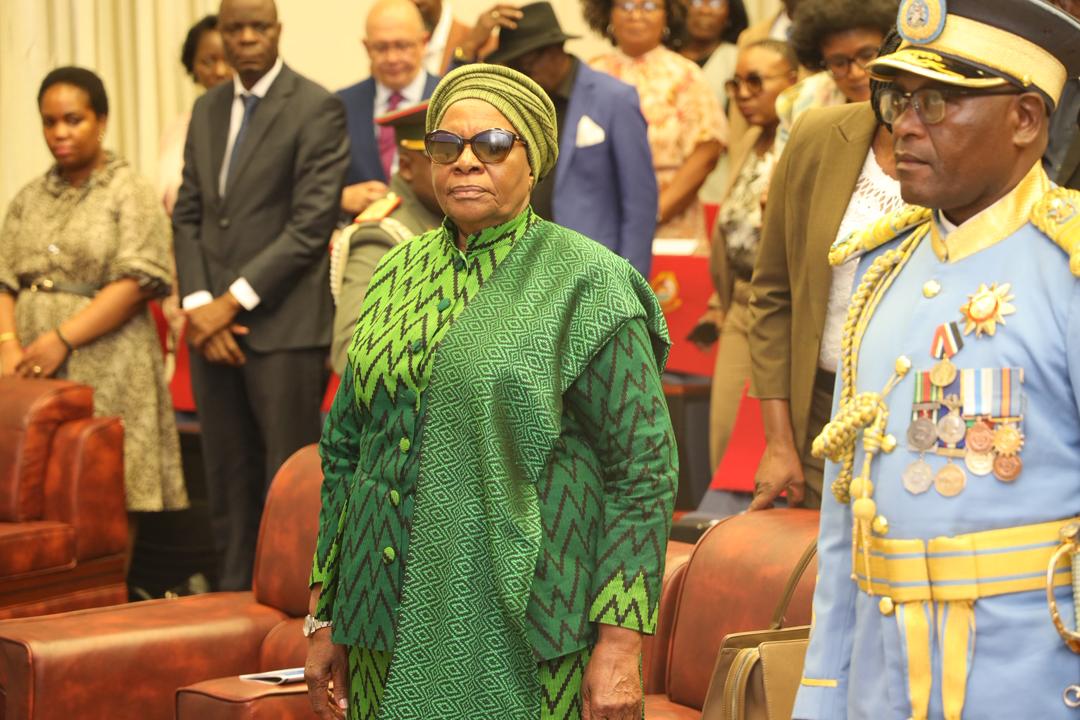
We are here today to mark another milestone in the history of our country, as we confer the ‘Passed Staff Course’ symbol to 35 senior officers who have completed 11 months of diligent training, hard work, and dedication. It is also important to note that this graduation ceremony of the senior command and staff course number 05 of 2025 will add value to command and staff functions even beyond our borders.
I commend the minister of defence and veterans affairs, the chief of the Namibian Defence Force (NDF) and the college leadership for their commitment and dedication in their stewardship of this institution of higher learning.
Through this college, officers are equipped with professional, academic, and practical competencies that prepare them to assume command and staff functions in the defence forces and other structures. I believe you will now be able to execute your assigned duties and responsibilities with full confidence and distinction.
This fifth graduation of the senior command and staff course is a remarkable achievement. It demonstrates our collective resolve and the government’s unwavering commitment to uphold the highest standards of professionalism and service excellence within the scope of executing different responsibilities and assignments.
Today, we live in an era where the nature of our responsibilities, including warfare, has evolved beyond recognition. Office functions and the battlefield are no longer defined only by the office environment and terrain; they also include cyberspace, artificial intelligence, satellite systems, and information networks. Conflicts are waged not only with ordinary weapons but with high-technology data and weaponry.
To the NDF officers and other professional graduates here, you must rise to meet these new and complex challenges. You must be at the forefront of innovation, strengthening capacity in cyber defence, investing in digital intelligence, and nurturing strategic thinkers who can navigate this rapidly changing world.
This speaks to our national security strategy as articulated in the Sixth National Development Plan. This strategy will improve the overall operational efficiency of the security sector and prioritise the construction and upgrading of infrastructure, modernisation, and human resource development.
You have just concluded intensive training and development. These processes aim at improving knowledge, skill, and prowess that will help enhance performance in long-term strategic goals.
You must be reminded that the strength of a nation lies in continuous training, development, and education. These are the strategic elements that will always remain the balancing acts aimed at achieving set objectives and goals.
It is therefore critical that organisations must always train, develop, educate, and retain the best men and women of intellect, integrity, and creativity. The strength of any organisation will not be measured by the size of its personnel, but by the power of its ideas and the readiness of its people to adapt, innovate, and lead.
States’ peace and sovereignty will depend on how effectively we prepare for the new frontiers. I am confident that this college will continue to play a pivotal role in ensuring that officers remain prepared to serve their countries with knowledge, discipline, and technological competence.
I am informed that during this course, officers were introduced to various concepts such as strategic leadership and management, national and international security, inter-agency operations, and joint planning processes. These skill sets will enable our officers to become critical thinkers and rational decision-makers across different portfolios of their careers.
I am further informed that on 18 June this year, the college hosted a commemorative lecture on the Battle of Cuito Cuanavale, the epicentre of one of the most decisive battles ever fought in the Southern African region. It must also be underscored that Cuito Cuanavale was the biggest battle fought on the African continent after the Second World War. That battle marked a turning point in the struggle against the colonial apartheid regime and paved the way for Namibia’s independence and the total liberation of Southern Africa.
The commemoration of this historic moment at this college is commendable. It reminds us that the peace we enjoy today was not given on a silver platter, but was achieved through blood and sweat, and that it is our collective duty to protect it with vigilance, wisdom, and unity.
I am pleased that the ministry of defence and veterans affairs is incorporating 23 March as Southern Africa Liberation Day into the college curriculum. This will preserve the history and institutional memory of the Battle of Cuito Cuanavale for the benefit of future generations.
I am equally gratified that this college extends its training to officers from sister countries in the Southern African Development Community region and beyond. This year’s class includes officers from Botswana, Kenya, and Zambia. That is a living testimony to Namibia’s enduring pan-African solidarity and our commitment to regional and continental peace which must be maintained.
Such cooperation strengthens our collective ability to respond to security threats and promotes the vision of the African Union’s Agenda 2063: an integrated, prosperous, and peaceful Africa.
I am also pleased to note that this course included participants from the Namibian Police Force, the Namibia Correctional Service, and the Namibia Central Intelligence Service. This joint training strengthens cohesion within our security cluster and enhances national readiness in times of emergency.
Let me also acknowledge the contributions of the International Committee of the Red Cross, the Southern African Development Community Regional Peacekeeping Training Centre, and the Southern African Development Community Combined Joint African Exercise coordinated by the Republic of South Africa. In the same vein, I appreciate the support of our local academic institutions and veterans of the liberation struggle, including lieutenant general (retired) Denga Ndaitwah and lieutenant general (retired) Martin Shalli. I understand that the two generals have been regular guest presenters on various areas of study. I therefore urge them to continue making their contributions in the areas of their expertise.
Namibia’s constitution and our National Gender Equality and Equity Policy 2025-2035 reaffirm the government’s commitment to eliminate discrimination and to promote women’s full participation in all spheres of life.
I am therefore proud to note that 12 of today’s graduates are women, a testament to the ministry’s efforts in promoting gender inclusivity in strategic leadership and management. Gender inclusivity must continue to be pursued with determination.
As I conclude, allow me to extend my sincere gratitude to the college’s management, instructors, and all stakeholders who made this event possible.
To the graduates, I congratulate you on this well-deserved achievement. But remember, learning does not end here. It begins anew with every challenge you face and every command you assume. Be disciplined, be ethical, and be visionary in your service to the nation.
The late founding president, Sam Shafiishuna Nujoma, reminded us that our efforts to promote continental integration must place the education of our people at the top of our priorities. The Namibia Command and Staff College stands as a living testament to that ideal.
As we chart our future, let our different areas of responsibility be strengthened for a common goal. Let us be innovative and deep-rooted in our principles. Let us stand ready to defend our nations from cyberspace and cyberattacks.
It is now my singular honour to declare the senior command and staff course number 05 of 2025 officially closed.
I thank you.
In an age of information overload, Sunrise is The Namibian’s morning briefing, delivered at 6h00 from Monday to Friday. It offers a curated rundown of the most important stories from the past 24 hours – occasionally with a light, witty touch. It’s an essential way to stay informed. Subscribe and join our newsletter community.

The Namibian uses AI tools to assist with improved quality, accuracy and efficiency, while maintaining editorial oversight and journalistic integrity.
Stay informed with The Namibian – your source for credible journalism. Get in-depth reporting and opinions for
only N$85 a month. Invest in journalism, invest in democracy –
Subscribe Now!