




The government’s plan to subsidise fuel in April is unsustainable. This is what economists say following the government’s latest fuel price announcement.
Minister of industries, mines and energy Modestus Amutse announced on Friday that the government would step in to reduce the impact of increased oil prices on consumers.
Although the prices of fuel will increase by N$2.50 for petrol and N$4 for diesel, the government will cut its fuel levies by 50% for three months. It will also cover some of the cost of importing fuel using the national energy fund – a decision that will cost the government approximately N$500 million per month.
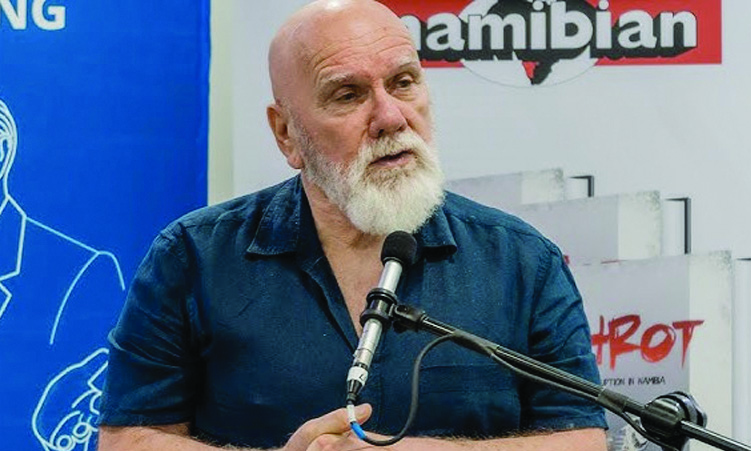
Economics professor Roman Grynberg told The Namibian that this approach to keeping fuel prices reasonable for everybody is unsustainable and will not help the poorest members of Namibia’s society.
“This is bad policy – the type of policy that has gotten many countries into trouble. We live in a market economy and subsidising fuel doesn’t make sense,” he says.
Rather than keeping fuel prices low for everyone, Grynberg says the government should help low-income groups through direct cash grants.
“We should use the money to help those who need it the most. For example, we could do something temporarily to keep taxi fares low,” he says.
Although increasing the price of fuel at the pump to match the cost of importing fuel will hurt businesses, Grynberg says the impact of increased fuel does not hurt everyone equally.
The sectors that contribute the most to the economy have likely already hedged against increased fuel prices – which will protect the economy as a whole. For consumers, wide income inequality means that some people are more vulnerable to the higher prices.
The high cost of oil is driven by the United States-Israel war on Iran, which began four weeks ago.
Iran closed the Strait of Hormuz – a major international shipping route for oil – not only reducing the supply of oil on the market but also increasing shipping and shipping insurance costs globally.
Bank of Namibia economist Mally Likukela describes the government’s solution as “short-term” and “unsustainable”.
“The government simply does not have the fiscal space. It is already under pressure. There is no space for the government to maintain N$500 million per month for importing fuel,” Likukela says.
He says a long-term solution would be for the government to increase its fuel storage to manage prices.
Likukela also raises the issue of Namibia’s transportation system, saying that the country is too reliant on cars.
“The government should look into introducing some more affordable public transport. Make sure public transport is okay so that consumers have options,” he says.
In countries with stronger public transport systems, the effects of fuel price increases can be more effectively managed at the consumer level, he says.
Economist Omu Kakujaha-Matundu also says it was not clear how many months the national energy fund – which is the stabilisation fund through which the government will cover import costs – could sustain losses.
“A question that begs an answer is: what if the attack on Iran is sustained and global oil prices become so steep that it necessitates another steep fuel price increase which will exhaust the national energy fund? What does the government have up its sleeve?” he asks.
The fund functions by paying fuel importers when the imported fuel prices are higher than the regulated price of fuel. When the price of fuel at the pumps is lower than the import price, the government recovers its money. In this way, it can stabilise the costs over months.
Standard Bank economist Helena Mboti says it is unlikely that the government will be able to subsidise prices for longer than six months, adding that cutting levies also removes funding away from productive investments.
“To support a long-term subsidy, a fundamental shift in budget allocations would be required, which would jeopardise the long-term development trajectory of the country,” she says.
Fuel and Franchise Association of Namibia chairperson Michael Ludeke says despite the high costs for the government, this is the best compromise that the country could make.
“What the government did was absolutely necessary and we are very grateful. One must take into consideration that if the government did not take the actions that they took, in all likelihood, we would be looking at a N$12 diesel increase and N$6 petrol increase,” Ludeke says.
In South Africa, the central energy fund is predicting an increase of R5.76 per litre for petrol and an increase of R10 per litre for diesel next week.
Passing along the full price of fuel to consumers would be “catastrophic”, Ludeke says.
He adds that given “the under-recoveries being what they were”, another increase in May is also likely.
THREAT TO TRANSPORT INDUSTRY
Meanwhile, transport operators warn that price increases threaten the survival of taxis, seven seaters and minibuses.
Namibia Bus and Taxi Association secretary general Pendapala Nakathingo says taxi operators will not survive as usual with the price increase.
“Taxi fares may increase with the fuel although customers may not be happy, but there has not been any recoveries in the taxi industry to date,” he says.
He adds that the association is engaging stakeholders to determine the percentage of the fare increase.
Seven-Seaters Association member Pablo Benjamin says daily operation costs will rise sharply, and drivers will spend more on fuel while income remains limited.
“This will reduce profitability, lead to fewer trips and some operators may even park their vehicles because they can no longer sustain their businesses as usual,” he says.
He urges the government to review and adjust transportation fares accordingly, adding that drivers depend on it for survival.
“Engaging directly with transport associations is crucial to understand challenges and ensure fair, sustainable pricing. Both parties can map a practical way forward that protects operators’ livelihoods while remaining mindful of commuters’ financial pressures,” he says.
CONTRADICTIONS
Lawmakers have criticised the decision to increase fuel prices, saying it contradicts recent claims of fuel stability, as it has not translated into price stability for consumers.
Prime minister Elijah Ngurare this month said Namibia will not run out of fuel, as most of its fuel is imported from Nigeria, India and Europe. Ngurare said this after countries like Botswana announced they could soon run out of fuel following the conflict in the Middle East.
Ngurare said Namibia only sources about 20% to 30% of oil from the region.
Popular Democratic Movement leader McHenry Venaani says the government must buy oil from Nigeria’s Dangote Group to ensure oil security.
Venaani says Ngurare’s claim of oil security is a sign of the government’s unpreparedness.
“We must leverage Dangote’s interest in Namibia … the government’s N$500 cover is a positive development, but how long will it sustain the country?” he says.
Independent Patriots for Change shadow minister of energy Ferdinand Hengombe describes the situation as a “direct assault on already struggling Namibians”.
He warns that the increase in fuel price will have immediate economic consequences, including higher transport costs, spiking food prices and increasing pressure on small businesses.
“You cannot claim fuel security on one hand and impose fuel pain on the other. If this government truly has a 90-day strategic fuel reserve, then one of two things must be true,” he says.
In an age of information overload, Sunrise is The Namibian’s morning briefing, delivered at 6h00 from Monday to Friday. It offers a curated rundown of the most important stories from the past 24 hours – occasionally with a light, witty touch. It’s an essential way to stay informed. Subscribe and join our newsletter community.

The Namibian uses AI tools to assist with improved quality, accuracy and efficiency, while maintaining editorial oversight and journalistic integrity.
Stay informed with The Namibian – your source for credible journalism. Get in-depth reporting and opinions for
only N$85 a month. Invest in journalism, invest in democracy –
Subscribe Now!