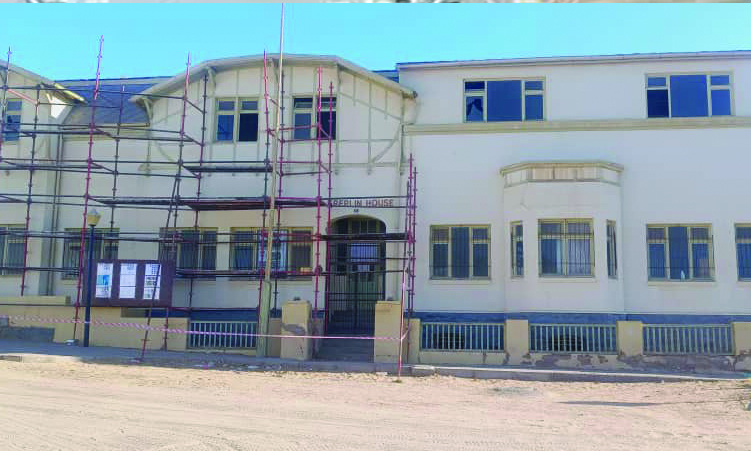





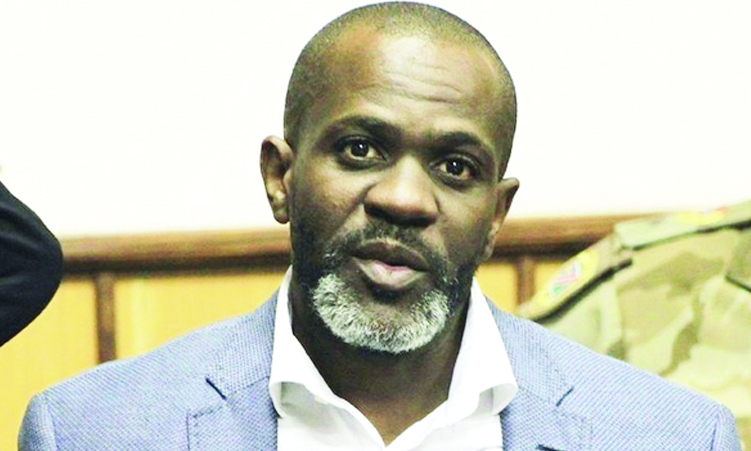
Government-appointed curators are facing significant legal and institutional hurdles while attempting to seize and manage domestic and foreign assets linked to the Fishrot fraud and corruption scandal.
The curators are also frustrated by local banks’ lack of response and meetings with the accused.
In an interview with The Namibian in February, Harald Hecht, one of the curators, said they are struggling to get access to properties owned abroad because the current court order issued in 2020 only mentions properties owned locally.
“There’s a court order now being made in February to bring those overseas assets into the Namibian net, if I can call it that,” he said.
The Namibian reported in 2020 that suspects in the Fishrot scandal owned properties abroad, including luxury homes in Cape Town, Dubai, England, and Spain.
These properties are mostly owned by former Investec Asset Management Namibia managing director James Hatuikulipi – one of the accused in the case which has been delayed since 2019.
The delays are largely due to technical court submissions of his co-accused, former minister of justice Sacky Shanghala.
The other suspects are former fisheries minister Bernhard Esau, his son-in-law Tamson Hatuikulipi, former Fishcor chief executive Mike Nghipunya, Pius Mwatelulo, and Former Investec executive Ricardo Gustavo.
They are accused of being involved in the Fishrot corruption, fraud, money laundering and racketeering case involving over N$317 million.
By last month, the curators revealed that they had not spoken to the accused for 18 months.
Despite facing challenges, Hecht said he was confident that progress would be made this year as the curators are now focused on producing a full list of all properties linked to the Fishrot case.
“It’s really a complex matter, but we are confident that we can make real progress this year,” he said.
The curators said they have encountered challenges similar to those faced by former curators David Bruni and Ian McLaren.
“The challenges include communication, fees, obtaining the necessary authorities to make decisions, and engaging with the accused,” Hecht said.
In 2020, the court ordered a restraint of all properties “with immediate effect”, including bank accounts and all assets owned directly and indirectly by the accused.
The court restraint order issued in 2020 shows that the Fishrot accused are linked to a network of 22 companies, 36 immovable properties, 36 bank accounts, including trust accounts, and 134 vehicles.
The fleet includes luxury vehicles such as a Volkswagen Amarok 3.0, Mercedes-Benz R231, Range Rover Sport, Ford Ranger 3.2 Wildtrak and Range Rover 5.0 V8.
According to the curators’ report, the vehicles have remained in the custody of the Anti-Corruption Commission since they were seized.
“Any other person with knowledge about these properties is hereby prohibited in dealing in any manner with the property of the suspects, except as permitted or required by the order,” the court order said.
However, two reports by curators suggest they have not been getting support to execute their work, backing up Hecht’s comments.
The High Court appointed Hecht and Knoetze in 2024 to trace and manage assets linked to Fishrot after Bruni and McLaren stepped down as curators.
They all had the same problems: a lack of cooperation, missing information, slow institutional responses, and legal limitations on foreign assets.
The latest interim report, dated 18 February 2025, provides an overview of the challenges they are facing, including a lack of cooperation from banks and the police.
“Response time from financial institutions and others to provide requested information are also highly unsatisfactory. For example, we have been waiting for more than two months now for a leading commercial bank of Namibia to provide information on certain bank accounts,” the report says.
“Stakeholder availability remains a challenge, meetings are frequently cancelled, and financial institutions have delayed providing requested information, with some responses outstanding for more than two months.”
The accused listed as owning combinations of these assets include James Hatuiklulipi, Gustavo, Tamson, Shanghala, Esau and Mwatelulo. Five scheduled meetings with Gustavo, the Hatuikulipis and Mwatelulo did not take place between September and November 2024 due to security issues involving Namibian Correctional Service and the police at the time of the report.
The curators said they later raised the issue with deputy commissioner Veikko Armas.
Following discussions with the police and the correctional facility officers in February, it was agreed that future meetings would be coordinated through the Office of the Prosecutor General.
The curators said they hoped regular meetings with the defendants would resume after having been discontinued at the end of August 2024.
The new curators also discovered that most of the seized properties and movable assets were uninsured when they took control.
Insurance was only secured on 15 December 2024 on a property belonging to James Hatuikulipi at Finkenstein, estimated to be worth around N$10 million.
“The biggest risk identified is that no property was insured,” the report says.
The curators sold two residential properties at Swakopmund belonging to Tamson and his wife, Johanna Hatuikulipi, for N$9.1 million.
Hecht said this was done with the Hatuikulipis’ agreement and remains the only sale concluded so far.
The proceeds were transferred to curator-controlled trust accounts in November 2024 to preserve the value of the assets. Shanghala has in recent weeks been accused of using delaying tactics, with co-accused Gustavo saying a recusal application seeking to have acting judge Marelize du Plessis removed from the case was “merely intended to delay the start of the trial and to further frustrate the proceedings”.
Gustavo says in his affidavit: “The fact remains that the trial has still not commenced. Its commencement has been delayed because each time the trial must start, an interlocutory application is filed.
“Those applications, when launched, must be determined and, therefore, delay the commencement of the trial.”
In an age of information overload, Sunrise is The Namibian’s morning briefing, delivered at 6h00 from Monday to Friday. It offers a curated rundown of the most important stories from the past 24 hours – occasionally with a light, witty touch. It’s an essential way to stay informed. Subscribe and join our newsletter community.

The Namibian uses AI tools to assist with improved quality, accuracy and efficiency, while maintaining editorial oversight and journalistic integrity.
Stay informed with The Namibian – your source for credible journalism. Get in-depth reporting and opinions for
only N$85 a month. Invest in journalism, invest in democracy –
Subscribe Now!