




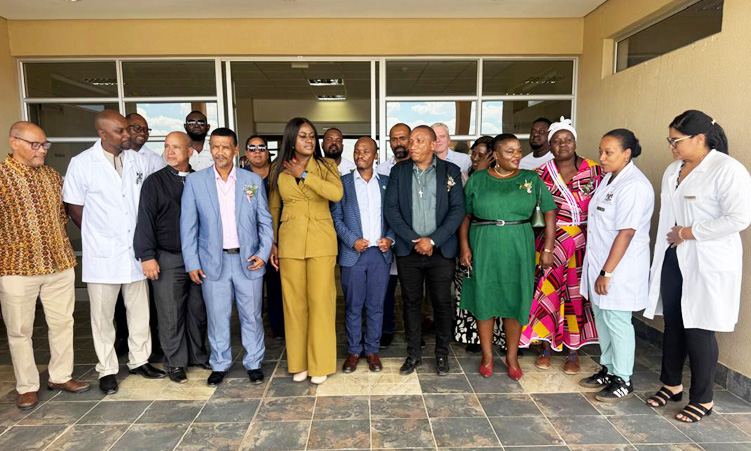
The government is moving to digitise birth and death registration systems as part of broader efforts to improve service delivery and data coordination in the health sector.
This was announced yesterday by health and social services minister Esperance Luvindao during the opening of the Africa CDC learning visit on e-birth notification and integrated civil registration and vital statistics systems.
Luvindao said the shift aims to address long-standing gaps between health services and civil registration.
“In the past, our health systems and our civil registration systems often operated in silos.
A child would be born in a health facility, but the legal recognition of that child’s existence might be delayed for months or even years,” she said.
The minister said this disconnect has created gaps in national planning and service delivery.
By introducing interoperable digital systems, Luvindao said the government aims to ensure more coordinated and timely services.
“This new paradigm of service delivery ensures that a mother in the Kunene region, a child in the Oshana region, and an elderly patient in the Zambezi region all receive timely, data-driven and coordinated care,” she said.
Luvindao added that the e-birth and e-death notification systems demonstrate the government’s commitment to modernising services.
“The e-birth and e-death notification systems are just some of the testimonies of the Namibian government’s commitment to digital reforms to modernise and accelerate broad-based delivery of services to all our people,” she said.
The initiative forms part of the broader national digital health policy (2026-2036), which seeks to embed digital solutions across the healthcare system.
“This policy envisions a digitally empowered health system that ensures equitable, efficient and quality health services for all people in Namibia,” she said.
Luvindao added that digitalisation would also improve data for decision-making and strengthen service delivery across regions.
“Digital transformation is not an end in itself. Its true purpose is to unlock efficiencies by linking the systems and services so that every data point represents a person, a story, as well as a right to services and wellbeing,” she said.
She stated that the initiative aligns with national and international frameworks and requires collaboration among stakeholders.
“The implementation of these strategic initiatives requires a collective effort by all role players,” Luvindao said.
She also highlighted the importance of regional cooperation, saying Namibia is committed to sharing knowledge and learning from other African countries through platforms such as the Africa CDC.
In an age of information overload, Sunrise is The Namibian’s morning briefing, delivered at 6h00 from Monday to Friday. It offers a curated rundown of the most important stories from the past 24 hours – occasionally with a light, witty touch. It’s an essential way to stay informed. Subscribe and join our newsletter community.

The Namibian uses AI tools to assist with improved quality, accuracy and efficiency, while maintaining editorial oversight and journalistic integrity.
Stay informed with The Namibian – your source for credible journalism. Get in-depth reporting and opinions for
only N$85 a month. Invest in journalism, invest in democracy –
Subscribe Now!