




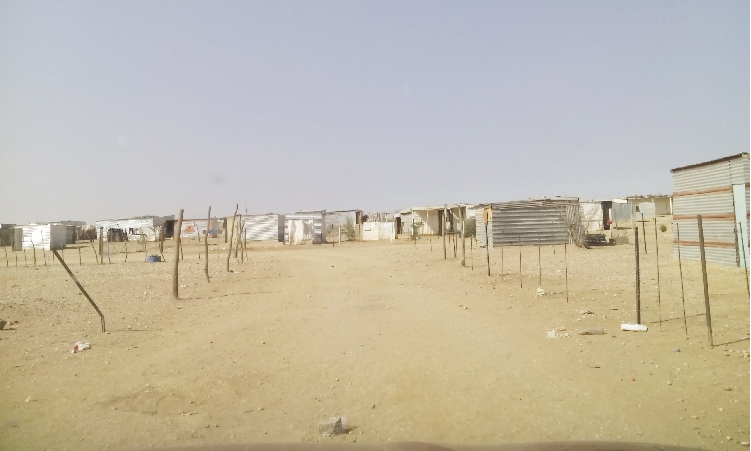
The government has launched a phased N$14-million project to replace shacks with serviced land at Otjiwarongo, beginning with water infrastructure in Eie Risiko informal settlement.
This was announed by urban and rural development minister James Sankwasa at a handing over ceremony of a newly installed water reticulation network at Otjiwarongo’s extensions 16 and 17 on Monday.
“Through collaboration between the government, the municipality, and community organisations such as the Shack Dwellers Federation of Namibia, we are transforming informal settlements into dignified, serviced neighbourhoods where people can live safely and with pride. “Our vision is clear: within the next year, we would like to see the gradual disappearance of shacks in this area,” Sankwasa said.
The installation of the water reticulation project forms part of the upgrades to the informal settlement.
Through this project, 404 plots have been serviced with water, and 80 households have been connected to taps and water meters.
Otjiwarongo has four legal informal settlements – Ombili, DRC, Tsaraxa-Aibes, Ombili New, and Eie Risiko.
Sankwasa said the next steps are to ensure the provision of electricity, proper roads, and sewerage infrastructure for residents. “These services are essential if we are to build sustainable and fully integrated communities,” he said.
He noted that in 2020, records showed there were 1 044 structures in the settlement. He added that the government is committed to upgrading and servicing two more blocks, in collaboration with partners.
Sankwasa commended community members for carrying out most of the work themselves, supported by local plumbers, making it more affordable.
“When the government, communities, and the private sector work together, we can accelerate development and bring real change to people,” he emphasised.
Sankwasa urged community members who are unable to afford house construction to work together with the shack dwellers federation. Otjiwarongo mayor Leonard Simushi says access to reliable water is a fundamental service that all local authorities must provide.
“Meaningful development is achieved when municipalities, partners, and communities work together, creating a shared sense of ownership and responsibility for the infrastructure that serves them,” Simushi says.
Bernard !Gaeb (48), a resident at the informal settlement, says having a tap at his house is a dream come true.
“We only had standpipes and you and your children had to carry your buckets to collect water. Now my children can play and do their homework because they no longer have to walk to the standpipe and wait in line,” !Gaeb says.
In an age of information overload, Sunrise is The Namibian’s morning briefing, delivered at 6h00 from Monday to Friday. It offers a curated rundown of the most important stories from the past 24 hours – occasionally with a light, witty touch. It’s an essential way to stay informed. Subscribe and join our newsletter community.

The Namibian uses AI tools to assist with improved quality, accuracy and efficiency, while maintaining editorial oversight and journalistic integrity.
Stay informed with The Namibian – your source for credible journalism. Get in-depth reporting and opinions for
only N$85 a month. Invest in journalism, invest in democracy –
Subscribe Now!