


THE government is planning to consult on the poverty-ridden Kombat settlement in the Otjozondjupa region.
Following a visit to the town, settlers complained that the government has deserted them, saying there has been no basic service delivery since the mine and town were separated in 2013.
Currently, Canadian company Trigon Metals is temporarily fulfilling the role of town council by supplying the settlement with water and collecting garbage.
Minister of urban and rural development Erastus Uutoni yesterday said they would first have to engage the regional council of Otjozondjupa to determine how and when an office can be established to administer the settlement.
“I can’t say the government did not look into the matter previously, because things of this nature normally go through certain processes – hence the way forward by engaging the council,” he said.
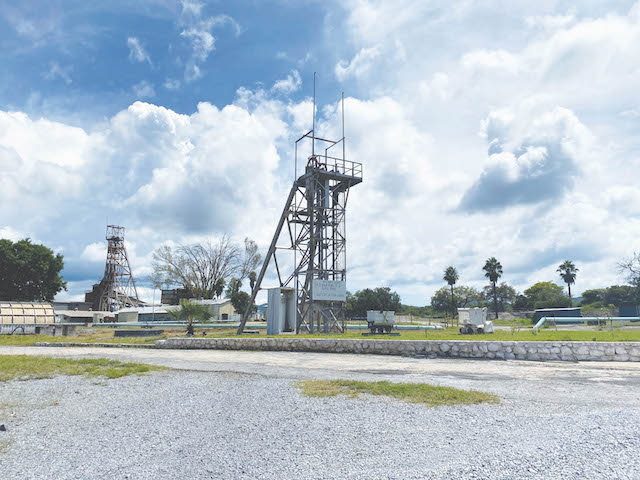
Mining operations were halted in January 2008 when low copper prices and a power outage that resulted in underground flooding led to the shutting down of mining operations.
After the flooding, many of the former workers moved away, which turned Kombat, once known as a prosperous home to copper mining, into a ghost town.
Grestina Ubukhaes, a Kombat resident, says the former mine workers have not had any source of income since the mine closed.
“I’ve been here for more than 20 years, and I worked at the mine when it was open. Life has been very hard since it closed. There has been no work, and we are suffering,” she says.
Ubukhaes says community members have been surviving by planting corn and other vegetables to feed themselves, and some families are receiving help from the government.
Litota Mukano, another resident, says most of the residents have failed Grades 10 and 12, which leaves them with limited options.
“We are struggling, so we are trying to grow our own food,” she says.
Recently, parliamentarian Kazeongere Tjeundo called the government out for turning a blind eye to the people of Kombat.
Tjeundo said residents have been subjected to humiliation and exploitation for about 20 years, while the government is pretending not to notice because of the influence of businessman Knowledge Katti, who acquired the town in 2015.
Meanwhile, Landless People’s Movement leader Bernadus Swartbooi in the National Assembly alleged that Kombat’s management has not paid the settlement’s NamPower bill, which amounts to millions.
This was confirmed by the power supplier. The government is set to respond to the concerns raised in the National Assembly this week, while Uutoni could not be reached for comment.
Trigon’s president, Jed Richardson, last week said the mine could be reopening by the end of this year.
However, the burden the town has become for the company is delaying the process.
Richardson mentioned errors made previously by electricity suppliers among others, and the responsibility of Kombat village as factors slowing down the process.
“We have all the equipment we need; we have raised equity to finance the mine in September last year . . . one piece that is left is the permitting and the political situation around Kombat,” he said.
Since the divorce between the mine and the town, no council or municipality has been established, but most houses are owned by Katti, Richardson said.
“It needs to be a formalised town. Right now, we are doing garbage collection, and the water the residents are receiving is from Trigon. We are happy to be good neighbours, but we need to have a proper system in place,” he said.
In an age of information overload, Sunrise is The Namibian’s morning briefing, delivered at 6h00 from Monday to Friday. It offers a curated rundown of the most important stories from the past 24 hours – occasionally with a light, witty touch. It’s an essential way to stay informed. Subscribe and join our newsletter community.

The Namibian uses AI tools to assist with improved quality, accuracy and efficiency, while maintaining editorial oversight and journalistic integrity.
Stay informed with The Namibian – your source for credible journalism. Get in-depth reporting and opinions for
only N$85 a month. Invest in journalism, invest in democracy –
Subscribe Now!