




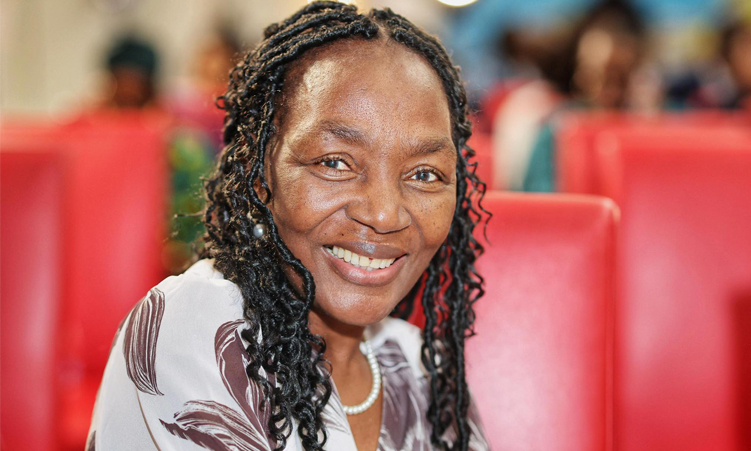
Minister of finance and social grants management Ericah Shafudah, National Assembly, 23 April 2025.
I rise to respond and clarify the questions, comments and matters of concern raised by members during the second reading of the financial year 2025/26 appropriation bill and accompanying budget documents.
Allow me to express my profound gratitude to the speaker and deputy speaker for meticulously presiding over the budget debate. I also thank the prime minister, the secretary-general and Swapo members of parliament for their valuable contributions and support for the budget.
At the same time, I would like to thank all other members from various political parties who have taken the floor to contribute to the budget and eventually support the same.
During the general debate, I could pick up your collective voice that the budget should address bread-and-butter issues, a position resonating with the call by the members of the public. Further, this highlights the urgent need for the realisation that the challenges faced by our country are common and enormous, calling for consolidated efforts and cooperation among ourselves as members of parliament and players within the ranks and files of our society (Unity in Diversity, part of the theme of the Swapo manifesto).
Before I address the issues raised during the budget discussion, I wish to turn the attention of the members to my speech delivered earlier in this august House, where I highlighted the positive prospects for the domestic economy under which the budget was prepared. Similarly, I warned of the risks and uncertainty facing the global economy, that if materialised will have a lingering effect on our economy. As such, we are continuously reminded that no country operates in isolation, and global shocks can impact the domestic economy negatively.
I have further highlighted the countless socio-economic challenges facing our country, including youth unemployment, poverty, income inequality, housing, and sanitation, thus we cannot do everything at the same time.
Having said the above, now let me turn to the specific issues and aspects raised on the budget. As I respond to various issues, I wish to remind the House that I may not cover each detail pertaining to specific funding proposals for programmes under the various budget votes. In this regard, I would rely on my cabinet colleagues to provide specifics on the various programmes at the committee stage.
Some members raised concerns on the high operational and personnel expenditure, relative to the allocation to the development budget as growth limiting, and called for more budget provision for the development expenditure. Empirical evidence indicates a positive relationship between economic growth and development expenditure.
The government has a clear understanding of this relationship, and as a result the development budget has been increased gradually. In 2023/24, for example, the development budget stood at 3.1% of gross domestic product (GDP), 4.2% in 2024/25, and 4.6% in 2025/26. Over the medium-term expenditure framework (MTEF), the development budget is estimated to average around 4.4% of GDP. While the government is making sure that allocation to the development budget is increased, there are challenges in execution due to capacity constraints and timing between budgeting and execution. Addressing these challenges remains a key priority, going forward.
Members also raised a concern regarding the decline in Southern African Customs Union (Sacu) revenue in the current year and the MTEF as well as the volatile nature of Sacu revenues and the need to diversify our revenue sources. By its nature tax on international trade is volatile and fluctuates with developments in the regional and global markets. This is what we are experiencing this year, especially coming from the weaker trading activities in the customs union. The government is monitoring this development and subsequently embarked on various tax policy and administration reforms aimed at diversifying government revenues. These efforts have begun to pay dividends as evidenced by steady growth in domestic revenue sources over the MTEF.
Furthermore, over the long term, as outlined in the budget statement and fiscal strategy, the government is also gradually reducing the non-mining corporate tax rate to make the economy more competitive, attract investments and grow the economy, which will in turn boost revenue. We also introduced new taxes on resident dividends, with land tax introduced last year. Furthermore, the ministry started the process of renegotiating tax treaties with our key trading partners to close the loopholes of tax evasion as was announced in the previous budget.
As announced in the previous budget, the government is working on measures to make sure it gets the most out of its natural resources and ventures into new industries such as green hydrogen, and oil and gas. All these efforts are directed at positioning Namibia in the global economy and increasing domestic revenue generation capacity, while at the same time diversifying the economy, by developing complementary new engines of growth through facilitating a more private sector-driven economic growth.
On youth unemployment and housing problems, I want to state here that the government continues to prioritise the issue of youth employment and housing through budget allocations. In this regard, the government is implementing various programmes to address youth unemployment through various institutions including the Development Bank of Namibia, Agribank and line ministries. Allocations are made to cater for youth programmes for skills development and capacity building. Among the programmes are youth skills-based facilities and the small and medium enterprise (SME) financing strategy. I believe the allocations in the budget will take us a long way and as our revenue continues to grow, more allocation will be made available for these important ventures.
Some members also questioned the issue of increasing debt and interest payments. The accumulation of debt occurs as a result of increased and continuous budget deficits, that is, expenditures exceeding revenues over time. In this regard, the government continues to employ macroeconomic policies and reforms aimed at stabilising and reducing debt. These include expenditure management, revenue mobilisation efforts through revenue collection and compliance, and growth-enhancing activities.
As a result government revenue as a percentage of GDP stabilised. In this regard, the government has achieved a positive primary balance of 3% of GDP in 2023/24, and this trend is projected to remain over the MTEF period. What this means is that, with a positive primary balance, the government can cover its non-interest expenditure through its own revenue which is the condition required to achieve sustainable debt reduction. However, this is a deliberate process, which requires long-term and consistent efforts.
Government debt as a percent of GDP is projected to decrease from 66.0 percent in 2024/25 to 62% in 2025/26 and that downward trend is projected to continue over the MTEF period. This is a commendable effort and a step in the right direction. Interest payments, on the other hand, are projected to reduce from 4.1% of GDP in 2024/25 to 3.6% of GDP at the end of the MTEF.
I also want to bring to the attention of the members that the government has a debt management strategy in place to manage debt and ensure that the government does not fall into a debt trap. However, this could only be achieved if we maintain fiscal discipline and spend our budget sparingly and grow the economy. I am therefore imploring the members for their support in this noble cause. With the current revenue envelope, additional spending will undoubtedly lead to more borrowings. We all need to speak in unison to maintain a sustainable debt trajectory.
Members indicated their desire for an increase of old-age pension to N$3000 and more per month. We are cognisant of the fact that the old-age pension is a critical source of income for the most vulnerable members of our community. As such, we are in full agreement that further considerations could be made. Nonetheless, we believe this could be done gradually as the government revenue improves over time.
To substantiate this, calculations made last year indicated that an increase in pension between N$2 000 to N$3 000 could have cost the government an additional N$5.2 billion in relation to the current N$4.8 billion. This will cost the government a total of N$10.1 billion per year. This is equivalent to the allocation made to the Ministry of Health and Social Services in FY2024/25 and about 60 percent of the allocation to the Ministry of Basic Education and Culture in the same year. Therefore, given the current revenue, this is unaffordable at present. However, the government will continuously review the allocation over time as resources permit.
A lot has been said about under-investment in agriculture, while the sector remains the source of income and employment for the majority of our population. At present, the Ministry of Agriculture, Fisheries, Water and Land Reform is implementing a total of 53 capital projects that have positively contributed to economic growth and employment creation.
The total budgetary allocation of N$865 million was utilised in FY2023/24 and N$1.3 billion was allocated in FY2024/25. In the current financial year, the ministry received an allocation of N$2.6 billion of which an amount of N$506 million is allocated to agricultural projects and N$2 billion over the MTEF period. This includes dedicated allocations for the improvement of food systems as well as the green scheme programme, including phase II of the Neckartal Dam Irrigation Project.
Among the capital projects being pursued, the notable ones are the improvement of animal health and marketing in the northern communal areas (NCA), beef value chain development in the northern communal areas, green schemes, Namibia Agricultural Mechanisation and Seed Improvement Project (Namsip), land purchase sub-programme, value chains (cereal, poultry, horticulture, small stock distribution) programme, implementation of community-based management and construction of earth dams, modernisation of traditional wells, and pans for livestock drinking. It is our belief that these allocations will boost agricultural production including food production and contribute to employment creation.
An impression was created that our budget is being influenced by the International Monetary Fund (IMF) and as a result, we are not as self-sufficient as we want to be. Let me inform the august House that the IMF is an international organisation of which Namibia is a member and made a financial contribution. The objective of the IMF is to assist member countries with technical assistance and advice, especially in the area of balance of payments. However, the IMF does not dictate to Namibia as to what should be included in our budget, nor how we run our economic and financial affairs.
Our budget is informed by the aspirations of the Namibian people, as outlined in the Swapo manifesto (2025 to 2030) where programmes and projects are planned at constituency, regional and national levels and are submitted to the National Planning Commission (NPC) for assessment and approval based on their viability and affordability. The operational budget also follows the same process. I therefore wish to assure the members that we are in control of our own budget and destiny, being a sovereign country for that matter and contribution from this budget consultation culminates in the national budget every year.
We are aware of the need to continuously undertake reforms to ensure efficiency in government spending and accelerate the implementation of capital projects. In this regard, various reforms are underway such as amendments to the Public Procurement Act to introduce a specialised procurement court to ease bottlenecks experienced in the budget execution process. Once these amendments are passed, we hope to see speedier execution and a reduction in the backlog of procurement cases.
In conclusion, I want to thank all the members for their contributions and support. I further want to encourage members to always analyse and critique the budget, all for the betterment of the budgeting process. Your valuable contributions will help direct national priorities and improvement in the budget process. On that note, I wish to request your support and approval of the budget.
I thank you!
In an age of information overload, Sunrise is The Namibian’s morning briefing, delivered at 6h00 from Monday to Friday. It offers a curated rundown of the most important stories from the past 24 hours – occasionally with a light, witty touch. It’s an essential way to stay informed. Subscribe and join our newsletter community.

The Namibian uses AI tools to assist with improved quality, accuracy and efficiency, while maintaining editorial oversight and journalistic integrity.
Stay informed with The Namibian – your source for credible journalism. Get in-depth reporting and opinions for
only N$85 a month. Invest in journalism, invest in democracy –
Subscribe Now!



