




Senior government officials will transition to public healthcare facilities on 1 April, following a presidential directive aimed at reforming Namibia’s healthcare system.
President Netumbo Nandi-Ndaitwah in 2025 directed that public servants under the Public Service Employee Medical Aid Scheme (Psemas) use public healthcare facilities.
The directive forms part of the five-year N$85.7-billion development plan contained in Swapo’s manifesto, aimed at upgrading public hospitals and health clinics to match private standards.
Executive director of health and social services Penda Ithindi yesterday said: “In Phase I, this category entails executive directors, the deputy auditor general, the secretary to the National Assembly, the secretary to the National Council, speech writers and economic advisers/knowledge management experts, the chief electoral and referenda officer, the commissioner general of the correctional service, the inspector general of the police, the chief of the defence force, the secretary to Cabinet and political office-bearers.
“By prioritising this category of senior officials, the implementation seeks to secure high-level buy-in, facilitate timely decision-making, and strengthen accountability, thereby creating an enabling environment for effective roll-out in subsequent phases.”
He said the phased approach would allow the ministry to gradually accommodate Psemas members, strengthen the capacity of the system, identify areas of improvement and continuously improve service delivery over time.
Under the current national budget, about N$3 billion is allocated to Psemas annually.
Many civil servants are, however, asking whether the public healthcare system is adequately prepared to accommodate an expected influx of patients.
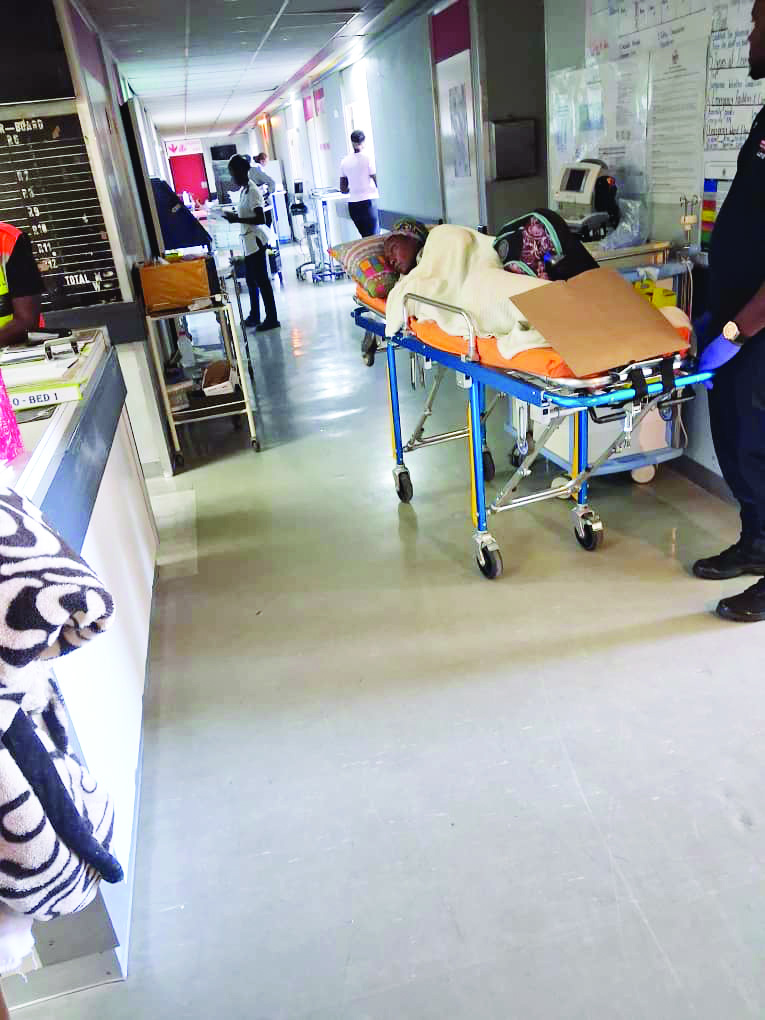
Public hospitals are already overcrowded and battling staff shortages and a lack of medical supplies.
Over the years, The Namibian has reported on public facilities often having long queues, limited staff and medicine shortages, forcing patients to return multiple times or buy medication privately.
Although they will not be affected by the first stage of implementation, civil servants are warning that the new arrangement would only strain services further.
Namibia’s public service workforce stood at 118 936 employees by 31 December 2025.
‘COMFORT AND DIGNITY’
Swakopmund-based teacher Tuwilika Uugwanga says healthcare systems should provide comfort and dignity, not added stress.
“When someone is sick, time and efficiency matter. A patient in pain should not endure prolonged delays. A person managing a chronic condition should not worry about medication availability,” she says.
Uugwanga says if Psemas members are expected to rely mainly on public hospitals, improvements in staffing, pharmaceutical supply, and facility management should be visible.
Without a transparent system, the shift risks increased congestion and frustration, she says.
“I truly stand against this decision as we were not even included in their decision-making process. They have decided without our consent.
“My question is whether they are still going to deduct the same membership fee amount or not. I am against this,” she says.
A police officer, requesting anonymity, says the issue is not resistance but uncertainty about whether the system is ready.
Moving members to such a system without addressing the basic issues first would place additional strain on services and create uncertainty for patients with chronic diseases.
“As a Psemas contributor and public servant, my concern is whether the system is prepared for a transition. Public hospitals already face challenges such as overcrowding, medication shortages, and limited privacy at some facilities,” the officer says.
He says contributors expect financial stability, functional administrative systems, and meaningful consultation before major changes are implemented, as they contribute to their medical aid scheme on a monthly basis.
‘MORE RESEARCH NEEDED’
Kavango East teacher Kupembona Nyangana says more research should be conducted before implementation.
“In my view, this decision is rushed. How is the government planning to address long queues, a shortage of healthcare facilities and medications in state hospitals? Do they want people to die or what?” he asks.
Psemas member Emilia Naftal asks whether state employees would still be allowed to access private hospitals under the new arrangement.
She says those who are financially able to buy medicine may deplete the fund, leaving vulnerable patients without access.
“Imagine I can afford to buy medicine but receive it for free at a state hospital, while someone who cannot afford it comes after me and is told to buy it because the medicine is finished.
“We are placing financial strain on these people,” she says.
Political analyst Ndumba Kamwanyah in a Facebook post yesterday said he also disagrees with the directive.
He said the decision takes away the freedom of choosing where to access medical care.
“Health is personal. We all have different needs, doctors we trust, and circumstances. Forcing state employees into one hospital system does not necessarily solve the current public hospitals challenges,” he said.
Kamwanyah suggested that improvement in service delivery at public hospitals be prioritised for it to be an option.
“People should choose the state because they want to, not because they have no other option.
“If public hospitals are well equipped, properly staffed, efficient, and respectful to patients, they would naturally become competitive,” Kamwanyah said.
Press secretary Jonas Mbambo yesterday said the Presidency would provide comment today.
UNIVERSAL HEALTH COVERAGE
The health ministry has started with regional consultations on the proposed universal health coverage bill.
The first meeting is scheduled for 25 February at Mariental.
According to the invitation, the bill is aimed at improving access to quality, affordable and equitable healthcare services and strengthening the legal and institutional framework for healthcare services in Namibia.
In an age of information overload, Sunrise is The Namibian’s morning briefing, delivered at 6h00 from Monday to Friday. It offers a curated rundown of the most important stories from the past 24 hours – occasionally with a light, witty touch. It’s an essential way to stay informed. Subscribe and join our newsletter community.

The Namibian uses AI tools to assist with improved quality, accuracy and efficiency, while maintaining editorial oversight and journalistic integrity.
Stay informed with The Namibian – your source for credible journalism. Get in-depth reporting and opinions for
only N$85 a month. Invest in journalism, invest in democracy –
Subscribe Now!