A group of individuals born in Windhoek’s Old Location are accusing the government of down-playing the significance of the 10 December 1959 massacre by lumping it under Human Rights Day and Women’s Day commemorations.
The day serves as a tribute to the resilience of those who endured the colonial and apartheid eras.
The forced removal of inhabitants of Windhoek’s Old Location, now known as Hochland Park, to the township Katutura provoked an organised mass protest culminating in a massacre on 10 December 1959.
At least 11 people were killed when the police opened fire on an unarmed crowd.
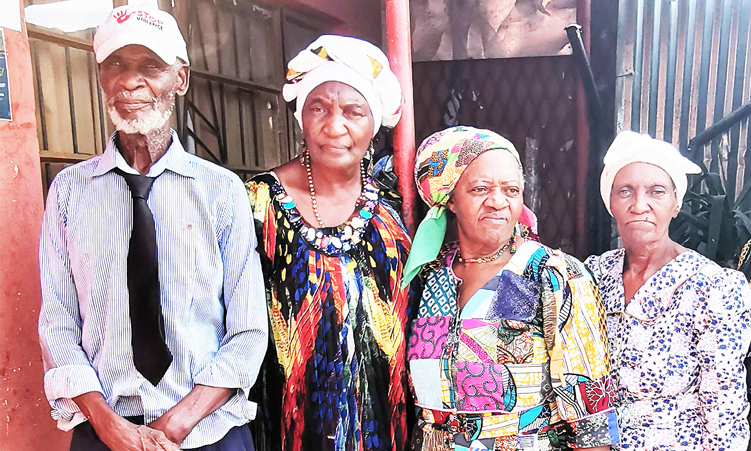
However, for Antonette Tjitimuje (75), a former resident of the Old Location, the commemorations and the day’s significance are not adequately acknowledged.
Tjitimuje, who was 12 years old on 10 December 1959, recalls surviving by hiding under a bed.
She likened the events of the day to the Cassinga massacre.
“We were not at Cassinga, they were also not at the Old Location, but we feel their pain. They must sympathise with us and recognise that we are also hurting even though we are small in number,” she says.
Each year, the day features speeches and performances by former Old Location residents.
Magdalena Tsuses (71) says: “I am very unhappy . . . none of us are ever asked to say what happened on that day. We just go eat and dance.”
She urges the government to provide an opportunity for a more fitting commemoration.
“We are heartbroken because we are not acknowledged,” she says.
Lazarus Mambo (77), another former resident, says: “It’s an emotional matter for us and it means a lot to us that someone is writing our story.”
Historian Mannfred Goldbeck in a 2017 Facebook post explained that 10 December 1959 marked a significant turning point in Namibian history.
He says people began to leave the country to live in exile from that year.
“It was an event which had been started peacefully by a group of women, and which snowballed into a day that rocked and changed the country,” he says.
Rosa Namises, a social, gender equality, and human rights activist born at the Old Location, demands that the day be officially recognised as Human Rights Day/Women’s Day/Old Location Commemoration.
She advocates that commemoration activities are held at the Old Location’s monument at Pioniers park’s Gammams Cemetery. Last year’s event at Soccer House held no significance for them, she said.
“Events in Soccer House or Katutura hold no meaning. The essence and memories reside in the Old Location,” Namises says.
On Sunday, the group laid a wreath at the grave of Bernhard Gutsche, who was not buried at the Old Location mass grave.
Gutsche, according to history, was a respected member of the community, who developed curriculums for Rhenish Mission schools in the country.
He died while assisting others on the day of the attack.
Historian Kletus Likuwa says moving Women’s Day may, however, diminish its significance.
According to him, there’s a need to ensure inclusivity while acknowledging the broader context of the Old Location event.
“Moving Women’s Day would reduce the value of women’s rights,” he says.
President Hage Geingob on International Human Rights Day and Namibian Women’s Day paid homage to the courageous actions of Namibian women who resisted forced removal from the Old Location to Katutura by the South African apartheid regime in 1959.
“On Namibian Women’s Day, we look back with profound memories on the remarkable journey of women, whose actions not only shaped a more just and inclusive Namibia, but also inspired current and future generations of Namibian women to reach new heights,” he said over the weekend.
Geingob, while noting progress in gender equality, especially in parliament, highlighted persisting challenges. “More should be done to eliminate the challenges women continue to face in various aspects of life, including gender-based violence, unequal access to opportunities, and societal biases,” he said.