






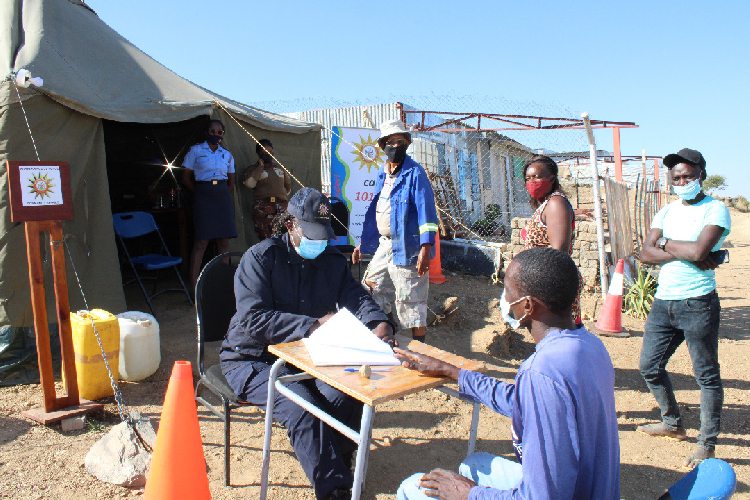
THE Goreangab informal settlement at Katutura in Windhoek received a mobile police station on 14 June.
The overpopulated settlement has been classified by the police as a crime hotspot.
Khomas police regional commander commissioner Ismael Basson says the mobile station was set up to bring services closer to the people and to promote community engagement.
Community police chief inspector Christina Van-Dunem Da Fonsech Shikongo says the police are collaborating with community members who are part of the Women and Men Network Against Crime to fight crime at Goreangab, which over the past months saw several cases of rape reported.
The community policing organisation is an initiative of the Namibian Police, comprising volunteers countrywide.
Maria Alumenta (28), a Goreangab resident, says: “I feel good and safe now, because it means crime is likely to decline.”
Kandeshi Kadonga (49), another resident, says: “We now sleep peacefully after all the stressful nights of chasing intruders. It is always difficult to identify the culprit, because we live in the dark and there is no electricity.”
Pensioner Jacobus Basson (73) says housebreaking is rife at the settlement.
Community leader Lucas Alugodhi (47) says: “At times I used to go and help some residents by giving them accommodation at my place just for safety. Some residents would get attacked almost every night.”
He says he has joined the crime-fighting network and is grateful that members of the community can now have documents certified without spending money on taxi fares.
The station by Thursday reported eight crime incidents, of which seven involved assault and one domestic violence.
More than 35 Goreangab residents have signed a petition requesting that the mobile police stations remain in the area.
The police on Friday conducted a patrol to encourage community participation in the fight against crime.
Van-Dunem Da Fonsech Shikongo says the outcome was disappointing.
“This is a serious matter. The hospitals are full and cannot accommodate more patients,” she says.
Some residents still attend gatherings of more than 10 people and share homebrew (tombo), which add to the risk of contracting Covid-19, she says.
She says some churches still convene with more than 10 people.
The Women and Men Network Against Crime was established by Van-Dunem Da Fonsech Shikongo in the Oshana Region in 2001, and has expanded to all other regions of the country.
She says working with the network makes the police’s work easier, since community members are mobilised to observe and report crimes they observe.