




I’ve always maintained that when it comes to the consumption of seafood in Windhoek, there are very few places I would venture to – very very few.
In fact, I can count them on one hand. While you are wondering why I am giving ‘snob’ and ‘overly selective’, I am merely protecting both my palate and my stomach.
And just to get it out of the way, the beerhouse everyone loves rushing to for bucketloads of oysters is the last place one should be heading to, unless you are going to bang on drums and eat some wild animal you’ve only seen on TV.
Food poisoning on two occasions was enough to teach me better. I mean I was near gone.
Anyway, why this direction? Well, I was watching one of my favourite home-cooking shows, ‘Come Dine With Me’, and I came across a rather simple but low-key fancy dish that I thought I’d try.
However, this was mid-month, and the funds were not funding, not in the way I wanted them to anyway. So I decided to get my sister-in-law to sponsor my foodie escapades for the week.
A mid-week dinner was in order, plus it was another excuse to go spend time with de-niece and de-nephew (see what I did there).
You see, one of the main ingredients in this dish is saffron, and for those that know the spice, it ain’t too cheap. What is saffron you may ask? Well, it’s foodie gold. One of, if not ‘the’ most expensive spice you can come across. You use small amounts, and it does the job. It’s like cooking with diamonds.
The price it goes for per microgram, you might as well be.
But why is it so expensive? I’ve been doing my ‘spice homework’ and learnt that the price comes down to how delicate and labour-intensive it is to produce. It is all about hand-harvested threads from the dried stigmas (tiny red threads) of the Crocus sativus flower. So, each flower only has three stigmas, and they all must be picked by hand.
It apparently takes around 75 000 to 100 000 blossoms to produce just one pound of saffron, so when it comes to the sheer volume of flowers needed, it is massive. The flowers bloom only for about two weeks each year, the stigmas must be collected at dawn before sunlight wilts them, then carefully dried to preserve their flavour, colour and aroma, and to top it all off, saffron thrives only in specific climates (like in Iran, Spain, India’s Kashmir, Greece, Morocco).
This means supply is naturally limited – so good luck if you thought you could grow it in your backyard. I’m not even sure it is allowed. This all then leads to people creating bootleg versions of the spice. So it’s not just people’s Nikes that have questionable logos and places of origin, it’s the spice too.
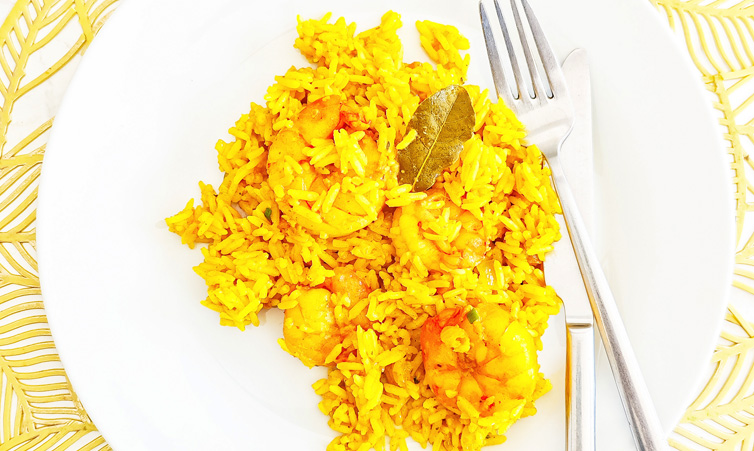
I procured a few strands from the Zero Waste store in Klein Windhoek, then swung by SeaSource, whose seafood remains top notch. I got a few prawns, and zoomed home to prepare the dish below.
If you do not have saffron, the recipe works with a bit of curry powder or paprika.
Saffron Rice with Peri-Peri Shrimp
Ingredients:
560g shrimp, peeled and deveined
1 onion, chopped
6 cloves garlic, minced
2 tablespoons extra virgin olive oil (30 ml)
180ml dry white wine
8 strands saffron
1–2 tbsp peri-peri hot sauce (to taste)
1 tbsp paprika
¼ teaspoon ground cumin
Juice and zest of 1 lemon
3 tbsp butter (45 g)
450g cooked rice or couscous
Salt and pepper, to season
Method:
Warm white wine and steep saffron strands. Stir this into the cooked rice/couscous until golden and fragrant.
Season shrimp with salt and pepper.
Heat olive oil in a pan, sauté onion (five to 10 minutes), then add garlic.
Add shrimp, paprika, cumin and peri-peri sauce. Cook for about five minutes.
De-glaze with a splash of wine if needed, then add lemon juice and zest.
Finish with butter over low heat for a glossy sauce.
Serve shrimp over saffron rice or couscous.