



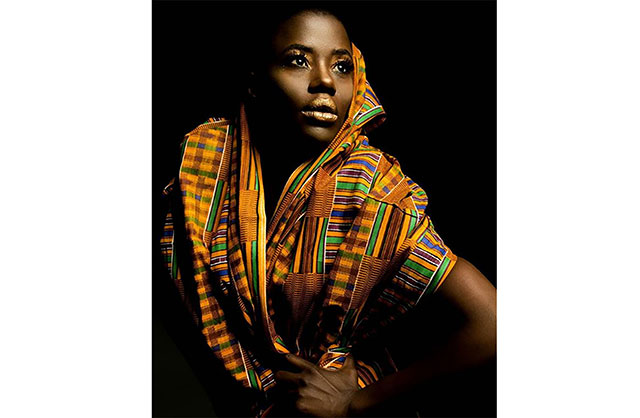
The word that Girley Jazama keeps using to describe her monumental wins at the Sotigui Awards in Burkina Faso last weekend is “beautiful”.
Having won the award for Best Actor in Southern Africa as well as the coveted Sotigui d’or for her role as an apartheid-era domestic worker in ‘The White Line’ (2019), Jazama has returned to Namibia filled with gratitude, awe and a new lease on her film-making life.
“Honestly, I didn’t expect to win, because of all the brilliant nominees in my category. I am really humbled and it is such an honour to win these awards,” says Jazama, who spent three days doing awards show press in Ouagadougou in-between a little sightseeing alongside this year’s Sotigui Awards host Adriano Visagie, who won the Best Actor in Southern Africa award in 2019.
“It was such a beautiful experience,” says Jazama, who is a bit of an introvert and was somewhat overwhelmed by the royal treatment, the paparazzi-style snapping and onlookers wanting to take photos.
“The people of Burkina Faso were so welcoming. I think the reception we received was just so beautiful. I got to know other actors from across Africa who are working all over the world representing their country.”
Considering why Sylvia, the character she plays in ‘The White Line’, seems to have resonated with so many people, Jazama believes it’s because she is someone we can relate to in one way or another.
“I think Sylvia resonated so well with people because she represents the struggle. Our story highlighted our struggles as a country from an apartheid perspective which I think a lot of people didn’t know about because they thought apartheid only happened in South Africa,” she says of the character she embodied in homage to her family’s own particular past as well as Namibia’s collective apartheid and colonial history.
“So Sylvia, to a certain degree, represents the struggles of our people as Africans, not just as Namibians, not just as Hereros. I think it’s also her courage and her bravery. That, despite the odds, she persevered.”
Jazama, who was a producer on the film also elaborates on preparing for the role.
“From an emotional perspective, I stepped away from being a producer to be able to prepare the character. I did a lot of reading. I watched a lot of movies. I did a lot of research but, at the same time, I studied my character by just working through my script,” she says.
“As an actor, you relate to certain experiences you’ve had in your personal life and use those to give life to the character. Sylvia is a beautiful character […] She is a strong character who would speak with her eyes and speak with her body language. It was quite challenging but I loved telling her story.”
Effusive about the Sotigui Awards’ organisation, mission and treatment of the talent, Jazama was stunned to be so sincerely fêted.
“The Sotigui Awards is all about celebrating our own people because they value the work us actors put in. It takes hard work for us to do what we do. We put in a lot of effort to portray a character on screen or even on stage and we were really celebrated as actors,” she says, recalling a particularly blissful, unifying and genuinely supportive feeling among the nominees.
“I have never ever received that calibre of love and appreciation. It is something I will never forget. It was like the academy was saying we’re not gonna wait for our people to be celebrated internationally nor are we gonna wait to only celebrate them when they’re dead. Let’s celebrate our people now while they’re alive.”
Excited for her Sotigui sweep to put her on the continental map while opening doors for her to work outside Namibia, perhaps even in collaboration with the actors she met in Ouagadougou, Jazama is currently home and still sort of waiting for this major moment to sink in.
“Thank you to the Sotigui Awards,” Jazama says.
“To receive this international recognition is just so beautiful but I think at the same time, us as a country, we can learn from it. We kind of only take people seriously or start celebrating them when they’ve been recognised internationally and I think we need to change that mindset. It needs to start at home before talents are exported or celebrated elsewhere,” she says.
“It needs to start here.”
In an age of information overload, Sunrise is The Namibian’s morning briefing, delivered at 6h00 from Monday to Friday. It offers a curated rundown of the most important stories from the past 24 hours – occasionally with a light, witty touch. It’s an essential way to stay informed. Subscribe and join our newsletter community.

The Namibian uses AI tools to assist with improved quality, accuracy and efficiency, while maintaining editorial oversight and journalistic integrity.
Stay informed with The Namibian – your source for credible journalism. Get in-depth reporting and opinions for
only N$85 a month. Invest in journalism, invest in democracy –
Subscribe Now!