



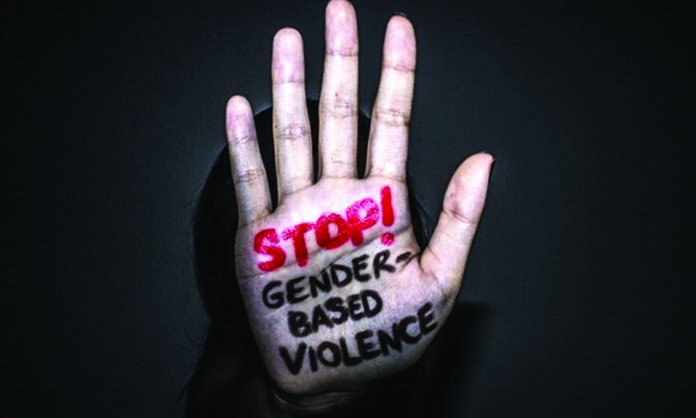
Local mental health professionals are concerned about how gender-based violence (GBV) victims and survivors rarely seek professional counselling.
Namibia continues to face a significant challenge with GBV, with about 4 405 cases reported between April 2024 and February 2025.
In the Zambezi region, 302 cases were reported between November 2024 and November 2025.
Psychologist Ceaseria Mutau told The Namibian yesterday that internalised shame among victims prevents them from seeking professional help or speaking up until it is too late.
Mutau referenced two GBV incidents that happened in the Zambezi region last year, one of which ended fatally, while the other victim pleaded for leniency. A Zambian national living in Masida attempted to withdraw a case she had opened against her husband two days after he allegedly assaulted her as he is the family’s breadwinner. However, the police refused to withdraw the case.
Mutau noted that the two incidents may appear startlingly different, however, through a psychological lens, they illustrate two points on the same continuum of harm, fear, trauma and emotional entanglement.
“Many women in abusive relationships fear that reporting will trigger retaliation. Tragically, their silence is sometimes fatal, but so is speaking up. This is the psychological contradiction of GBV, as both silence and disclosure are dangerous acts,” she said.
Mutau further stated that, from a psychological systems perspective, survivors are not failing to leave; rather, the system is failing to keep them safe.
“When a woman pleads for her abuser’s release, it may reflect desperation and disillusionment, not forgiveness. Because when the person who loves you is also the person who harms you, the mind experiences conflict. By defending the abuser, it reduces the mental discomfort of accepting a frightening truth, and then denial becomes a form of self-protection. When abuse happens repeatedly, a woman may subconsciously learn that fighting and reporting don’t help and that leaving only makes things worse,” she said.
She added that often times they prefer to keep quiet because they are afraid of being judged, rejected or mocked, and it pushes survivors deeper into self-blame and isolation.
“Shame attacks a person’s core identity; the emotional weight makes it extremely difficult for survivors to speak up, seek help or leave. Survivors of abuse do not stay because they are weak. They stay because abuse affects the brain, emotions, self-worth and sense of safety. Many remain locked in a cycle where fear and attachment coexist,” she said.
GBV expert Mwenda Mubuyaeta-Sanandwa told The Namibian yesterday that victims’ hesitancy also stems from society’s stigma and victim-blaming, despite the fact that they need support to heal and move on with their lives.
Mubuyaeta-Sanandwa added that violence is still considered a private family situation; hence, victims are discouraged from seeking professional counselling.
“Religiously, victims will be encouraged to forgive their abusive partners. Hence, many cases are ‘resolved’ within families or by religious leaders, bypassing formal counselling and justice systems,” she said.
In an age of information overload, Sunrise is The Namibian’s morning briefing, delivered at 6h00 from Monday to Friday. It offers a curated rundown of the most important stories from the past 24 hours – occasionally with a light, witty touch. It’s an essential way to stay informed. Subscribe and join our newsletter community.

The Namibian uses AI tools to assist with improved quality, accuracy and efficiency, while maintaining editorial oversight and journalistic integrity.
Stay informed with The Namibian – your source for credible journalism. Get in-depth reporting and opinions for
only N$85 a month. Invest in journalism, invest in democracy –
Subscribe Now!