






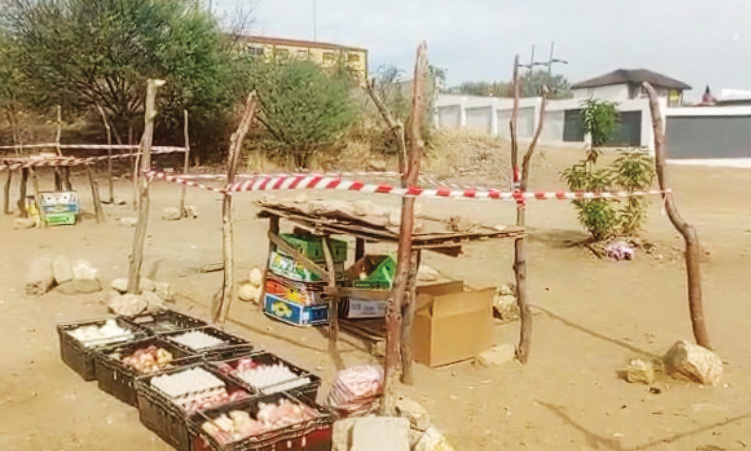
The Windhoek City Police are demanding that street vendors at Dorado Valley buy gazebos and tables to comply with informal trading regulations.
Some vendors’ stalls in the area were cordoned off with police tape last week to prevent them from selling their goods until they obtain the required items.
Vendors around the city have for years been using umbrellas and tables made from wooden pallets to display their goods.
Karolina Mundila, one of the affected vendors, says they cannot afford gazebos due to their low earnings, and there’s also the risk of such structures being destroyed by wind and rain.
“Even if I could afford a gazebo, it would be destroyed the same day. This place is windy,” she says.
The price of gazebos in Windhoek range from N$575 to N$10 000.
Despite paying a monthly rent amount of N$221, Mundila says the vendors at Dorado Valley lack basic services like toilets and shelter. The municipality is also not clearly communicating with them, Mundila says.
“We don’t know where the money we pay goes. The police told us they don’t want the poles we put here or the hand-made tables, instructing us to buy from the shops,” she says.
Mundila is calling on the municipality to put up some structures to provide vendors with shade at their selling points.
“Now we are unsure whether we should continue selling. In the meantime, our things will rot,” she says.
Another vendor, Petrina Nangolo, says if she stops selling she would not be able to feed her family.
“This is where I get food. January is almost here and my children need uniforms to go to school. How are we going to survive?” she asks.
Victoria Mukowoto says the income from selling her items is the only means she has.
“The City of Windhoek should buy us gazebos to continue selling. We pay rent. We even pay people at a house here N$10 to use their toilet. Stopping us from selling means we cannot make a living,” she says.
Windhoek City Police spokesperson Marcelline Murapo says the police’s demands comply with the municipality’s informal trading regulations.
“The police acted according to the city’s trading regulations, stating that an informal trader may not erect any structure other than an umbrella-like device without written approval from the council,” she says.
The municipality gave the vendors permission to use the space for trading on 4 November.
According to a letter from the city’s suburb coordinator, Kondjashili Shipoke, they are strictly permitted to sell fruit and vegetables, with selling alcohol strictly prohibited.
“You are requested to ensure cleanliness of the surroundings, the food, utensils, person serving food and compliance with Covid-19 regulations,” the letter reads.
Shipoke says trading will be stopped if vendors fail to adhere to the rules.
In a statement on Saturday, community advocate Sem David has demanded answers from the municipality to a “painful historic pattern”.
David demands clarity on the municipality’s operation policy for vendors, the approval and purpose of the monthly fee, the authorisation and reason for the removal of stands, and whether affordability and environmental risks are considered.
“The informal economy feeds families and creates self-employment for thousands excluded from the formal job market, yet the municipality enforces outdated bylaws to criminalise poverty and punish hard-working street vendors,” he says.
He says the authorities’ actions are putting the livelihoods of vulnerable vendors at risk, demanding an end to the “harassment”.
“These vendors already pay an unexplained monthly fee, yet receive no clear services or protection,” David says.
The municipality promised to respond to a request for comment on Monday.