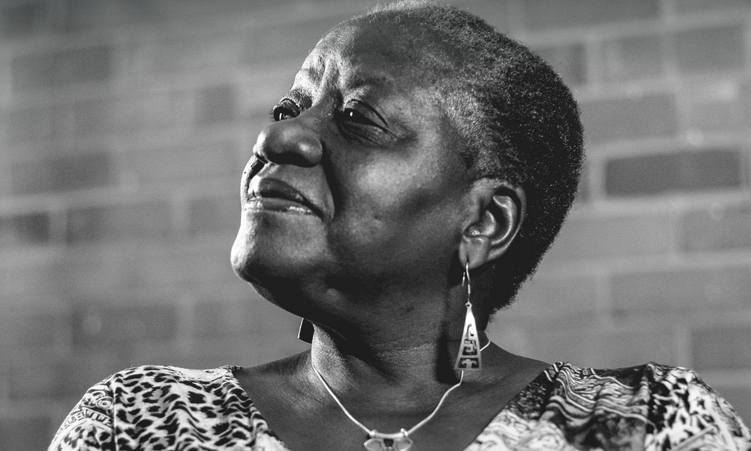
A new documentary offers an intimate audiovisual portrait of Bience Gawanas, one of the country’s most prominent liberation figures and human rights advocates.
The film, ‘The Encapsulation of Bience Gawanas’, was directed by Namibian film-maker and creative director Othilia Mungoba.
The experimental reflective biographical portrait moves away from standard chronological formats, opting instead for a multi-sensory storytelling approach that blends sit-down conversations, archival footage, personal artefacts, photographs and music.
The documentary will be screened on 28 August at a public sit-down event in Windhoek.
Mungoba says the piece deliberately strips away institutional titles to reveal the core humanity of a woman widely celebrated as one of Namibia’s first black woman advocates.
“Rather than relying strictly on typical sit-down interviews, the story is guided through personal items placed within the set, such as a coffee mug from Gawanas’ time serving at the African Union, or a jersey passed down from her grandmother,” Mungoba says.
Throughout a career spanning over more than three decades, Gawanas (70) has consistently broken barriers in legal reform, pan-African policy and global governance.
Following Namibia’s independence, she quickly became a central figure in shaping the country’s post-colonial legal landscape.
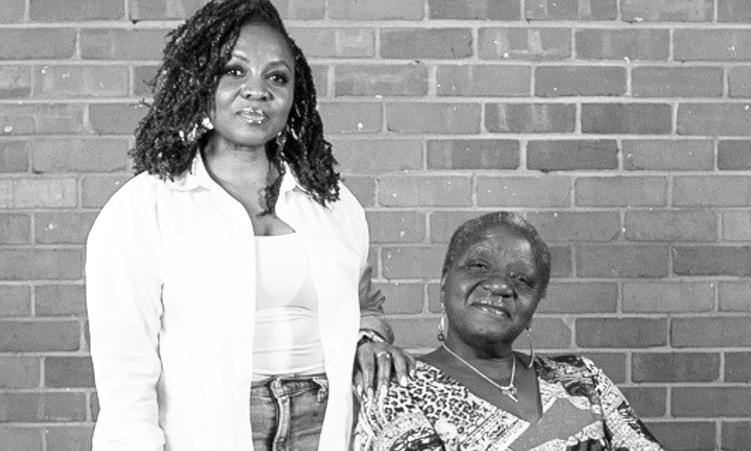
Serving as a commissioner on the Public Service Commission from 1991 to 1996, she went on to serve as Namibia’s ombudsperson until 2003.
Each item serves as a narrative anchor and a portal, prompting reflection on her personal and professional milestones, trials and tribulations, family values and her pivotal role in shaping policy, advocacy and social justice frameworks.
“It is shot and screened in black and white to evoke timelessness and emotional depth. The interview features deliberate pacing and minimalistic staging to keep the tone intimate and contemplative,’’ Mungoba says.
The film serves as a meditation on identity, justice and womanhood, inviting audiences to engage with Gawanas’ lived experiences within Namibia’s historical and socio-political landscape, she says.
Mungoba highlights the financial struggles local filmmakers face, saying that “high production costs and limited returns on investment force many creators to rely on international film festivals to recoup expenses’’.
She urges local audiences to actively support national storytelling by buying tickets and attending screenings.
The documentary comes as part of Heroes’ Month and Women’s Month awareness activities, highlighting the vital role women played in Namibia’s struggle for independence and in shaping the nation’s history.
“Designed as a curated cultural experience, the event will unfold with opening remarks and contextual framing, followed by the documentary screening and a moderated live segment,” Mungoba says.
As the chairperson of the Law Reform and Development Commission, Gawanas spearheaded crucial progressive legislation.
Most notably, she led the passage of the Married Persons Equality Act, a landmark piece of law that abolished the legal supremacy of husbands and established equal rights for spouses in marriage. Her foundational work also paved the way for key legal protections regarding sexual violence and gender rights.
Gawanas’ impact extends far beyond domestic policy. In 2002, she was elected as the commissioner for social affairs at the African Union assembly of heads of state and government, a post she held until 2012.
In this role, she focused on health, human rights and social development strategies across the continent.
In addition to her government and diplomatic posts, Gawanas has maintained deep ties to civil society and academia. She taught gender law at the University of Namibia, served on the board of the Bank of Namibia, acted as secretary general of the Namibian National Women’s Organisation and is the current chancellor of the University of Warwick in the United Kingdom.
She has also served as patron to the Namibian Federation of Persons with Disabilities.
“I have always believed the creative arts are an integral part of who we are as a people. They give us the language to express our identity, preserve our memory and make sense of our collective journey. This documentary is, in many ways, an extension of that belief,” Gawanas says.