



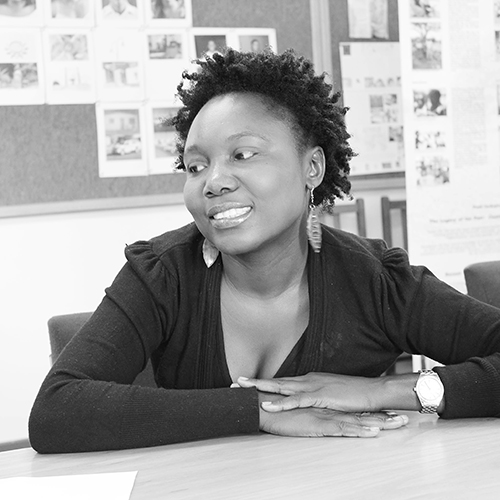
For some people, their passion revolves around standing in a classroom filling children with knowledge, for others it might be sitting in an office writing articles. However for Alma Nankela, her passion is to dig up the ground and discover the history of the human race.
Archaeology is among the ‘not so popular’ professions in Namibia. How could it be? It’s not an easy job for starters, work might sometimes be scarce and far between and single projects could take months or even years to complete, not to mention the amount workforce involved.
The work of archaeologists involves surveying, excavation and eventually analysis of data collected to learn more about the past, and should be considered as one of the most important careers in the world.
Alma Mekondjo Nankela was born in exile in Kwanza-Sul, Angola during Namibia’s liberation struggle. Spending most of her life in the northern regions of the country, she pursued History and Geography in secondary school and later a degree at the University of Namibia.
Through earning her masters degree in Archaeology in Europe, she has become Namibia’s leading lady of Archaeology and is currently pursuing her Ph.D in France while leading the Archaeology and Heritage Research Department at the The National
Heritage Council of Namibia.
“I think most people think that you’re almost born to be an archaeologist. I wasn’t that kid who played in a sandbox and dreamed of being a future archaeologist. My own experiences and interests were different,” Alma said.
It was her love of the outdoors that largely shaped her childhood years, growing up in refugee camps in Angola, as well as the time she spent living in the village in Namibia.
Like all children, she too was very curious.
“I would often sit around the soldiers guarding our camp and curiously and constantly question them about life outside the camp. I wanted to see it for myself and often contemplated an escape out the camp one day unnoticed to see what was out there… but my fear of the forests stopped me.”
Due to her fear, she would round up the other children from the camp and cook up escape plans to explore the world outside, which on many occasions were successful.
She later moved from Kwanza-Sul, when her mother was transferred to Cambuta settlement where she worked as a Clinical Pathologist in a laboratory alongside Dr Nickey Iyambo.
“Often during his free time, I occasionally saw Dr Iyambo leaving his house – which was not far from our house, carrying some hunting tools to hunt for birds and squirrels nearby our settlement. I begged him to take me on his hunting expeditions. I loved our adventures. We eventually became hunting buddies.”
On why she decided to pursue archaeology, Alma says her initial interest in archaeology was largely driven by her love of culture and people and by the fact that Namibia has, even today, an extreme acute deficiency of archaeologists.
Alma says the highlight of her career came about in April 2008 with the discovery of the 16th century Portuguese shipwreck in Oranjemund. This was an extraordinary experience mainly due to the “nature of the challenges it presented and the relationships between all the parties involved in the project”.
“Although many people may find archaeology to be incomprehensible and a tedious thing of the past, I am convinced that anyone who makes the effort to understand it will realise that it’s a rewarding experience, because these prehistoric remnants carry messages that are universal in the fullest sense of the word.”
Thinking of Pursuing Archaeology?
• Explore: The best way to get involved in archaeology is to find out what opportunities are available within Namibian universities, history societies or heritage institutions.
• Read: There are many popular archaeology magazines and books available in stores and local libraries, this is a quick and enjoyable way to find out about archaeology.
• Watch: Movies like those starring the character Indiana Jones have become a topic of interest for budding archaeologists and it helps you to familiarise yourself with the basic concepts and enables you to identify with the quality of archaeology done and the validity of some of the claims.
• Talk: Archaeologists are generally friendly people who love their subject. Never be afraid to look up archaeologists who work in your country and ask them for advice on how to get started.
• Practice: A career in archaeology begins at university. Without a university degree in archaeology or anthropology, your chances of getting a job in the discipline becomes difficult, let alone advancing your career as a professional. So if you are serious about a career, find out what requirements you need to meet to be accepted for such a university course and find out which university you would like to attend.
• Volunteer: In Namibia, there are few archaeologists available. Beyond expanding your training, skills and expertise, successful archaeologists volunteer at the National Heritage Council or the National Museum of Namibia. It will provide opportunities for networking, publication and self-promotion. This means volunteering to work, often unpaid.
In an age of information overload, Sunrise is The Namibian’s morning briefing, delivered at 6h00 from Monday to Friday. It offers a curated rundown of the most important stories from the past 24 hours – occasionally with a light, witty touch. It’s an essential way to stay informed. Subscribe and join our newsletter community.

The Namibian uses AI tools to assist with improved quality, accuracy and efficiency, while maintaining editorial oversight and journalistic integrity.
Stay informed with The Namibian – your source for credible journalism. Get in-depth reporting and opinions for
only N$85 a month. Invest in journalism, invest in democracy –
Subscribe Now!