



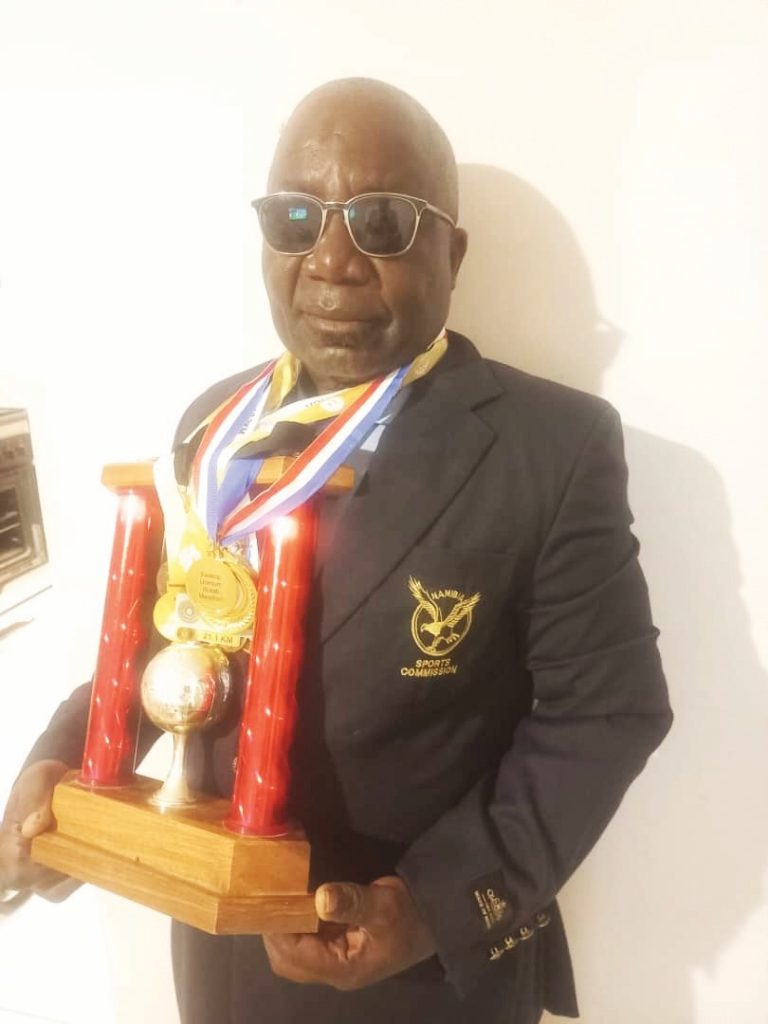
Former powerlifter Tsire Tsauseb says his inspiration to take athletics seriously comes from Springbok wheelchair athlete Anna Shipena.
Walvis Bay-born Tsauseb started his education journey at the then Kuisebmond Inboorling Skool, now known as Immanuel Ruiter Primary School, and his desire to attain an education would later take him to the famous Cornelius Goreseb High School at Khorixas.
“I was a restless young man growing up. I would not allow myself to be sidelined from participating in sport just because of my short leg. I just ran against the other children – although my last place was guaranteed – and I also played football with the boys,” he says.
After he realised he was too slow to keep up with the other boys on the football pitch, Tsauseb converted to coaching the under-15 boys team of Kuisebmond Secondary School.
“Coaching football was a different ball game altogether. I was training the likes of late Eleven Arrows striker Munyande Muaine and Elia Nghipundja, who went on to become a key member of Blue Waters after he left school at Kuisebmond secondary,” he says.
“But my real coaching job was when I was coaching premier league giants Eleven Arrows in the National Soccer League, which is the predecessor of the Namibian Premier League. It was a challenge, but the four-two-four system we played made things very easy for me.”
Tsauseb did not only coach, but had to play an encounter in the JPS Knockout Cup competition after the regular goalkeeper got injured.
“I remember that day well: Our keeper got injured and the other officials on our bench looked around and decided I was the suitable candidate to play in goals. It was against Swallows from Katutura and they were even laughing at me, but we beat them 1-0,” he says.
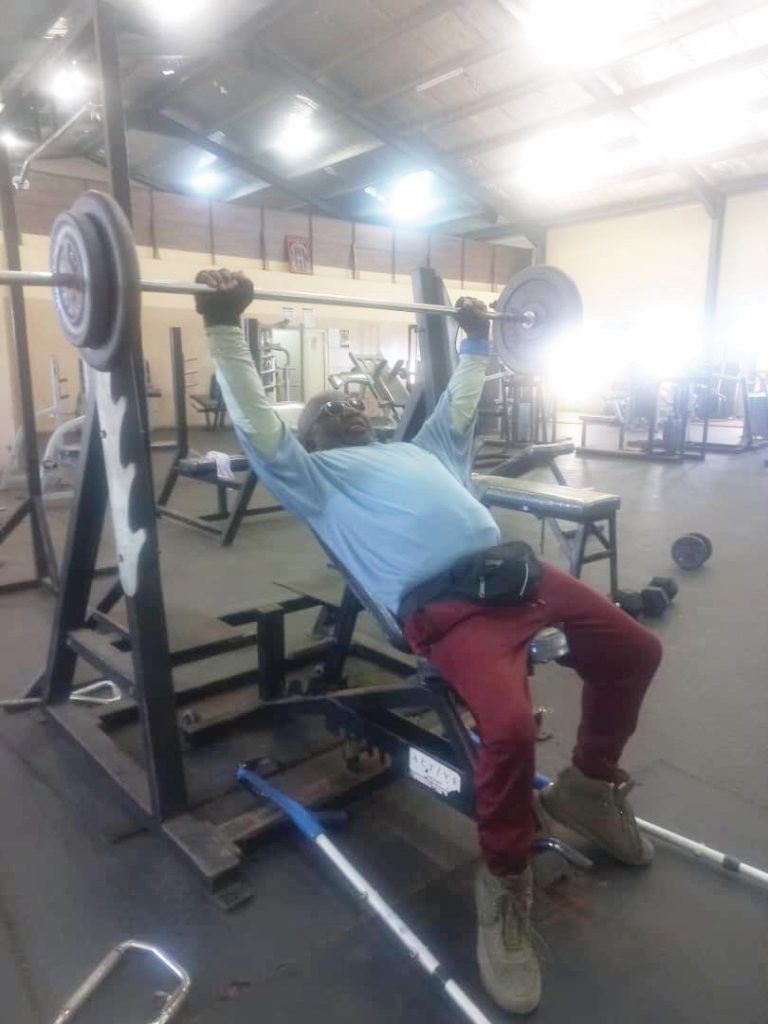
The physical demands of football became too overwhelming and Tsauseb decided to switch to a more individualistic and static sport and he opted for powerlifting.
PUMPING IRON IN THE BEER HALL
“We were only five when we started lifting weights at the Kuisebmond Stadium in 1989. It was just late Aupapa ‘Ouchumi’ Hipondoka, Samuel ‘Bonneti’ Niilenge, About Mbako, late former boxer Joe Hindjou and myself. We were later relocated to the beer hall,” he says.
“The former colonial administrators demarcated a section of the beer hall for us to continue with our training. I was a very light person.
“I only weighed 30kg at the time, but I started pushing 40kg, then 60kg and I moved up to 150kg, which is 75kg a side.”
Tsauseb, who also tried karate and boxing, stopped because both sport codes were just too fast for him.
With the dawn of Namibian indepedence, Walvis Bay got isolated from the mainland because it was still falling under the jurisdiction of South Africa (SA), and it also started to affect the sport fraternity.
“I decided to return to athletics and I started competing in the shot-put, which I was dominating because I was now stronger from the weights I was lifting. SA was the only country we could go to for competitions, and it became my destination as well,” he says.
“I was progressing well in my sport, but the only setback is that I could not represent my motherland Namibia, and for about four years I was just training on my own. I was improving a lot with my shot-put up to a point that I even won a competition in SA.”
Tsauseb even qualified for the 1992 Barcelona Paralympics in powerlifting, but he could not represent Namibia due to politics and could not even compete in the South African colours, because of the sport ban imposed on South Africa.
Eventually, age started catching up on the former Arrows coach, and he was losing his competitive edge.
“By that time Walvis Bay was returned to Namibia, but the reintegration came way too late for me. And due to my advancing age I was now mostly concentrating on talent identification and started coaching children with disabilities,” Tsauseb says.
“I can proudly say I have discovered and trained Olympic champion Johanna Benson. As a result I was even honoured with a sport achiever award.
“I had Ruben Soreseb, who uses crutches. He does powerlifting and he was at the Paralympics.”
He says Soreseb managed a personal best lift of 250kg.
STRONGMAN FOR RESPECT
Tsauseb, who is also a strong advocate for the recognition of and respect for people with disabilities, also played a crucial role in the establishment of the Namibia National Federation for Disability Sport, of which he was also the president at some point.
“The problem I have noticed with mainstream sport bodies that are affiliated to the Namibia Sports Commission (NSC) is that those bodies, including the NSC itself, don’t take people with disabilities seriously and they want to control us,” he says.
“We have footballers, swimmers, tennis players, volleyball and athletes but the controlling bodies in the country want to have the biggest say in our sport, despite the fact that we have our own capable coaches and administrators who are just overlooked,” he says.
“People like myself are training and developing our athletes in the regions. We face a lot of challenges grooming our people, but when they become competitive and it is time for them to compete at major events outside the country, we are replaced by able-bodied people.”
The Tsire Athletics Sport Club owner is married to Lydia Tsauses and they have four children.
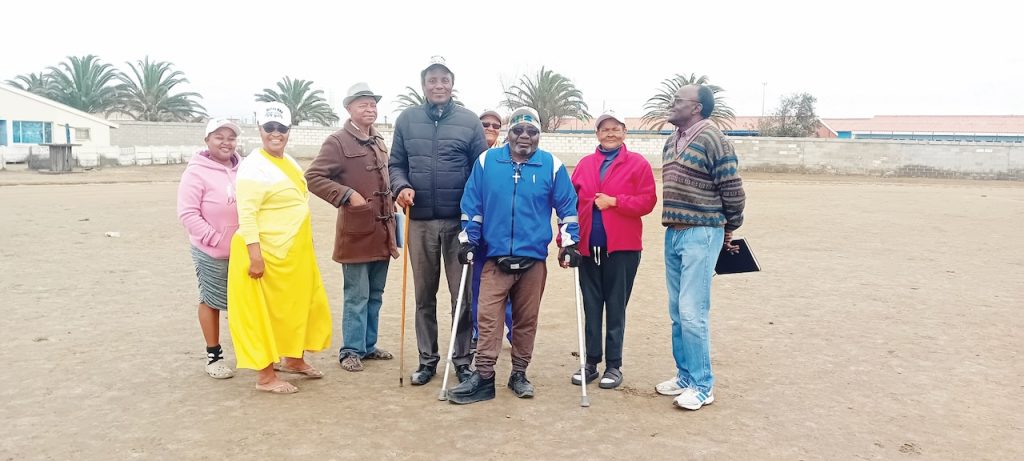
Apart from coaching his athletes, Tsauseb is a community activist with a soft spot for Walvis Bay’s senior citizens.
In an age of information overload, Sunrise is The Namibian’s morning briefing, delivered at 6h00 from Monday to Friday. It offers a curated rundown of the most important stories from the past 24 hours – occasionally with a light, witty touch. It’s an essential way to stay informed. Subscribe and join our newsletter community.

The Namibian uses AI tools to assist with improved quality, accuracy and efficiency, while maintaining editorial oversight and journalistic integrity.
Stay informed with The Namibian – your source for credible journalism. Get in-depth reporting and opinions for
only N$85 a month. Invest in journalism, invest in democracy –
Subscribe Now!