




Union membership IS not just a legacy of Namibia’s past – today it is a living force for justice, dignity and economic empowerment.
As Namibia continues to confront inequality, unemployment and the pressures of a globalised economy, the role of trade unions remains as vital as ever.
It can be argued that the foundation of organised Namibian labour movements were the spark that ignited the liberation movement in this country.
The existence of labour movements, that were inclusive of black workers, can be traced back to as early as 1924, where the first recorded organised indigenous trade unions were reportedly established at Lüderitz.
Two of the central organisations were the Universal Negro Improvement Association and the Cape Coloured institution known as the International and Commercial Workers Union.
At the time, trade union movements were created exclusively for whites as the colonial South African government opposed the emancipation of the black labour force.
A pivotal milestone in the Namibian labour movement was the founding of the Ovamboland People’s Congress (OPC) at a barbershop owned by a Namibian at Green Point, Cape Town, on 2 August 1957.
The OPC was established to fight for the rights of migrant workers against the exploitative South West African Native Labour Association, a labour contracting organisation that recruited many Namibians from northern Namibia to work on farms and mines at the time.
Workers in the Namibian compounds responded well to the OPC as it became the only structured organisation that addressed their concerns of poor treatment, substandard working conditions and frequent human rights abuses.
Another pivotal milestone in the labour movement was the Swapo-linked nationwide contract labour strike that took place between December 1971 to January 1972. In June 1971, the International Court of Justice declared that South African control of Namibia was unlawful, leading to strike action across the country.
The unifying demands made by 15 000 to 20 000 strikers included “free choice in location of employment; better wages according to qualifications and abilities; the right to terminate an unwanted and too-low paid contract, as well as freedom to search for a new assignment without action by the police; permission to take family members to the place of work, and the unconditional right to visit or be visited”.
On 19 January 1972, the United Nations Council for Namibia declared that the contract labour system violated the UN Declaration of Human Rights and after two days of government-striker negotiations at Grootfontein, the South African government officially abolished the contract labour system.
In 1985, a group of workers assembled at the Catholic Church at Katutura and formed the Workers Action Committee (WAC). Similarly, South Africa’s National Union of Mineworkers began organising workers at Namibia’s Consolidated Diamond Mines and Rössing Uranium. These workers merged with WAC and formed the Rössing Mineworkers Union in April 1986, later becoming the Mineworkers Union of Namibia (MUN).
By the time Namibia gained independence in 1990, unions such as MUN were a formidable force among grassroots organisations. They enjoyed huge support and played a critical role in ensuring Swapo’s victory in Namibia’s first democratic elections held in 1989.
While Namibia has made significant strides since independence, the challenges facing workers remain.
Unemployment, especially among the youth, the high cost of living, informal employment, and job insecurity threaten the well-being of families across the country. Many workers still face low wages, poor working conditions, and intimidation in the workplace.
The history of Namibia shows that when workers unite, they can break the chains of oppression and shape the destiny of the nation.
Namibia’s commitment to upholding labour rights is a cornerstone of its democratic principles and social justice.
Contemporary challenges faced by the mining industry include the outsourcing of mining operations that effect the remunerations and working conditions of workers. Sub-contractors for mining houses providing short-term fixed contracts for their workers disadvantages workers from benefits that would improve their livelihoods and that of the broader Namibian society.
The MUN leadership is hard at work with the government for the above practices to be discontinued and effectively addressed in support of members and workers.
MUN, through its efforts, will continue to strive for the well-being and prosperity of our members. Aluta Continua!
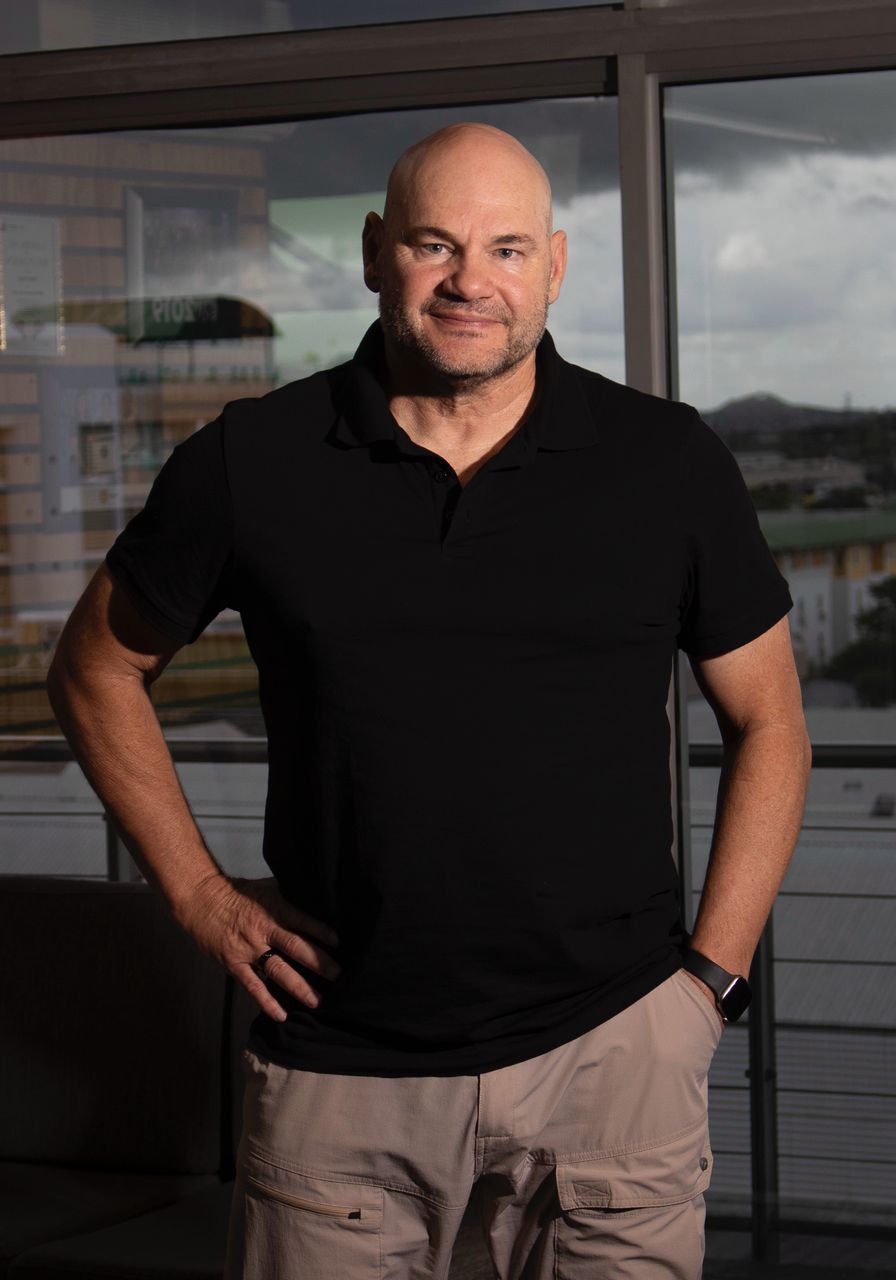
– Poco-Key Mberiuana is president of the Mineworkers Union of Namibia
In an age of information overload, Sunrise is The Namibian’s morning briefing, delivered at 6h00 from Monday to Friday. It offers a curated rundown of the most important stories from the past 24 hours – occasionally with a light, witty touch. It’s an essential way to stay informed. Subscribe and join our newsletter community.

The Namibian uses AI tools to assist with improved quality, accuracy and efficiency, while maintaining editorial oversight and journalistic integrity.
Stay informed with The Namibian – your source for credible journalism. Get in-depth reporting and opinions for
only N$85 a month. Invest in journalism, invest in democracy –
Subscribe Now!