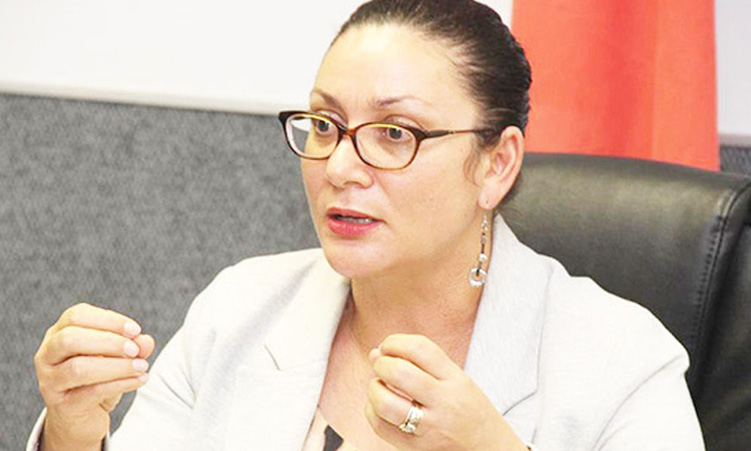
Getrud Malawi and Johannes Nangolo, aka ‘John the Trader’, are partners at Guru Forex Academy, situated in Windhoek’s southern industrial area.
They trade under South African broker Vault Marketing, which has an office in Namibia and provides a financial instrument for people to trade in forex.
“For one to trade in forex, they must open an account with a broker as this prevents trading on the streets where people get scammed,” says Malawi, the founder and chief executive officer of Guru Forex Academy.
While the two are accomplished forex traders, they also offer mentorship for those intending to start a career in the trade.
“Forex trading is a risky business because you can lose money if you do not know what you are doing,” says Nangolo.
He says a broker is an intermediary between a liquidity provider and a client.
At the heart of forex trading is making an analysis of how the values of certain currencies will move against the United States (US) dollar, which is used as a base currency, he says.
Nangolo says world events like Russia’s war in Ukraine influence the strength of the US dollar as it becomes more stable.
“As the British mourned the death of Queen Elizabeth II, forex traders made money because of the down movement of the pound sterling,” Malawi says.
Nangolo dismisses notions that forex trading is a gamble, saying one must know what is happening in the world that influences the movement of currencies to be able to trade successfully.
“You do not just plunge into the sector. Everyone must learn the trade and read about forex trading to understand the basic principles of what is going on,” says Malawi, adding that this is where the scamming happens as conmen will take people’s money in the name of forex trading and not explain how and when they lost money.
“I always tell people who have been scammed that they had in fact scammed themselves by not acquiring knowledge, and that this had enabled other people to steal their money,” she says.
Malawi says forex trading is different from pyramid schemes in that the initiators of the scheme get their money, while those who join later always lose out.
“The biggest mistake people make is thinking that forex trading is a get-rich-quick scheme,” says Nangolo, who abandoned an electrical engineering degree programme at the Namibia University of Science and Technology to pursue forex trading.
This is also where he acquired the moniker ‘John the Trader’.
He has, however, returned to university to obtain an economics degree.
“Forex trading is a professional career and there are only two moves – either you buy or you sell,” he says, adding that besides mentorship, he also gives trainees signals of when to buy or sell.
Nangolo says people lose money if they buy at the wrong time, and the uninitiated will see this as a scam, yet it will be a bad trading decision.
He advises people to get mentored before venturing into trading.
“You can even go on YouTube and find information on forex trading,” he says.
Malawi says she was inspired to go into trading because Covid-19 restrictions had prevented her business, GM Fashions, from travelling to China to order merchandise.
Nangolo says there is a future in forex trading as long as there is trade between countries.
“Every day there is US$8 trillion circulating globally,” Malawi says.
She says Guru Forex Academy will be hosting a gala dinner for all forex traders in Namibia and South Africa on 3 December.
Email: matthew@namibian.com.na
In an age of information overload, Sunrise is The Namibian’s morning briefing, delivered at 6h00 from Monday to Friday. It offers a curated rundown of the most important stories from the past 24 hours – occasionally with a light, witty touch. It’s an essential way to stay informed. Subscribe and join our newsletter community.

The Namibian uses AI tools to assist with improved quality, accuracy and efficiency, while maintaining editorial oversight and journalistic integrity.
Stay informed with The Namibian – your source for credible journalism. Get in-depth reporting and opinions for
only N$85 a month. Invest in journalism, invest in democracy –
Subscribe Now!