



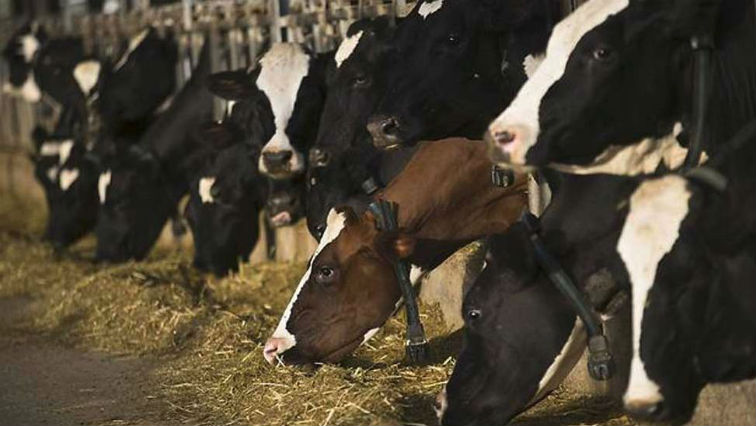
Namibia could lose up to N$2.5 billion in export revenue if foot-and-mouth disease (FMD) disrupts access to key international beef markets.
This is according to a new macroeconomic risk analysis by Simonis Storm Securities.
Although Namibia remains FMD-free, outbreaks in Botswana and South Africa risk Namibia’s vulnerability to the disease.
A case of FMD was reported in South Africa’s Northern Cape province last month, which shares a border with Namibia.
The warning is contained in an economic assessment on FMD risks to Namibia’s livestock sector, which links regional outbreaks in South Africa, Botswana, and Zambia to heightened trade and economic vulnerability for Namibia’s export economy.
It states that “the regional livestock corridor is currently under strain” and that disease outbreaks are no longer only a veterinary issue, but a macroeconomic risk linked to trade and growth.
Namibia’s beef export structure places the country at particular risk.
The report says export-approved abattoirs supply premium markets, including the European Union (EU), the United Kingdom (UK),
Norway, South Africa and China. The EU and UK account for approximately 55 to 65% of total export volumes combined.
It estimates total beef export values at about €290 million (around N$5.7 billion annually), with roughly N$3 to 3.6 billion directly exposed to premium EU and UK markets alone.
The report says any confirmed outbreak within Namibia’s FMD-free zone would likely trigger immediate export suspensions.
It warns that “reinstatement is rarely immediate; it requires structured surveillance, verified eradication, World Organisation for Animal Health recognition, and bilateral renegotiation of export protocols,” a process that can take “12 to 24 months or longer.”
Under a six-month export suspension scenario, the report estimates that export losses could reach approximately N$2.5 to 3 billion, with gross domestic product (GDP) growth reduced by an estimated 0.5 percentage points.
In a 12-month disruption scenario, “export losses could approach N$5 to 6 billion, potentially reducing annual GDP growth by up to one percentage point”.
The economic risk is compounded by Namibia’s current recovery phase following drought.
The report notes that herd rebuilding involves increased livestock movements, greater auction throughput, mixing of animals from different sources and intensified transport activity, which heightens epidemiological risk.
While agriculture contributes about 6 to 8% of GDP, the report highlights its wider economic importance, stating that the sector supports 20 to 23% of the national labour force, with 70 000 to 90 000 direct and indirect livelihoods linked to livestock production.
“Biosecurity preservation must, therefore, be treated not only as veterinary compliance but as a core component of Namibia’s economic infrastructure,” the report says, warning that the cost of prevention is far lower than the potential systemic losses from export disruption.
The Ministry of Agriculture, Fisheries, Water and Land Reform has launched an FMD task force and increased biosecurity protocols at borders. State veterinarians have also been dispatched to increase monitoring and prepare for an outbreak.
Namibia’s newly launched FMD support fund has secured N$12.76 million from unions and corporations to bolster national biosecurity and emergency response efforts.
The fund is organised by Namibia’s four farmers’ unions, the directorate of veterinary services and the Livestock and Livestock Products Board of Namibia to respond to the threat of an FMD outbreak in Namibia.
In an age of information overload, Sunrise is The Namibian’s morning briefing, delivered at 6h00 from Monday to Friday. It offers a curated rundown of the most important stories from the past 24 hours – occasionally with a light, witty touch. It’s an essential way to stay informed. Subscribe and join our newsletter community.

The Namibian uses AI tools to assist with improved quality, accuracy and efficiency, while maintaining editorial oversight and journalistic integrity.
Stay informed with The Namibian – your source for credible journalism. Get in-depth reporting and opinions for
only N$85 a month. Invest in journalism, invest in democracy –
Subscribe Now!