




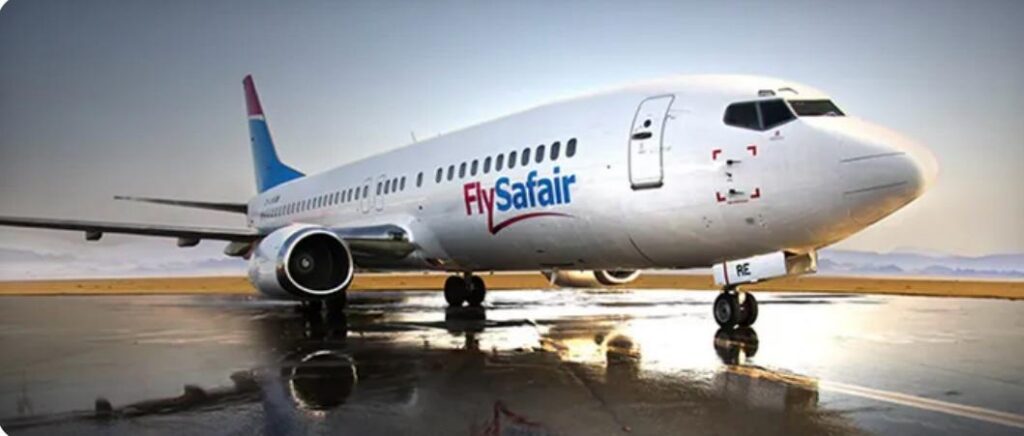
South Africa’s lack of jet fuel refinery capacity and the absence of a contingency plan for supply interruptions have come into sharp focus after low-cost carrier FlySafair introduced a temporary fuel surcharge from 12 March to 12 May.
The airline says the surcharge is intended to cushion it from the impact of rising fuel prices since hostilities began between the United States (US) and Iran, which have created uncertainty around fuel supplies from the Middle East.
FlySafair says since the Middle East crisis erupted on 28 February, it had absorbed steep fuel cost increases to shield passengers from immediate airfare hikes.
However, with Jet A1 fuel prices at South African coastal airports rising by approximately 70% in just one week, and no clear end in sight, the airline says it had reached the point where a surcharge was unavoidable.
“We will be specifically itemising this temporary dynamic fuel surcharge on all tickets to ensure fairness and transparency to our customers,” FlySafair chief marketing officer Kirby Gordon says.
The impact on fuel prices has been immediate and severe. Global oil prices have swung widely, with Brent crude surging past US$100 (N$1 643) per barrel before settling between US$87 (N$1 429) and US$91 (N$1 495) amid extreme volatility.
Gordon says fuel typically makes up 50-55% of FlySafair’s direct operating costs. At current price levels, the airline estimates an additional cost of about R35 000 per flight hour for each Boeing 737-800 aircraft in operation.
He says FlySafair had absorbed these increases since the crisis began, but this was not sustainable without threatening the long-term viability of affordable air travel in South Africa.
“The persistence and scale of these fuel costs have left us with no reasonable alternative. Instead of increasing fares across the board or hiding costs, we have chosen to introduce a clearly labelled, temporary surcharge. This gives customers full visibility into what they are paying for and allows us to remove the surcharge once prices stabilise,” Gordon says.
Aviation expert and managing director of Plane Talking Linden Birns says jet fuel in South Africa is unregulated, giving fuel suppliers significant leverage over airlines.
“The price of fuel can change several times while a ship or an oil tanker is en route from a refinery to South Africa, and this is exactly what we have seen in the last few days,” Birns says.
He says the current prices reflect the uncertainty surrounding geopolitical developments in the Middle East, including questions around the US’ strategy and how long the conflict may last.
“There have been wild swings in the price of crude. It came down again to about US$87.53 this morning, which is nearly US$18 (N$296) lower than a few days ago, but it is still about 25% higher than it was two weeks ago. Jet fuel prices are typically 20% to 30% higher than crude oil prices,” Birns says.
He adds that South Africa faces a difficult challenge because floods and riots in 2021 and 2022 resulted in the loss of most local jet fuel refinery capacity.
“Only the Astron Refinery currently produces jet fuel, and it does so at limited capacity because it is undergoing refurbishment,” Birns says.
As a result, the country relies heavily on imported jet fuel to meet demand, which significantly increases costs.
“This means South Africa has some of the highest jet fuel prices in the world, because the fuel must be shipped here, transported from coastal ports to inland airports such as those on the Reef, and then subjected to import duties, pipeline tariffs and other charges,” he says.
Birns says fuel remains the single biggest cost component in airline ticket pricing.
“Airlines cannot shoulder all these costs. They will try to mitigate the impact by increasing ticket prices, consolidating flights, reducing frequencies, or ensuring aircraft operate at maximum capacity,” he says.
However, he notes that capacity reductions have not yet occurred, largely because demand for air travel remains strong.
“If the economy deteriorates significantly, demand for discretionary travel could fall and airlines may be forced to reduce capacity,” Birns says.
He adds that the biggest concern was the lack of a government contingency plan for jet fuel supply since refineries began shutting down in recent years.
– Banele Ginindza