






THE FLOODS IN Pakistan last year caused devastation and carnage, leaving an enduring impact on the lives of millions.
Thousands of lives, tens of thousands of homes, and hundreds of thousands of livelihoods were consumed by water on an unimaginable scale.
More than 30 million people were affected, with more than half a million people displaced.
They have been the worst floods in Pakistan’s history and, with atypically heavy monsoons combined with melting glaciers, on the back of severe heat waves, they are an obvious expression of the clear and present danger of climate change.
They are a painful reminder that global inaction on climate change today is a wilful choice to make tomorrow’s crises even worse. A price which will be paid disproportionately by those who contributed the least to its creation.
This is true in Pakistan, it is true across India and Bangladesh, it is true across Commonwealth countries in Africa, the Caribbean and the Pacific.
GROWING IMPACT
It is a truth which forces us to assess the quality of our immediate response when disaster strikes, and to assess our overall approach to global financing in the age of climate change.
The UN stepped forward quickly to mobilise international support for relief, rehabilitation and reconstruction.
This month, Pakistan and the UN co-hosted the International Conference on Climate Resilience to address climate resilience and adaptation, following the disaster.
I wholeheartedly support these efforts. However, I urge the world to recognise that the traditional cycle of crisis followed by one-off mobilisations of support is no longer sufficient.
In an age when the frequency, scale and impact of climate change continue to intensify – and interlink with ongoing global economic, energy and food insecurity to further amplify their impact – business as usual will not work.
We need to combine the generosity of people and governments with a more modern, skilful institutional approach which can enable countries with complex vulnerabilities, facing potentially crippling crises, access to the fullest range of short- and long-term finance mechanisms, based on a hard-headed assessment of real vulnerabilities, not on the blunt metric of GDP.
VULNERABILITIES
Pakistan is the eighth most climate-vulnerable country in the world, yet 172 countries sit below Pakistan in global GDP rankings.
This influences the scale and nature of financial support from global institutions, whether in times of profound crises, or in the vital long-term effort to build resilience and reduce the impact of future crises.
This is not only a problem for Pakistan, but also for many of our 56 countries.
The Commonwealth, alongside many organisations, including the UN, is attempting to drive more nuanced and constructive ways of defining and measuring the vulnerabilities of nation states.
We are working closely with our member states to hone our Universal Vulnerability Index, which assesses a country’s real resilience in order to provide global financial institutions with a reliable, transformational tool with which to assess where the need is greatest. And recently, Commonwealth finance ministers discussed the need for institutional financing to prioritise vulnerability.
This vulnerability dialogue overlaps with a vital debate around perceived injustices – both current and historical – at the heart of global climate politics and links the global finance agenda, as we observed at the UN Climate Change Conference COP27 in Egypt in November.
ACTIVE VALUES
Many developing nations are asking the developed world to satisfy their demand for more urgent action: Both through keeping promises made on climate finance for adaptation and mitigation, and through compensation to the most vulnerable countries which did nothing to cause anthropogenic climate change, but which have already suffered damage which cannot be undone.
Inertia, both in real-world climate action, and in negotiations around finance which could unlock political progress, works for no-one.
The situation in Pakistan has been both heart-breaking and urgent. It has also been another wake-up call: A call which asks us what kind of world we are, and what kind of world we want.
In a just world, where solidarity and empathy are active values, we would respond to such emergencies with the pace and urgency required, and we would be honest with ourselves about the need for a more complete, more compassionate overall approach.
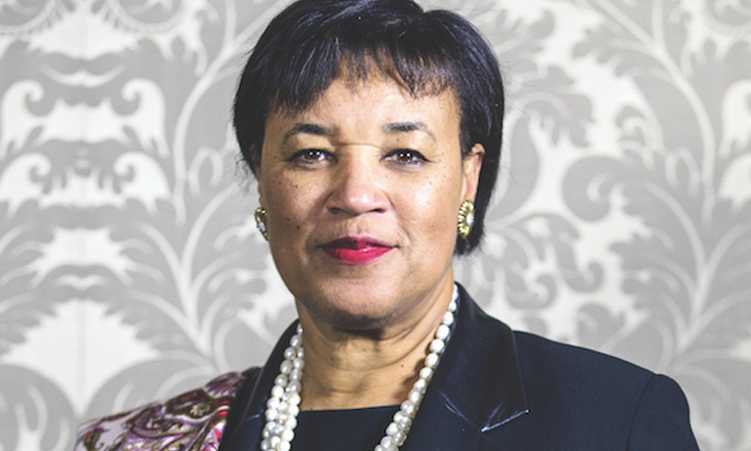
– Patricia Scotland (KC) is the secretary general of the Commonwealth.

