



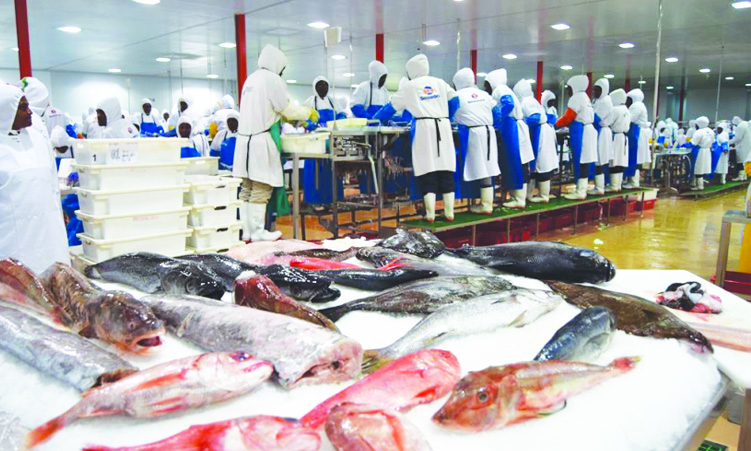
Fishing companies that exceed by-catch limits in the hake sector will be publicly named and risk losing quotas and vessels.
This is according to new compliance measures introduced by the Ministry of Agriculture, Fisheries, Water and Land Reform.
Executive director of water and marine resources Teofilus Nghitila says the rise in by-catch in the sector has prompted the introduction of a stricter regulatory and financial framework aimed at protecting the hake stock.
“Companies found to be in violation of these measures will be listed in the public listing of violators on an annual basis,” he says.
Under the new rules, companies are required to remain within a 2% by-catch threshold. A levy of 50% will apply to the landed value of by-catch within that limit.
Any amount above the 2% threshold will be forfeited to the state at no cost and will still attract the levy.
“The introduction of a strict financial and regulatory framework is essential for the effective management of by-catch. By-catch exceeding this limit will be fully forfeited to the government at no cost and will still be liable for the levy,” the ministry says.
Additional penalties include revoking licences for repeated breaches, quota deductions, and confiscating fishing gear and vessels.
Excess by-catch will also be deducted from future quota allocations.
This follows the Cabinet’s once-off total allowable catch (TAC) of 140 000 tonnes for the 2024/25 season, announced last year, when it directed that future quota allocations be gradually reduced to align with scientific recommendations.
For the 2025/26 season, the TAC has been set at 133 000 tonnes. The ministry says the allocation is based on scientific stock assessments to ensure long-term resource sustainability.
Ministry data shows a continued rise in by-catch in the hake sector. Official figures indicate that by-catch increased from 8 895 tonnes in the 2021/22 season to 11 639 tonnes in the 2024/25 season. In the 2023/24 season, the recorded by-catch stood at 12 058 tonnes.
The Confederation of Namibian Fishing Associations has previously stated that while the quota adjustments and by-catch controls would require operational adjustments, maintaining stock health is necessary to preserve the industry’s future.
The association said sustainability considerations must remain central when determining harvest levels and compliance obligations.
The sector has also raised concerns over illegal, unreported and unregulated fishing, indicating willingness to support the ministry through additional monitoring capacity and logistical assistance.
The association maintains that quota levels should continue to be guided by scientific recommendations, not economic pressure, to avoid long-term resource depletion and instability in the industry.
In an age of information overload, Sunrise is The Namibian’s morning briefing, delivered at 6h00 from Monday to Friday. It offers a curated rundown of the most important stories from the past 24 hours – occasionally with a light, witty touch. It’s an essential way to stay informed. Subscribe and join our newsletter community.

The Namibian uses AI tools to assist with improved quality, accuracy and efficiency, while maintaining editorial oversight and journalistic integrity.
Stay informed with The Namibian – your source for credible journalism. Get in-depth reporting and opinions for
only N$85 a month. Invest in journalism, invest in democracy –
Subscribe Now!