






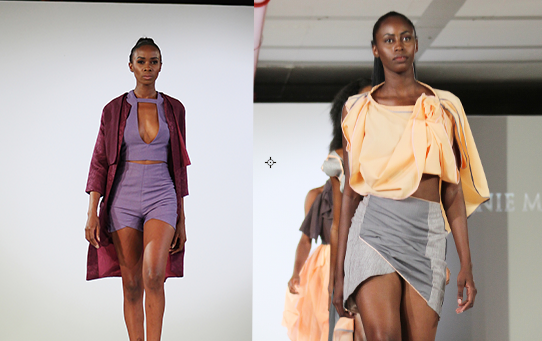
Fashion models the world over are envied for their proximity to the rich and famous and for having looks that many would die for, but their industry is also plagued by exploitation and scandals – which we have seen a glimpse of over the past few weeks in Namibia.
More than three months since walking the ramp at what has now become the biggest fashion event to have taken place in Namibia, models from the event took to social media to expose event organisers for not paying them.
In an interview with The Namibian on 5 February, both Georgina Kandjeke and Varaakuani Hambira confirmed that three months after Windhoek Fashion Week (WFW), they had yet to be paid and were instead given the run-around by the event’s organisers.
The Namibian also received an anonymous tip from a model’s mother who claimed that her daughter had not been paid, “despite numerous promises of payment”.
The mother, who declined to be named for fear of having her daughter victimised, added: “When the girls make enquiries or complain, they are removed from the Fashion Week WhatsApp group and warned that they might not work again because of their unprofessional conduct”.
When contacted for comment earlier this month, Luis Munana, a model himself and one of the brains behind WFW, said that Namibian models were not the only ones who hadn’t been paid yet. According to him, models from Angola and South Africa as well as some service providers were also awaiting payment.
By Tuesday, however, Munana told Republikein that all international and South African models had been paid so that “they wouldn’t paint a bad image of Namibia”.
What are They Owed?
For WFW, the payment structure varied for models depending on how many slots they walked in, with regular models contracted to be paid N$250 per slot while the seasoned models where to be paid N$500 per slot.
There were four slots in total so the highest paid models would have been paid N$2 000, and the lowest paid N$1 000.
Standing Together
To date, the models have yet to be paid and a number of them are standing together and are planning to create their own models council in an effort to protect their interests.
“This council is basically to do the duties that the fashion council is not doing in terms of protecting the models. If all of us are on one side, there’s no way that they will get anyone to work with them if they don’t treat us right,” Kandjeke told The Weekender this week.
The group, she said, is due to meet next week in order to vote for a board.
The Weekender is aware of at least 40 models who are standing together to make this council a reality. They include popular models such as Paula Namundjebo, Julia Hamutumwa, Armando van Wyk and Woudré Tune, amongst others.
Another model who is speaking out, Lorna Mabuku shut down criticism from those who question the need for Namibia to have two separate councils in the fashion industry. “There is clearly a reason we are here today. I started modelling when when I was about 10 years old in Malaysia. I was exploited. This made me stop modelling because it seemed very shady,” she said.
Mabuku stressed that a models council is needed because of the exploitation that’s inherent in fashion industries the world over. “Models all over the world get exploited each day, even here in Namibia. What are the models doing about it? Nothing. We want to start our own council to say enough is enough,” she said.
Pay the Models
Fashion designer Chakirra Claasen, who together with her business partner had made previously big fashion events such as Namibia Fashion Show and Emerge Fashion Show a reality, said that paying models should always be the number one priority. “It’s really unfair towards the models, they should have been paid regardless. As a producer, you should always make sure you pay models regardless of what happens,” she said.
Dennis Hendrik, who also walked the ramp at WFW, is of the opinion that although models had to be paid their dues, it was not necessary for them to go public about the dispute. “The only problem I have with Namibian models is that as much as they make noise on social media, they were supposed to come together and meet with the organisers to sort things out,” he said.
He applauds both Mukoroli and Munana for making fashion week a reality for Namibia. “The models need to understand that this was the first event of its kind in Namibia. Yes, they are accountable for paying us, they just need to find a way to do it,” he said.
From the Fashion Council
While disgruntled models blame the FCN for not taking an active role in condemning those who don’t pay models, the council reiterated that they are not in any way responsible for what has been happening.
“On the matter of WFW and the unpaid models, we would like to state that while we did collaborate with WFW, it was not our initiative. It was organised by an organisation apart from us. However, we do not condone what is happening and are rather disappointed this matter could not be handled within the industry. We do hope that the matter is being resolved as we are confident that everyone’s aim in the industry is to restore faith in what we are trying accomplish as an industry,” Leah Misika from the council said.
She added that the council will support the models who wish to start up their own council but encourage models to rather sign up with reputable agencies in order to be protected. “With regards to the models starting their own council, we are happy to support their endeavours. Our mandate as a council cannot protect them, only institutions such as modelling agencies can do that and we would highly recommend that any independent models sign themselves to agency. As The Fashion Council of Namibia, we would like the public and the industry to understand that as a non-profit organisation, we are here to develop the industry through facilitating projects. Our focus is and has always been growing the industry,” she said.
Misika also informed The Weekender that Kalistu Mukoroli, who previously served a PR role on the board, had stepped down from the portfolio. Mukoroli had also previously served as the vice chairperson of models liaison.